Flawed implementation of International Laws leaves seafarers in legal vacuum
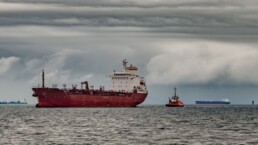

The consequences of port closures during the COVID-19 pandemic have highlighted flaws in the implementation of international law designed to protect the human rights of those at sea, according to a study by Dr Sofia Galani, Senior Lecturer in Public International Law at the University of Bristol and Human Rights at Sea Advisory Board member.
Speaking to Human Rights at Sea (HRAS), Galani says: “The systematic protection of persons at sea remains flawed. This is not because international law does not afford protection to persons at sea but rather because the many different legal regimes that apply to persons at sea often clash leaving them in something of a legal vacuum.”
For years, the plight of persons abandoned at sea has gone unnoticed, she says. “The global pandemic has changed this, as the suffering of persons stuck at sea during the pandemic, be it for employment, recreational, migration or other purposes, is now well-documented. The time is ripe to recognise that human rights apply at sea and find effective ways to enforce them.”
The right of States to close their ports for public health reasons is recognised under international law, but her study, published by the International and Comparative Law Quarterly (Cambridge University Press), highlights examples of how State actions and port closures have left people vulnerable. For example, the crew of the USS Theodore Roosevelt only received medical care after their plight was highlighted in the media. By then, around 600 sailors had COVID-19, and one had died. Additionally, migrants have been put at risk, as many States have not made exceptions to their port closures for asylum seekers.
The cruise industry was impacted early on in the pandemic when Japan prevented 4,700 passengers and crew from the Diamond Princess from disembarking because some had COVID-19. Subsequently, many cruise ships were impacted, with thousands of crew members unable to enter ports around the world and some ships ordered to leave port with unwell crewmembers still onboard.
These crews faced similar physical, mental and financial challenges experienced by many commercial cargo vessels, cruise ship and fishing boats crews who continue to be stranded at sea due to the unwillingness of States to allow crew changes. Seafarers have been kept onboard at sea for longer than their contracted period of employment, often without access to medical care and without being provided with personal protective equipment (PPE).
Both flag States and port States play an important role in safeguarding the rights of seafarers. Flag States have a duty to provide crews with adequate PPE and training on how to use it. They also have a duty to implement social distancing and hygiene protocols in order to prevent the spread of the virus and to provide adequate medical care on board.
“However, life-saving treatment might not be available on board, and this is why port States have to override port restrictions in order to allow physicians to board a vessel or allow sick seafarers to disembark,” says Galani. “Port closures, as a Covid-19 precaution, have meant that sick seafarers could not receive life-saving treatment even in emergencies. Port restrictions have also meant that vessels could not receive essential supplies and PPE.”
Port States should provide quarantine facilities for seafarers who need to isolate upon disembarkation in order to facilitate crew changes and could facilitate vaccination, she says. Returning sick crew to sea or preventing them from disembarking and being replaced by healthy crew is in breach of the obligations of States which is essential for the safety of life at sea and which has to be medically certified under the labour law instruments and SOLAS.
The right to repatriation is guaranteed under the MLC. “The protection of this right depends on how successfully flag States enforce it. At first instance, flag States have to oblige shipowners to repatriate seafarers, and if they fail to do so, the competent authorities of the flag State have to make appropriate arrangements. The difficulties arise from the operation of the flags of convenience that do not accept responsibility for the costs of repatriation. In such cases, it is important to recall that the conditions of abandonment often violate not only labour standards but also the basic human rights of seafarers. In cases where seafarers are abandoned within a territorial zone or a port, the coastal State could and should intervene in order to enforce human rights standards.”
Galani argues that the enforcement of labour standards is the responsibility of flag States, but port States have enhanced powers to oversee the enforcement of labour standards on board vessels entering their ports. “This double layer of protection should translate into enhanced protection of labour standards on board vessels, but port closures have resulted in precisely the opposite. Once port States close their ports, they not only shy away from inspecting labour standards but also prevent flag States from discharging their duties.”
The Law of the Sea is a living instrument and increasing reference is made to humanitarian considerations, but balancing “considerations of humanity” amongst different international laws with different focuses cannot be achieved easily. As a result, Galani says that the various rights and duties of States must be interpreted and applied in a way that fully recognises the rights of people at sea.
The International Health Regulations 2005, for example, require States to treat travellers “with respect for their dignity, human rights and fundamental freedoms.” While restrictive measures are allowed during public health emergencies, Galani says that port States should not impose restrictions that violate the basic rights of people at sea. The States should be expected to set aside their restrictions when life-saving treatment is urgently needed. Additionally, refusal to allow seafarers assure for crew change is inhumane and contrary to the spirit of international legal instruments such as the Maritime Labour Convention.
“The assertion of the right of States to close their ports can be considered lawful only when due consideration is given to the rights of persons at sea. This requires a more balanced approach which can be realised if the rights and duties of States are interpreted and applied in a mutually reinforcing manner that does not sideline the rights of persons at sea, both during the Covid-19 pandemic, and more generally.”



Related News.

Navigating the Multi-Orbit Era: In Conversation with Intellian’s Jon Harrison at SMM 2026
At SMM 2026 in Hamburg, the rapid evolution of maritime satellite communications took centre stage. Across the exhibition halls, discussions among…

Cyprus ports need joint energy and investment strategy, shipping agents chief says
Cyprus needs a coordinated strategy for shipping, energy and environmental protection to support port investment and modernisation, Cyprus shipping…

MASO Public Affairs introduces MASO Regulatory Intelligence
A new subscription service helping businesses understand what is changing and what it means for them MASO Public Affairs introduces MASO Regulatory…

Anglo-Eastern helps turn CMBTECH’s ammonia ambition into an operational reality
From early feasibility study and risk-based design to newbuilding supervision, crew readiness and technical management, Anglo-Eastern drew on its…

Escalation of attacks threatens to derail recovery in Middle East oil exports
World oil demand is forecast to fall by 2.5 mb/d y-o-y in 4Q26 and 2.6 mb/d on average in 2026. As the Iran war manifests itself through restricted…

New study finds shipping pays twice its share to EU ETS earmarked revenues should triple to help build market for sustainable fuels and technologies
Shipping is responsible for around 10% of EU ETS emissions but pays almost 20% of the ETS bill. Unlike other sectors, it has never received free…

MSARC strengthens maritime mass rescue readiness through training and national live exercise off Dakar, Senegal
Joint MSARC–FHAS programme combines three days of SAR training with a national multi-agency live exercise The Maritime Search and Rescue Council ,…

Sogese report deliveries are still being delayed as container freight rates fluctuate
FOR IMPORTERS Spot rates into the Mediterranean are back at January levels, Far East to Europe reliability sits at pandemic lows, and nearly…

Glencore begins trading on Australian Securities Exchange
Glencore has begun trading on the Australian Securities Exchange under the ASX code GLC. Gary Nagle, Glencore’s CEO, said it was an exciting day for…

BIMCO Shipping Number of the Week
Suez Canal container ship transits exceed 50% of pre-disruption levels "During the first two weeks of October, weekly container ship capacity…
Subscribe to our newsletter!
if you dont want to swim alone in the ocean of news, sign up for the newsletter, and you will receive daily all the important news of world shipping!
