“In order for us to walk in someone else’s shoes, we first have to take off our own” – the importance of a holistic view on diversity


Poornima, what stands out to you in Maersk Tankers’ approach to fostering a diverse, equal and inclusive culture?
Poornima: I featured organisations in the book that I found to have made concrete efforts in the field of diversity, equality and inclusion, and that are also sincere and authentic while doing so. For me, this is the case with Maersk Tankers. The company started with the idea of diversity of thought and understands that cultural transformation is needed to become a diverse and inclusive organisation. In many ways, I felt that Maersk Tankers reflects the holistic understanding of diversity that I am promoting in my book.
Annelise, what is it about Maersk Tankers’ diversity and inclusion initiatives that attracted you to the company?
Annelise: Maersk Tankers is going through a significant transformation and, as part of this, a cultural shift. As a service provider, we need to bring in diversity of thought, but we also need the leadership competencies that will create an inclusive culture. If you want to pioneer, you need a climate where everyone feels safe and supported, so you can do things that have not been done before by speaking up and challenging status quo. The starting point should not be improving statistics, but a cultural shift, so we can see how the benefits of an inclusive culture bring out the best in all of us. This stood out in Maersk Tankers’ approach.
Why is it better to start with diversity of thought rather than diversity of gender?
Poornima: Per se, there is nothing wrong with putting gender on the agenda. But the challenge is that if you put any minority group in the spotlight, you often don’t get the majority on board, because people feel that they cannot connect with it and see it as something for leadership or minorities to deal with. If we want an inclusive culture, everyone needs to be on board and to feel responsible. The challenge we face is that many of us don’t know how to be an active ally of inclusion.
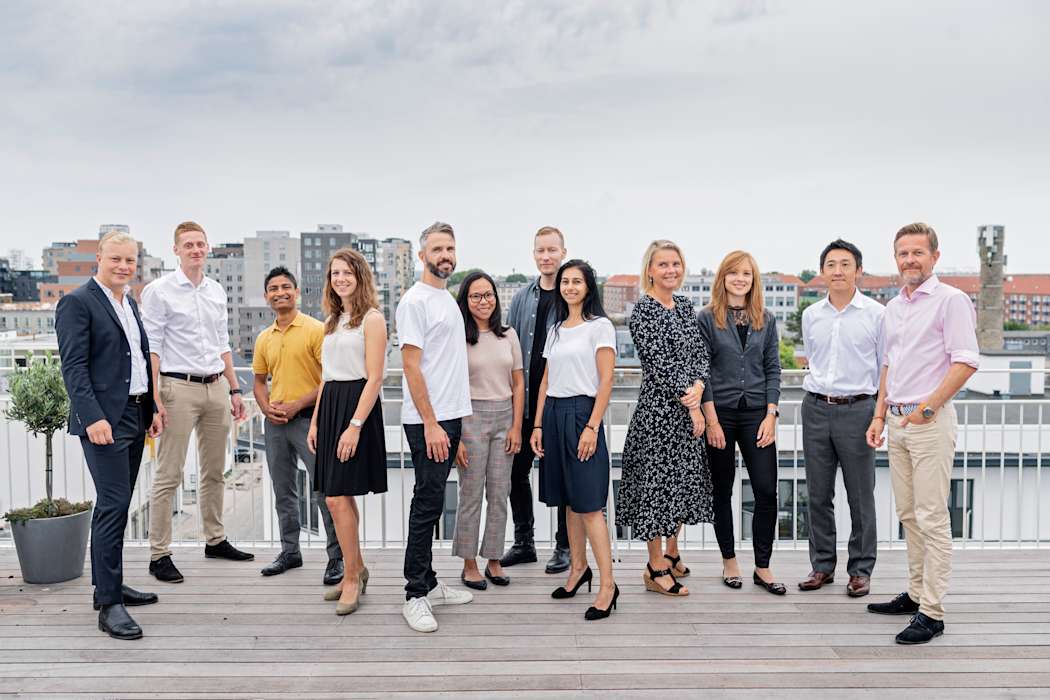
Talking about your idea of “active allyship of inclusion”, what changes can individuals make to their own mindset and behaviours in everyday life?
Poornima: My active allyship model is based on three dimensions. First, it’s about knowledge. This means the curiosity to understand more about different people and their backgrounds, as well as about the issues within diversity, equality and inclusion. Secondly, it is about honestly questioning one’s own bias and attitudes towards other people. Thirdly, it is about consistent and frequent behaviours and actions that form active allyship. Examples include fostering open conversations in a psychologically safe environment, addressing biases while also sponsoring and providing mutual mentoring opportunities for minority groups.
How can companies be allies of inclusion?
Annelise: If you look at it from a leadership perspective, it is about creating the framework in which these allyship behaviours can happen by talking about it, acknowledging those who do it and by being a role model oneself. And then, curiosity needs to be the desire. An inclusive culture is not a mandate that someone needs to put in place – we need to find that desire from within …
Poornima: … and it really has benefits for everyone at the end of the day. It’s not just going to benefit minority groups.
Looking at diversity, equality and inclusion within the context of the shipping industry, are there different challenges or opportunities for shipping companies?
Poornima: The shipping industry has long been male dominated, so we need to ask: Where are we getting our talent from? We need to work down the pipeline and not just focus on the “here and now” in individual companies. This requires, for example, partnerships with educational institutions. How do we get more women and girls thinking about industries like shipping?
Annelise: I also think some bias exists around whether women are really suited for these male-dominated industries. Gender-related societal roles need to be re-examined. This lies deep within all of us – both men and women – and can limit our perception of our own and others’ potential.
Poornima: We should focus on equipping our talent with the skills that are needed to work in an inclusive way with each other, and to understand and respect differences. As I write in my book, “In order for us to walk in someone else’s shoes, we first have to take off our own.”
How can we, in your words, “take off our own shoes” to avoid being biased?
Poornima: We need to allow ourselves to become vulnerable and for our biases to be pointed out. Often, bias comes from our childhood, education and early life experiences. The awareness that people around me are biased, just as much as I am, has the potential to diminish elements such as name-calling and stigmatisation. The understanding that we are all biased is crucial to really drive diversity, equality and inclusion forward.
How can companies and individuals effectively reduce bias and make changes?
Poornima: Companies need to stop thinking about unconscious bias training as a tick-box-exercise. If people are really to understand their biases, it requires long-term thinking. Introspection and time for reflection are so, so powerful. Companies need to be willing to think of it as a long-term development of their talent across all levels.
Annelise: As a female leader, some of my passion for this area has come from having grown up in a corporate, hierarchical, male-dominated setting. There were a lot of bumps along the road and, as an individual, it’s easy to think there is something wrong with you. But it’s about speaking up when you disagree with something – and accepting that you may receive strong reactions for that. The fact that you receive pushback means that you are doing something significant, otherwise people would not react. In my career, the big hits and pushbacks that I took were the things that really mobilised me and made me more resilient. Dialogues with close colleagues helped me separate what was me and what was not me. Social support is key to creating change. This is a collective task.
Source: Maersk Tankers



Related News.
Navigating the Multi-Orbit Era: In Conversation with Intellian’s Jon Harrison at SMM 2026
At SMM 2026 in Hamburg, the rapid evolution of maritime satellite communications took centre stage. Across the exhibition halls, discussions among…
Cyprus ports need joint energy and investment strategy, shipping agents chief says
Cyprus needs a coordinated strategy for shipping, energy and environmental protection to support port investment and modernisation, Cyprus shipping…

MASO Public Affairs introduces MASO Regulatory Intelligence
A new subscription service helping businesses understand what is changing and what it means for them MASO Public Affairs introduces MASO Regulatory…
Anglo-Eastern helps turn CMBTECH’s ammonia ambition into an operational reality
From early feasibility study and risk-based design to newbuilding supervision, crew readiness and technical management, Anglo-Eastern drew on its…

Escalation of attacks threatens to derail recovery in Middle East oil exports
World oil demand is forecast to fall by 2.5 mb/d y-o-y in 4Q26 and 2.6 mb/d on average in 2026. As the Iran war manifests itself through restricted…
New study finds shipping pays twice its share to EU ETS earmarked revenues should triple to help build market for sustainable fuels and technologies
Shipping is responsible for around 10% of EU ETS emissions but pays almost 20% of the ETS bill. Unlike other sectors, it has never received free…
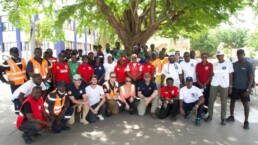
MSARC strengthens maritime mass rescue readiness through training and national live exercise off Dakar, Senegal
Joint MSARC–FHAS programme combines three days of SAR training with a national multi-agency live exercise The Maritime Search and Rescue Council ,…
Sogese report deliveries are still being delayed as container freight rates fluctuate
FOR IMPORTERS Spot rates into the Mediterranean are back at January levels, Far East to Europe reliability sits at pandemic lows, and nearly…
Glencore begins trading on Australian Securities Exchange
Glencore has begun trading on the Australian Securities Exchange under the ASX code GLC. Gary Nagle, Glencore’s CEO, said it was an exciting day for…
BIMCO Shipping Number of the Week
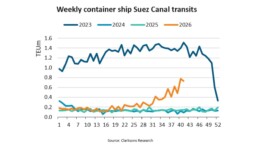
Suez Canal container ship transits exceed 50% of pre-disruption levels "During the first two weeks of October, weekly container ship capacity…
Subscribe to our newsletter!
if you dont want to swim alone in the ocean of news, sign up for the newsletter, and you will receive daily all the important news of world shipping!
