Rivertrace publishes new guide to oil in water monitoring & discharge
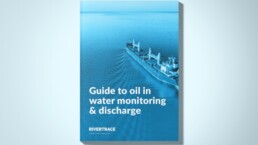

A new guide from water monitoring specialist Rivertrace examines the controversial subject of wastewater discharges and their potential environmental impact. The guide covers the MARPOL regulations controlling discharges from exhaust gas cleaning systems, exhaust gas recirculation (EGR) system bleed off, bilge water treatment and tank washing systems.
Exhaust gas cleaning systems, better known as scrubbers, allow ships to operate on high-sulphur fuel oil rather than more expensive very low sulphur fuel oil after the global 0.5% cap on fuel sulphur levels became effective on 1 January 2020. After a lull caused by low crude oil prices in 2020 and the effects of the COVID pandemic, scrubber uptake continues to advance, with systems even being specified for newbuildings with dual-fuel capability. For larger ship types some analysts believe they will become the optimal means for complying with emission abatement regulations.
A fierce debate is taking place with some opposed to scrubbers claiming they merely shift pollution from air to sea and seeking a ban on open loop scrubbers, while proponents point to conflicting research showing other advantages. A recent CE Delft study found the increase in CO2 footprint from the additional refining of MGO to likely be in the range of 10%-15% and potentially as high as 25%, whereas the increased CO2 from EGCS is only in the range of 1%-1.5% and the sulphur discharged to the oceans is in a harmless form.
New IMO guidelines for scrubbers were formulated in February 2020, but restricted time at virtual meetings held in November 2020 (MEPC 75) and June 2021 (MEPC 76) meant that the subject was dropped at both meetings. The guide examines current regulations in detail while anticipating these and other future guidelines on water quality and monitoring for scrubbers and EGR. It also covers regulations on monitoring oil content in bilge water and from tank washing systems in tankers, including a section on the science behind monitoring and the various methods employed in modern monitoring systems.
Mike Coomber of Rivertrace said: “Regulation around monitoring is a hot topic in the shipping industry. Although IMO has found it necessary to concentrate on other issues at the present time, the controversy around exhaust gas cleaning is not going away and we anticipate more national and regional authorities taking independent action. This guide will help owners and operators understand the issues and take appropriate action to ensure compliance.
“The need to develop harmonised international rules covering wastewater quality and monitoring is pressing. At Rivertrace we are constantly refining our product range and developing new systems that give shipowners confidence of knowing their vessels are meeting all regulatory requirements and avoiding the chance of penalties and detentions”.



Related News.

Navigating the Multi-Orbit Era: In Conversation with Intellian’s Jon Harrison at SMM 2026
At SMM 2026 in Hamburg, the rapid evolution of maritime satellite communications took centre stage. Across the exhibition halls, discussions among…

Cyprus ports need joint energy and investment strategy, shipping agents chief says
Cyprus needs a coordinated strategy for shipping, energy and environmental protection to support port investment and modernisation, Cyprus shipping…

MASO Public Affairs introduces MASO Regulatory Intelligence
A new subscription service helping businesses understand what is changing and what it means for them MASO Public Affairs introduces MASO Regulatory…

Anglo-Eastern helps turn CMBTECH’s ammonia ambition into an operational reality
From early feasibility study and risk-based design to newbuilding supervision, crew readiness and technical management, Anglo-Eastern drew on its…

Escalation of attacks threatens to derail recovery in Middle East oil exports
World oil demand is forecast to fall by 2.5 mb/d y-o-y in 4Q26 and 2.6 mb/d on average in 2026. As the Iran war manifests itself through restricted…

New study finds shipping pays twice its share to EU ETS earmarked revenues should triple to help build market for sustainable fuels and technologies
Shipping is responsible for around 10% of EU ETS emissions but pays almost 20% of the ETS bill. Unlike other sectors, it has never received free…

MSARC strengthens maritime mass rescue readiness through training and national live exercise off Dakar, Senegal
Joint MSARC–FHAS programme combines three days of SAR training with a national multi-agency live exercise The Maritime Search and Rescue Council ,…

Sogese report deliveries are still being delayed as container freight rates fluctuate
FOR IMPORTERS Spot rates into the Mediterranean are back at January levels, Far East to Europe reliability sits at pandemic lows, and nearly…

Glencore begins trading on Australian Securities Exchange
Glencore has begun trading on the Australian Securities Exchange under the ASX code GLC. Gary Nagle, Glencore’s CEO, said it was an exciting day for…

BIMCO Shipping Number of the Week
Suez Canal container ship transits exceed 50% of pre-disruption levels "During the first two weeks of October, weekly container ship capacity…
Subscribe to our newsletter!
if you dont want to swim alone in the ocean of news, sign up for the newsletter, and you will receive daily all the important news of world shipping!
