Carbon accounting: You can’t manage what you don’t measure


Of all the challenges the world is facing today, climate change represents the greatest threat. Tipping points that we did not expect to see crossed for many years have already been reached, and there is little time left to stop irreversible and disastrous changes to the Earth’s climate systems.
The global pursuit of net-zero carbon emissions is a huge undertaking. A significant transition to renewable energy alone can only address 55% of global emissions. The other 45% result from transportation, land use, building management, and the production of consumer and industrial goods. This shows that taking climate action requires many different, interlinking solutions and needs to be a joint endeavor among nations, civil societies, and business alike.
The shift toward sustainable business practices is being driven by governments, consumers, investors, and even employees. While most companies monitor and measure the CO2 emissions of their production sites, customers are increasingly demanding visibility into the full carbon footprint of the individual products they purchase.
As one result, companies need to move from the linear economic model that still dominates the industry today to the principle of circularity – a systemic shift that builds long-term resilience, generates business and economic opportunities, and provides environmental and societal benefits.
In this new equation, carbon is increasingly becoming a new vehicle of transformation. It is effectively a global, universal “currency” that can be tracked, traded, managed, and minimized like any other resource. Still, for most businesses, managing carbon is either seen as a necessary cost of doing business, or a tax that serves as a penalty. One way or the other, it is considered to be corrosive to profits.
But what if we could convert carbon management into an investment strategy that can also drive profit? What if we could make sustainability profitable and profitability sustainable, without sacrificing one for the other?
This is just as visionary as it is promising. Let’s take the example of a large fast-moving consumer goods company. On a five- to 10-year horizon, depending on legislative developments, there is an opportunity for avoided offsetting spend of one to two percent of revenue per year, top-line growth of one to three percent of revenue per year, and cost savings of €2 to 5 million per year based on more accurate and efficient emissions accounting and reporting.
This needs software that helps companies measure, account, and take the right action – and SAP is uniquely positioned to help enterprises tackle this challenge. As we run the supply chains of the largest companies in the world, we can play a central role in helping companies manage their green line by minimizing the carbon footprint and negative environmental impact of their products.



Related News.
Hong Kong Global Maritime Trade Summit to return for third edition
The International Chamber of Shipping, in collaboration with the Transport and Logistics Bureau of the Government of Hong Kong and the Hong Kong…

Appetite for US crude oil exports climbs despite high freight
South Korea tops US crude destinations at 568,600 b/d VLCC rates to Asia double, closing arbitrage window European refining margins…
Shipping stocks Rally as Hormuz Traffic plunges 75%
Ship traffic through the Strait of Hormuz — a critical chokepoint handling about 20% of global crude oil and liquefied natural gas shipments — has…
Diana Shipping announces Time Charter Contract for m/v G P Zafirakis with Classic Maritime
Diana Shipping, a global shipping company specializing in the ownership and bareboat charter-in of dry bulk vessels, announced that, through a…
New IMO ESP Code framework for Remote Inspection Techniques
The International Maritime Organisation, through Resolution MSC.584(111) , has adopted amendments to the International Code on the Enhanced…

ABS opens Offshore & Marine Support Center in Bergen
ABS has expanded its capabilities in the Norwegian maritime market with the opening of a cutting-edge support center in Bergen, bringing advanced…
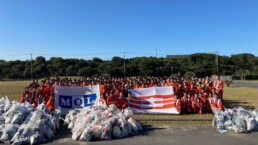
MOL holds giant step memorial ceremony and beach cleanup at Kashima Coast
Memorial and Reflection 20 Years After the Accident: Learning from the Past to Foster an Even Stronger Safety Culture Mitsui O.S.K. Lines, announced…
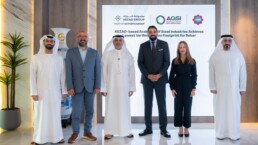
KEZAD-based Arabian Gulf Steel Industries achieves lowest verified Carbon Footprint for Rebar
CARES UK verified Environmental Product Declaration confirms 139 kg CO₂e per tonne for rebar produced at AGSI’s KEZAD Abu Dhabi facility Arabian…
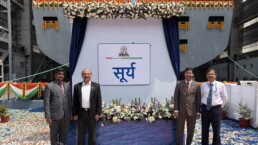
Indian Register of Shipping announces launch of first fleet support ship INS Surya
Indian Register of Shipping continues to strengthen its role in supporting the Indian Navy and India’s naval shipbuilding capabilities through the…

VLCCs Climbing the Record Charts
LR2 The TC1 75kt MEG/Japan index decreased by only a single point this week to WS928. The corresponding Baltic round-trip TCE fell by $2,000 to…
Subscribe to our newsletter!
if you dont want to swim alone in the ocean of news, sign up for the newsletter, and you will receive daily all the important news of world shipping!
