The environmental, regulatory, digital and political factors that will help shape the maritime sector in 2021
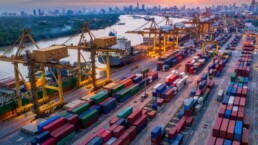

As we hesitantly enter 2021, it’s easy to remain pessimistic about what the new year brings for shipping after what has been a chaotic, challenging, and devastating year across the globe. Not only is Covid-19 still rocking the boat in terms of certainty for a better future for shipping, but shipping is also facing challenges in new areas; big data, autonomy, environmental regulation, and a shift in global power, to name a few. This article intends to explore, or touch upon, some of what shipping may face in 2021.
 Of course, much of the revelations and predictions for maritime 2021 rely wholly on the rate of Covid-19 infections and whether this new strain will pose the threat of yet another year of hardship and challenge. Assuming that Covid-19 is controlled and world economic output recovers, the United Nations Conference on Trade and Development expects maritime trade to grow by 4.8% in 2021, after what has been a 4.1% drop in 2020, according to UNCTAD. However, these predictions are fraught with uncertainty and ambiguity, but maritime can take solace in the fact that despite depressed levels of demand, freight, for example, remained fairly stable throughout the pandemic.
Moreover, green shipping has, in recent years, all that’s been talked about. But in 2021, we will begin to see some drastic regulatory action which could really push maritime into that ‘greener future’ we’ve always dreamed of. The IMO and United Nations Environment Programme are jointly hosting a Maritime Zero and Low Emission forum in the summer of 2021, which will address key innovation and R&D opportunities. The IMO has stated that this will be the first in a series of global, regional, and national events aimed at accelerating the transition of the maritime sector to zero or low emissions. Alongside the forum, the IMO are set to pass new regulation as part of the IMO GHG Strategy established in 2018, which seeks a reduction of carbon intensity of international shipping by 40% by 2030, compared to 2008. After a remote session to amend the approach, which was held in October of 2020, the adoption of such amendments are expected to be put through during 2021. This decarbonization of shipping, therefore, is expected to influence the way shipping operates; the Shipping Outlook Forum’s annual study found that almost 30% of fleet-owning participants stated that changes to vessel types or specifications will be the biggest impact on fleet investment plans. In a similar respect, insurers will also see major change stemming from a greener industry; the changing nature of risks as the range of environmental regulations affecting the sector grows, means that insurers must adapt their business strategies and revenue-generating components fast.
 Another hugely influential part of 2021 will be the influence of the incoming Biden administration, which must consider the geopolitical decisions made by the previous administration. Sanctions placed by Trump, if removed, will have significant consequences for the tanker sector, for example, by putting increased pressure on tanker rates. Furthermore, Biden is expected to end Trump’s protectionist measures for a more trade-centric mindset, meaning trade should see some major changes across the Biden presidency, especially with respect for pushing for stronger trade relationships with the EU, which is particularly important now after the recent establishment of the Asia pacific free trade agreement, known as the Regional Comprehensive Economic Partnership (RCEP). This agreement will see a shift in the global economy towards Asia; as the first of its kind, the RCEP will spur regional trade and reduce risk of protectionism from countries external to the agreement. This also means member states will have less reliance on the US and tensions between states will be reduced. Lloyds List states that the RCEP currently comprises of nearly one-third of the global economy, but will comprise of half the global GDP within just 10 years.
Digitalization is still a hot topic in maritime and will continue to be in 2021. Lloyds List have discovered the main drivers of the digitalization process, which will be (and are) big influencers for new technologies. Respondent’s ranked reducing operational costs and creating operational efficiencies as the most important driver, alongside compliance with regulation and certification requirements. Following this was improving vessel safety and creating better value for customers. On the other hand, the key challenges for digitalization, as stated by respondents, was the lack of / little evidence for value for money, followed by risk of cyber-attack and bandwidth capability and cost, and lack of staff training on vessels and ashore. As more fleets digitalize and the true capabilities of a digital maritime unfold as technologies are developed to meet these drivers, more regulations that consider new threats and opportunities must be considered and introduced quickly.
 Finally, seafarer welfare has not been overlooked this year, with the coronavirus causing many to argue that seafarers have been exploited and undervalued by the maritime community, after being forced into indefinite service due to state border closures and restrictions. This problem is not new – a study by the World Maritime University reported a systematic problem for seafarer exploitation as a whole, spanning many areas and highlighting the need for change in the industry. Maritime organizations have shown their desire for change; this year writing a joint letter to the United Nations in order to support those trapped onboard vessels, unable to get back home due to border restrictions. In 2021, we expect to see a greater push for seafarer rights and a focus onto improving and maintaining seafarer welfare, whether that be through new technologies, regulations, or services provided by industry service providers.
Ultimately, these all-important predictions allow our industry to tread carefully into what will be a difficult year rebuilding much of what we lost in 2020. It allows us at Navarino to listen to the needs and wants of the industry and have an open dialogue with our customers, enabling us to work towards providing the best and most effective solutions, whilst steering the course for a better maritime.
Source: Navarino



Related News.

Beyond Technical Skills: WISTA Cyprus explores the human side of leadership
WISTA Cyprus hosted The Art of Leadership & Emotional Mastery, an interactive workshop held on 15 October at the Alasia Hotel in Limassol,…
The human cost of sending merchant mariners into war zones extends far beyond the immediate danger of missiles and drones. It raises a harder question: who is really protecting the seafarer?
Who protects the seafarer? I have spent much of my professional life at sea. I am a Master Mariner. I have stood on the bridge, made decisions…
Loss of bridge control: Human failure is normal – context is key
When bridge control is lost in a functioning system, it can be easy to blame human error. But accidents rarely happen because of one mistake…
Danish Shipping announces the transport of live animals by sea new rules should improve safety for animals, seafarers and the environment
Revised rules on the transport of live animals by sea are being negotiated in the EU. Danish Shipping wants to ensure good animal welfare,…

Japan’s flawed shipping proposal leaves developing countries adrift
A new analysis by Opportunity Green warns governments of the wide-ranging risks posed by Japan’s proposal at the International Maritime Organization…

Intermodal Report Week 42 2026
Pls find below the Intermodal Report - Week 42 2026 Intermodal Report Week 42 2026
Allied Weekly Market Review Week 42
Pls find below the Allied - Weekly Market Review - Week 42 ALLIED - Weekly Market Report- Week 42
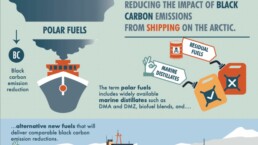
EU Arctic Strategy NGOs welcome EU ambition on on cutting shipping’s Arctic Black Carbon Emissions
Responding to today’s publication of the EU’s Arctic Strategy, which definitively states the EU’s intention to support International Maritime…
The final quarter of 2026 is expected to see softer bauxite flows
Chinese front-loading is expected to have run its course, pointing to softer bauxite flows in 2026 Q4. Global bauxite flows increased by 2.8% y/y…

DP World Foundation and Belewan new container terminal mark groundbreaking of AED 3.7 million school project in Indonesia
Classrooms of Hope initiative expands to Belawan, Medan with a new junior high school designed to provide modern learning facilities and greater…
Subscribe to our newsletter!
if you dont want to swim alone in the ocean of news, sign up for the newsletter, and you will receive daily all the important news of world shipping!
