CEN Workshop Agreement puts Methanol in pole position as safe clean Arctic fuel
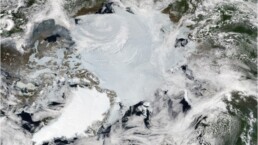

Polar states can take immediate action to avoid another decade of HFO use in the Arctic and mitigate black carbon risks from VLSFO
Brussels, 1 December, 2020. The Methanol Institute is urging the maritime community to take action to mitigate pollution and emissions risk in Polar regions by adopting Methanol as marine fuel, applying safe bunkering guidelines developed by the European Committee for Standardisation (CEN).
Facilitated by the Safe Maritime Operations under Extreme Conditions: the Arctic Case (SEDNA), which advocates for an integrated risk-based approach to safe Arctic navigation, ship design and operation, the project secured a CEN Workshop Agreement on a process to address safety during bunkering of Methanol as a marine fuel earlier this year.
IMO member states in late November agreed amendments to MARPOL regulations to restrict the use of Heavy Fuel Oil in Arctic waters, changes that have come in for criticism from environmental groups thanks to exemptions and waivers that may not see a comprehensive ban on HFO come into effect until mid-2029. Some NGOs are also concerned that very low sulphur fuel oil used in place of HFO contains high levels of black carbon, a particularly dangerous pollutant to the Arctic environment where it can settle on and increase the melt rate of sea ice.
“The shipping industry knows that the use of HFO in the Arctic is unsustainable and questions around the black carbon content of VLSFO raise serious questions that need to be addressed,” says Methanol Institute Chief Operating Officer Chris Chatterton. “Being miscible in water and biodegradable means Methanol has negligible spill risk and it’s possible to use as a marine fuel with close to zero particulate matter emissions.”
The SEDNA project put forward technical provisions and assessment of relative safety risks along with safety zone guidance for three Methanol bunkering concepts: truck to ship, shore to ship and ship to ship. It included a safety assessment of the implications for the environment, for vessels and their crews of projected accidents where the vessels involved using low flash point and conventional fossil fuels.
Consideration was given for ships intended to be exposed to the Arctic’s specific environmental conditions, by providing comprehensively comparative safety assessments of the use of low flash point fuels in Arctic shipping operations in place of conventional fossil fuels. The CEN Workshop Agreement on Methanol bunkering processes set out requirements for bunkering Methanol to marine vessels and included the following four elements.
- Guidelines for usage of hardware and transfer system,
- Operational procedures,
- Requirement for the methanol provider to provide a bunker delivery note,
- Training and qualification of personnel involved.
“With the expected increase in shipping traffic operations in the Arctic comes a corresponding increase in the risk of accidents as well as an increase in ship-source emissions,” adds Chatterton. “Nations are increasingly moving ahead of the regulatory curve in restricting HFO use and Methanol gives them a practical and scalable alternative that will increasingly see renewable volumes coming onstream.”
Used as a marine fuel, conventional Methanol emits no sulfur, very low PM and according to data from MAN Energy Solutions has carbon dioxide emissions around 20% lower than conventional marine fuel oil. To meet IMO NOx Tier III requirements, Methanol can be blended with water which brings the ship into compliance without the need for expensive exhaust gas after treatment. In the longer term the production of renewable bio-Methanol provides a climate-neutral pathway for the industry to adopt sustainable marine fuel.



Related News.
Beyond Technical Skills: WISTA Cyprus explores the human side of leadership
WISTA Cyprus hosted The Art of Leadership & Emotional Mastery, an interactive workshop held on 15 October at the Alasia Hotel in Limassol,…
The human cost of sending merchant mariners into war zones extends far beyond the immediate danger of missiles and drones. It raises a harder question: who is really protecting the seafarer?
Who protects the seafarer? I have spent much of my professional life at sea. I am a Master Mariner. I have stood on the bridge, made decisions…
Loss of bridge control: Human failure is normal – context is key
When bridge control is lost in a functioning system, it can be easy to blame human error. But accidents rarely happen because of one mistake…
Danish Shipping announces the transport of live animals by sea new rules should improve safety for animals, seafarers and the environment
Revised rules on the transport of live animals by sea are being negotiated in the EU. Danish Shipping wants to ensure good animal welfare,…

Japan’s flawed shipping proposal leaves developing countries adrift
A new analysis by Opportunity Green warns governments of the wide-ranging risks posed by Japan’s proposal at the International Maritime Organization…
Intermodal Report Week 42 2026
Pls find below the Intermodal Report - Week 42 2026 Intermodal Report Week 42 2026
Allied Weekly Market Review Week 42
Pls find below the Allied - Weekly Market Review - Week 42 ALLIED - Weekly Market Report- Week 42
EU Arctic Strategy NGOs welcome EU ambition on on cutting shipping’s Arctic Black Carbon Emissions
Responding to today’s publication of the EU’s Arctic Strategy, which definitively states the EU’s intention to support International Maritime…
The final quarter of 2026 is expected to see softer bauxite flows
Chinese front-loading is expected to have run its course, pointing to softer bauxite flows in 2026 Q4. Global bauxite flows increased by 2.8% y/y…

DP World Foundation and Belewan new container terminal mark groundbreaking of AED 3.7 million school project in Indonesia
Classrooms of Hope initiative expands to Belawan, Medan with a new junior high school designed to provide modern learning facilities and greater…
Subscribe to our newsletter!
if you dont want to swim alone in the ocean of news, sign up for the newsletter, and you will receive daily all the important news of world shipping!
