Shipping implications from the IMO’s MEPC 75


Newbuilding orderbooks have dipped to historically low levels relative to existing fleets, with the dry bulk carrier sector one of the most extreme examples.
“The current bulker orderbook of 56.1 Mdwt represents just 6.3% of the existing capacity, the lowest percentage in almost 30 years,” said Derek Langston, Head of Research at leading shipbrokers SSY.
“At the same time, the dry bulk carrier fleet is ageing: the ratio of 15+ year old vessels to the orderbook is the highest since 2003.”
While these trends are partly due to uncertainties over the direction of the market, they also reflect doubts over the speed at which financially viable designs for new low carbon ships can be developed.
Last week’s draft approvals at the IMO’s Marine Environment Committee (MEPC) could compound, rather than reverse, these trends for several more years as there seems little prospect of an immediate regulatory-driven acceleration in demolition (and replacement newbuilding demand).
Such a development could have significant implications for both the dry bulk sector’s supply/demand balance and CO2 emissions:
(1) Alongside limited scrapping activity until enforcement takes effect, the new IMO measures raise the prospect of continued slow steaming by much of the existing dry bulk carrier fleet. This is at a time when a ‘middle-age spread’ is developing in the fleet’s age profile. The biggest five-year concentration of dwt capacity was built in the years 2009-13 and will, therefore, be 13-17 years of age when IMO enforcement measures could begin to bite in 2026. Without sharply increased anticipatory newbuilding orders, or a decline in dry bulk trade volumes, in the intervening years, a large portion of the middle-aged fleet will have to continue trading towards the end of the decade (at potentially slower speeds) in order to avoid a squeeze in cargo carrying capacity.
(2) Carbon emissions, meanwhile, could continue to trend up. A recent report by Marine Benchmark showed a net increase in maritime greenhouse gas emissions since 2011 as the effects of an expanding global fleet have exceeded efficiency gains. In the case of dry bulk carriers, Marine Benchmark estimates annual average growth in emissions of close to 3% p.a. since 2011.
“The combination of low newbuilding deliveries, a potential rebound in demand and an ageing fleet implies that CO2 emissions are more likely to track fleet growth this decade, which suggests that the shipping industry cannot deliver an absolute reduction in CO2 emissions by 2030,” cautioned Torbjorn Rydbergh, Managing Director of Marine Benchmark.



Related News.

Beyond Technical Skills: WISTA Cyprus explores the human side of leadership
WISTA Cyprus hosted The Art of Leadership & Emotional Mastery, an interactive workshop held on 15 October at the Alasia Hotel in Limassol,…
The human cost of sending merchant mariners into war zones extends far beyond the immediate danger of missiles and drones. It raises a harder question: who is really protecting the seafarer?
Who protects the seafarer? I have spent much of my professional life at sea. I am a Master Mariner. I have stood on the bridge, made decisions…

Loss of bridge control: Human failure is normal – context is key
When bridge control is lost in a functioning system, it can be easy to blame human error. But accidents rarely happen because of one mistake…

Danish Shipping announces the transport of live animals by sea new rules should improve safety for animals, seafarers and the environment
Revised rules on the transport of live animals by sea are being negotiated in the EU. Danish Shipping wants to ensure good animal welfare,…

Japan’s flawed shipping proposal leaves developing countries adrift
A new analysis by Opportunity Green warns governments of the wide-ranging risks posed by Japan’s proposal at the International Maritime Organization…

Intermodal Report Week 42 2026
Pls find below the Intermodal Report - Week 42 2026 Intermodal Report Week 42 2026

Allied Weekly Market Review Week 42
Pls find below the Allied - Weekly Market Review - Week 42 ALLIED - Weekly Market Report- Week 42
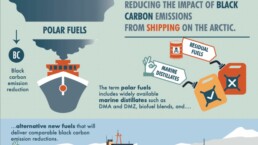
EU Arctic Strategy NGOs welcome EU ambition on on cutting shipping’s Arctic Black Carbon Emissions
Responding to today’s publication of the EU’s Arctic Strategy, which definitively states the EU’s intention to support International Maritime…

The final quarter of 2026 is expected to see softer bauxite flows
Chinese front-loading is expected to have run its course, pointing to softer bauxite flows in 2026 Q4. Global bauxite flows increased by 2.8% y/y…

DP World Foundation and Belewan new container terminal mark groundbreaking of AED 3.7 million school project in Indonesia
Classrooms of Hope initiative expands to Belawan, Medan with a new junior high school designed to provide modern learning facilities and greater…
Subscribe to our newsletter!
if you dont want to swim alone in the ocean of news, sign up for the newsletter, and you will receive daily all the important news of world shipping!
