MAN ETES: German State Funds Cross-Sector, Energy-Storage Solution
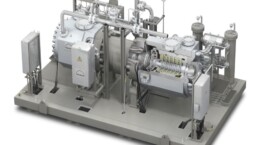

As part of the ‘progres.nrw’ funding program, German state, North Rhine-Westphalia (NRW), is providing funding of €200,000 for a technical and economic-evaluation study of the new MAN ETES energy-storage technology. This still-untested technology offers the potential of a CO2-free alternative to traditional, large-scale, heat supply.
Project partners – RWTH Aachen University, Stadtwerke Aachen Aktiengesellschaft (STAWAG) and MAN Energy Solutions – want to investigate the potential for implementing the technology in NRW. The study will examine the necessary requirements for constructing a research facility in the Aachen area in 2021, to which end it will determine consumer requirements, the energy industry’s framework-conditions, and space requirements. An electrothermal electricity-storage system with a capacity of up to 7 MW is planned.
“In the course of expanding renewable-energy sources, storage technologies are becoming increasingly important for securing future energy-supplies. MAN ETES is a potential candidate, which stores excess electrical energy in the form of heat and cold. Today, the process for generating heat and cold is mainly based on fossil fuels. We must therefore make the growing share of renewable energies available to this sector in order to sustainably reduce emissions,” said Prof. Dr. Manfred Wirsum, Director of the Institute of Power Plant Technology, Steam and Gas Turbines (IKDG) at RWTH Aachen University and coordinator of the study.
Dr. Uwe Lauber, CEO of MAN Energy Solutions, said: “With our innovative technology solution, we want to contribute to the planned reduction of fossil fuels in NRW’s electricity and heat supply and thus provide concrete support for the structural change of the energy sector in the state. Sector coupling is a decisive step on the way to a climate-neutral future. MAN ETES provides renewable energy – in the form of usable and storable heat and cold – that can be converted back into electricity as required. The system thus couples the electricity, heating and cooling-supply sectors with unprecedented flexibility.”
“We are very pleased that we at STAWAG can contribute to the project’s success, especially from the user side, with our district-heating network and operating experience,” said Frank Brösse, Managing Director of STAWAG Energie GmbH and responsible for STAWAG’s heating division. “As energy-transition pioneers, we have long been involved with the various storage technologies and sector coupling in the electricity and heat sector.”
The basic principle of ETES technology is the reversible conversion of electrical energy into thermal energy, which is stored in the form of hot water and ice in insulated reservoirs. A special feature of the electrothermal process is the added – or even preferable – possibility of distributing the heat and cold generated to users depending on demand and margins, and accordingly offering the option of converting it back into electricity as an additional usage variant. The technology fulfills two important tasks: on the one hand, it helps with maintaining the grid balance by absorbing large amounts of surplus electricity from renewable energies and feeding it back into the grid when needed; on the other, the system integrates several sectors by generating, storing and providing thermal energy for heating and cooling purposes.
The system’s properties are highly relevant for urban regions with a strong industrial base, such as North Rhine-Westphalia, with the traditionally-high energy requirements of its strong industrial sector and the planned phase-out of its coal-based electricity generation. The state supports the research association coordinated by RWTH Aachen University, which will develop a concept for an ETES research facility for an emission-free heating-and-cooling supply based on an evaluation study. Provided that the framework conditions of the energy industry are correct and feasibility can be validated, the construction of a pilot plant with an electricity-to-electricity storage efficiency of approx. 50% will take place in 2021.
At the same time, the study will serve as a basis for the further technological development of ETES’ system components. The system is based on heat-pump and heat-engine technologies using CO2charging-&-discharging cycles, and the storage of pumped heat. ETES innovations include the use of water as a storage medium, as well as toxicologically and environmentally safe CO2 as a working medium for the entire energy-storage system.
The turbomachinery technology and the process design of CO2 cycles are the key elements of ETES and reflect MAN Energy Solutions’ core competences. In the charging cycle, the system uses the hermetically-sealed MAN HOFIM® turbo-compressor to compress the CO2 working medium to a supercritical state, typically at 140 bar and approx. 120°C to 150°C.



Related News.
Beyond Technical Skills: WISTA Cyprus explores the human side of leadership
WISTA Cyprus hosted The Art of Leadership & Emotional Mastery, an interactive workshop held on 15 October at the Alasia Hotel in Limassol,…

The human cost of sending merchant mariners into war zones extends far beyond the immediate danger of missiles and drones. It raises a harder question: who is really protecting the seafarer?
Who protects the seafarer? I have spent much of my professional life at sea. I am a Master Mariner. I have stood on the bridge, made decisions…
Loss of bridge control: Human failure is normal – context is key
When bridge control is lost in a functioning system, it can be easy to blame human error. But accidents rarely happen because of one mistake…
Danish Shipping announces the transport of live animals by sea new rules should improve safety for animals, seafarers and the environment
Revised rules on the transport of live animals by sea are being negotiated in the EU. Danish Shipping wants to ensure good animal welfare,…

Japan’s flawed shipping proposal leaves developing countries adrift
A new analysis by Opportunity Green warns governments of the wide-ranging risks posed by Japan’s proposal at the International Maritime Organization…

Intermodal Report Week 42 2026
Pls find below the Intermodal Report - Week 42 2026 Intermodal Report Week 42 2026
Allied Weekly Market Review Week 42
Pls find below the Allied - Weekly Market Review - Week 42 ALLIED - Weekly Market Report- Week 42
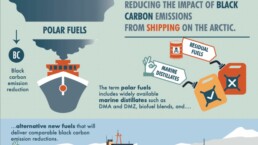
EU Arctic Strategy NGOs welcome EU ambition on on cutting shipping’s Arctic Black Carbon Emissions
Responding to today’s publication of the EU’s Arctic Strategy, which definitively states the EU’s intention to support International Maritime…
The final quarter of 2026 is expected to see softer bauxite flows
Chinese front-loading is expected to have run its course, pointing to softer bauxite flows in 2026 Q4. Global bauxite flows increased by 2.8% y/y…
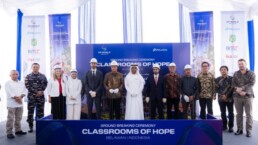
DP World Foundation and Belewan new container terminal mark groundbreaking of AED 3.7 million school project in Indonesia
Classrooms of Hope initiative expands to Belawan, Medan with a new junior high school designed to provide modern learning facilities and greater…
Subscribe to our newsletter!
if you dont want to swim alone in the ocean of news, sign up for the newsletter, and you will receive daily all the important news of world shipping!
