SAP and IBM Can Help Fix Supply Chains that Broke Down During COVID-19

Logistics is the science of making thing A and delivering it to point B, and has been described as the calling card of America.
“Until the pandemic arrived, we lived in a vast, elaborate, whirring contraption that delivered culture and commerce at spectacular speeds, with astonishing efficiency,” wrote the author of a New York Times article earlier this year.
What happened to the great American logistics machine? It fell apart. Back in March, 75% of companies had already reported that COVID-19 had disrupted their supply chain. Companies that chose not to invest in their supply chain in previous years either crashed or suffered a severe hit this year due to lack of resiliency. Even companies with highly rated supply chains did not escape unscathed.
What Went Wrong
According to the Harvard Business Review, the challenge for companies after the pandemic subsides will be to make their supply chains more resilient without weakening their competitiveness. Before the pandemic, manufacturers in most industries depended on suppliers and subcontractors that narrowly focused on just one area. Those specialists, in turn, usually relied on many others. The advantages of this arrangement include flexibility in what goes into the product as well as the ability to incorporate the latest technology. But relying on a single supplier somewhere deep in its network for a crucial component or material leaves manufacturers vulnerable.
In a recent discussion, Takshay Aggarwal, group lead for IBM Digital Supply Chain, and Darcy MacClaren, senior vice president of Digital Supply Chain for SAP North America, discussed reasons for supply chain failure and talked about the IBM and SAP partnership, which offers a truly transformative road map for supply chain excellence.
Aggarwal spoke about logistics problems during the pandemic. “There’s a lot of logistics transformation going on right now,” he said. “Supply chains broke down because in their efforts to save dollars, companies were single sourcing things. They didn’t have alternatives. And when there were fluctuations, they were not able to accommodate them with alternatives such as other transportation lanes.”
He explained that companies were not prepared for shifts in demand, such as selling to more grocery stores rather than to restaurants. Grocery retail requires different packaging and different types of transportation. Local optimum does not mean global optimum. It is not enough to have islands of excellence in each function, so enterprises are moving toward intelligent workflows, which are more agile by nature. Aggarwal believes companies will have to look at their overall logistics strategy, from carrier network rationale to their ability to react to change.
What Needs to Change
MacClaren said data has been one of the biggest stumbling blocks for most enterprises, because they store massive amounts of data in different silos.
“Lack of visibility into real-time data greatly hampers a company’s predictive capabilities,” she explained. “All our customers want to improve their ability to predict the future. And if that’s not possible, then they want to improve their response.”
MacClaren believes the best way for suppliers to meet the challenge is by putting the customer at the center, then organizing to deliver the perfect experience through a multichannel, multimodal supply chain.
Both experts agreed on the two key factors behind the collapse of supply chains: lack of agility and the inability to respond in real time. One factor preventing agility is the use of disparate systems. “If you have to pull all the information you need for analysis from different points, and then you have to do it again and again, it really slows you down,” MacClaren said. “Folks just didn’t have visibility to do their job. True agility depends on the interoperability of systems.”
They also agree on the critical factors for recovery. Companies should begin by figuring out what part of the process is most broken. While it is important to create a holistic journey for transformation, every supply chain has its own needs depending on the industry and the customer. In addition to applying technology to the supply chain, companies also need to facilitate cultural change. This is where the concept of intelligent workflows, rather than individual processes, plays a key role.
Win-Win for Customers
Aggarwal sees a huge opportunity for the Internet of Things (IoT) and the use of artificial intelligence (AI) for demand sensing and forecasting. “IBM has always been on the cutting edge of emerging tech;,be it blockchain, AI, or IoT,” he shared. “By combining SAP’s industrial scale enterprise solutions with IBM’s new, most promising technology, we can drive that exponential value for our customers.”
For MacClaren, the SAP and IBM combination of intelligent technologies and a truly transformational road map of where to go is what can make the difference for future supply chain excellence. Now is the time to prepare, she said, so those “vast, elaborate, whirring contraptions” really do deliver culture and commerce at spectacular speeds, with astonishing efficiency, even amid a global crisis.



Related News.

Beyond Technical Skills: WISTA Cyprus explores the human side of leadership
WISTA Cyprus hosted The Art of Leadership & Emotional Mastery, an interactive workshop held on 15 October at the Alasia Hotel in Limassol,…
The human cost of sending merchant mariners into war zones extends far beyond the immediate danger of missiles and drones. It raises a harder question: who is really protecting the seafarer?
Who protects the seafarer? I have spent much of my professional life at sea. I am a Master Mariner. I have stood on the bridge, made decisions…

Loss of bridge control: Human failure is normal – context is key
When bridge control is lost in a functioning system, it can be easy to blame human error. But accidents rarely happen because of one mistake…
Danish Shipping announces the transport of live animals by sea new rules should improve safety for animals, seafarers and the environment
Revised rules on the transport of live animals by sea are being negotiated in the EU. Danish Shipping wants to ensure good animal welfare,…

Japan’s flawed shipping proposal leaves developing countries adrift
A new analysis by Opportunity Green warns governments of the wide-ranging risks posed by Japan’s proposal at the International Maritime Organization…

Intermodal Report Week 42 2026
Pls find below the Intermodal Report - Week 42 2026 Intermodal Report Week 42 2026

Allied Weekly Market Review Week 42
Pls find below the Allied - Weekly Market Review - Week 42 ALLIED - Weekly Market Report- Week 42
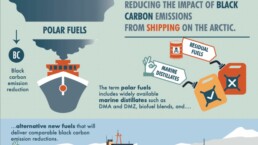
EU Arctic Strategy NGOs welcome EU ambition on on cutting shipping’s Arctic Black Carbon Emissions
Responding to today’s publication of the EU’s Arctic Strategy, which definitively states the EU’s intention to support International Maritime…

The final quarter of 2026 is expected to see softer bauxite flows
Chinese front-loading is expected to have run its course, pointing to softer bauxite flows in 2026 Q4. Global bauxite flows increased by 2.8% y/y…

DP World Foundation and Belewan new container terminal mark groundbreaking of AED 3.7 million school project in Indonesia
Classrooms of Hope initiative expands to Belawan, Medan with a new junior high school designed to provide modern learning facilities and greater…
Subscribe to our newsletter!
if you dont want to swim alone in the ocean of news, sign up for the newsletter, and you will receive daily all the important news of world shipping!
