ICS report reveals scale of challenge to decarbonise shipping
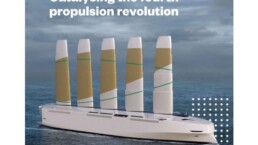

A new report from the International Chamber of Shipping (ICS) has laid bare the scale of the industry’s decarbonisation challenge. It also sets the scene for governments to back an industry proposal to form a global $5bn R&D fund to de-risk future investment. The report warns that a failure by governments to support the industry’s initiative to accelerate R&D risks trillions of dollars of investment being misallocated, making it impossible for the sector to decarbonise.
The report, ‘Catalysing the Fourth Propulsion Revolution‘, looks at different options to help decarbonise shipping and achieve the greenhouse gas (GHG) reduction targets established by the industry’s global regulator, the UN International Maritime Organisation (IMO). These include the use of Ammonia, Hydrogen, and Batteries to power the global fleet.
However, the report finds that currently, zero carbon fuels are not available at the size and scale needed to drive decarbonisation. While there are several promising potential zero-carbon fuels and technologies, the emissions reductions called for by the international community and industry require a huge amount of research and development before they can become viable. This represents a ‘financial iceberg’ for the industry, as pressure to regulate emissions is currently moving faster than supply chains’ ability to keep pace. Without innovation and a massive scaling-up of research and development, there is a significant risk of stranded assets that will impact nation states, the finance community and the shipping industry.
International shipping is integral to the global economy, transporting about 90% of global trade volumes. It also currently has to use four million barrels of oil a day – 4% of global oil production, or equivalent to a third of the daily production of Saudi Arabia. The energy needed to power one large container ship across the ocean in a single day is the same needed to power 50,000 homes. Shipowners are acutely aware of the need to decarbonise, something that can only be done with the development of a new generation of technologies and new zero-emission fuels. New fuels urgently need to be developed along with novel propulsion systems, upgraded vessels and an entirely new global refuelling network.
The report examines three alternative fuels in more detail:
-
- ‘Green’ Ammonia – one of the most promising low-emission fuels, with the IEA predicting that its use for shipping will reach 130m tonnes by 2070, twice as much as was used worldwide for fertiliser production in 2019. However, it is less energy dense that oil, meaning ships will consume up to five times as much fuel by volume. Ammonia production would have to rise by 440 million tonnes – more than treble current production – requiring 750 gigawatts of renewable energy. This means that shipping alone would consume 60% of the world’s current renewable energy production of 2,537 gigawatts.
- Hydrogen – emits no carbon but its current commercial production emits large amount of the GHG, negating its green credentials. However, research is underway to prevent this. Similar to ammonia, fuel density is poor, and a new bunkering system would also be required. Hydrogen use could reach 12 million tonnes in 2070, equivalent to 16% of 2019 global maritime bunker demand and 16% of today’s global hydrogen use.
- Fuel Cells and Batteries – the battery challenge is just as great: a typical container vessel would require the power of 10,000 Tesla S85 batteries every single day meaning that it would require 70,000 batteries in order to sail for a week. Wind power could complement electric vessels, although the current view is that they will only be viable for short-distance trips, but this could change with increased R&D.
To upscale these and other infant technologies into adoptable solutions, large levels of investment in R&D is required. Operational improvements alone cannot achieve the 90% efficiency targets needed to reach the IMO 2050 goal of halving emissions compared to 2008. Instead, commercially viable zero-carbon technologies must be available by 2030. Trillions of dollars of investment will rely on the success of such initiatives to identify the right zero-carbon technologies of tomorrow.
ICS Secretary General, Guy Platten said:
“A quantum leap in decarbonised technology similar to the switch from sail to steam over a century ago is required if shipping’s current CO2 reduction targets are to be achieved. However, we do not have the same luxury of time to transform.
“This report sheds some light on potential solutions that will have to be adopted if we are to steer the shipping industry away from fossil fuels. But the reality is that companies need a centralised fund that can catalyse an intense injection of R&D investment to turbocharge projects. Without it we are not going to achieve zero-emission shipping.
“The proposed R&D fund will lead to the introduction of zero-emission ships across the maritime sector by 2030 and beyond. We therefore urge the IMO to back the proposal, which will have such wide-ranging benefits for shipping, and the global transport sector more broadly.”
“The scale of the financial challenge is as great as the technical challenge. We need certainty and action to avoid the approaching financial iceberg as we set course for a zero-carbon future.”
Download the report ‘Catalysing the Fourth Propulsion Revolution’.



Related News.

Beyond Technical Skills: WISTA Cyprus explores the human side of leadership
WISTA Cyprus hosted The Art of Leadership & Emotional Mastery, an interactive workshop held on 15 October at the Alasia Hotel in Limassol,…
The human cost of sending merchant mariners into war zones extends far beyond the immediate danger of missiles and drones. It raises a harder question: who is really protecting the seafarer?
Who protects the seafarer? I have spent much of my professional life at sea. I am a Master Mariner. I have stood on the bridge, made decisions…
Loss of bridge control: Human failure is normal – context is key
When bridge control is lost in a functioning system, it can be easy to blame human error. But accidents rarely happen because of one mistake…

Danish Shipping announces the transport of live animals by sea new rules should improve safety for animals, seafarers and the environment
Revised rules on the transport of live animals by sea are being negotiated in the EU. Danish Shipping wants to ensure good animal welfare,…

Japan’s flawed shipping proposal leaves developing countries adrift
A new analysis by Opportunity Green warns governments of the wide-ranging risks posed by Japan’s proposal at the International Maritime Organization…

Intermodal Report Week 42 2026
Pls find below the Intermodal Report - Week 42 2026 Intermodal Report Week 42 2026

Allied Weekly Market Review Week 42
Pls find below the Allied - Weekly Market Review - Week 42 ALLIED - Weekly Market Report- Week 42
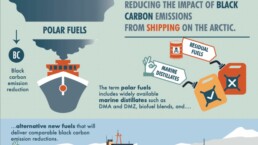
EU Arctic Strategy NGOs welcome EU ambition on on cutting shipping’s Arctic Black Carbon Emissions
Responding to today’s publication of the EU’s Arctic Strategy, which definitively states the EU’s intention to support International Maritime…
The final quarter of 2026 is expected to see softer bauxite flows
Chinese front-loading is expected to have run its course, pointing to softer bauxite flows in 2026 Q4. Global bauxite flows increased by 2.8% y/y…

DP World Foundation and Belewan new container terminal mark groundbreaking of AED 3.7 million school project in Indonesia
Classrooms of Hope initiative expands to Belawan, Medan with a new junior high school designed to provide modern learning facilities and greater…
Subscribe to our newsletter!
if you dont want to swim alone in the ocean of news, sign up for the newsletter, and you will receive daily all the important news of world shipping!
