Odfjell sets ambitious climate targets
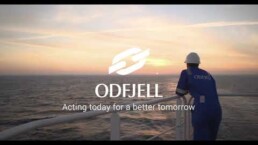
Odfjell has set ambitious targets to reduce our environmental footprints: We aim to reduce our carbon intensity by 50% by 2030 compared to 2008 levels and have a climate-neutral fleet from 2050. Both targets go beyond the targets set by IMO and contribute to achieving the UN Sustainable Development Goals.
As a company with a 106-year history sailing the world’s oceans and operating in many countries, we know the value of the ocean and the effects of the climate. Climate change is happening – and it can have devastating effects on people, society, and businesses.
In 2015, all nations came together in Paris under a common cause: undertake ambitious efforts to combat climate change and adapt to its effects.
The Paris Agreement’s central aim is to strengthen the global response to the threat of climate change. Shipping was not included in the Paris Agreement, so in 2018, the International Maritime Association presented a new climate strategy in response. IMO set out ambitious targets for shipping towards 2050.
“We believe that climate change poses a severe threat to society and business. Failing to operate in a sustainable way present significant risks to our industry, locally and globally. Climate risk affects all businesses – but also creates many opportunities for those able to adapt and willing to work to make a positive change. That is why sustainability and safety are integral parts of our business.”
Øistein Jensen, Chief Sustainability Officer

Our impact statement is a part of our strategy: At Odfjell, we recognize that our company has an impact on the environment, people, and societies. We are committed to operating a sustainable business, continuously seek improvements, and actively support the achievement of relevant UN Sustainable Development Goals.
Efficiency, fuel consumption, and emissions go hand in hand. To improve fuel efficiency and reduce fuel consumption and emissions, Odfjell has a constant focus on improving and renewing our fleet. This includes investing in new ships, optimize data-driven decisions, deploying retrofit programs, invest in new technology, and optimize the way we operate.
Since 2008, Odfjell has run several environmental and efficiency programs, resulting in an almost 30% reduction in our carbon intensity from 2008. This means that we have already taken big steps towards reaching the IMO targets. Further reduction poses even bigger challenges, but we commit to continue improving and have set new ambitious climate targets – targets that go beyond the IMO strategy.

Odfjell’s climate targets:
- Odfjell will cut greenhouse gas emission by 50% by 2030 compared to 2008*
- Odfjell is dedicated to pursuing a zero-emission strategy and will only order vessels with zero-emission technology from 2030
- Odfjell will have a climate-neutral fleet from 2050
- Odfjell will actively support initiatives to develop technology and infrastructure for zero emissions and support international regulation to drive zero-emission for our industry
* Intensity target, Emissions based on transport work, and Annual Efficiency Ratio (AER)
By committing to these ambitious climate targets, we set the direction for our work in the coming years. We have to operate safely, we have to be profitable and we need to do what we can to support the achievement of the sustainable development goals.
Our sustainability approach is rooted in our history and the way we work. It is a continuation of the way we always have done business. Responsible, innovative, and ready to seize opportunities. It is in our DNA to act today for a better tomorrow.
Ambitions of the IMO strategy
- Carbon intensity of the ship to decline through implementation of further phases of the energy efficiency design index (EEDI) for new ships. To review with the aim to strengthen the energy efficiency design requirements for ships with the percentage improvement for each phase to be determined for each ship type, as appropriate:
- Carbon intensity of international shipping to decline to reduce CO2 emissions per transport work, as an average across international shipping, by at least 40% by 2030, pursuing efforts towards 70% by 2050, compared to 2008; and
- GHG emissions from international shipping to peak and decline to peak GHG emissions from international shipping as soon as possible and to reduce the total annual GHG emissions by at least 50% by 2050 compared to 2008 whilst pursuing efforts towards phasing them out as called for in the Vision as a point on a pathway of CO2 emissions reduction consistent with the Paris Agreement temperature goals.



Related News.

Beyond Technical Skills: WISTA Cyprus explores the human side of leadership
WISTA Cyprus hosted The Art of Leadership & Emotional Mastery, an interactive workshop held on 15 October at the Alasia Hotel in Limassol,…
The human cost of sending merchant mariners into war zones extends far beyond the immediate danger of missiles and drones. It raises a harder question: who is really protecting the seafarer?
Who protects the seafarer? I have spent much of my professional life at sea. I am a Master Mariner. I have stood on the bridge, made decisions…
Loss of bridge control: Human failure is normal – context is key
When bridge control is lost in a functioning system, it can be easy to blame human error. But accidents rarely happen because of one mistake…

Danish Shipping announces the transport of live animals by sea new rules should improve safety for animals, seafarers and the environment
Revised rules on the transport of live animals by sea are being negotiated in the EU. Danish Shipping wants to ensure good animal welfare,…

Japan’s flawed shipping proposal leaves developing countries adrift
A new analysis by Opportunity Green warns governments of the wide-ranging risks posed by Japan’s proposal at the International Maritime Organization…

Intermodal Report Week 42 2026
Pls find below the Intermodal Report - Week 42 2026 Intermodal Report Week 42 2026

Allied Weekly Market Review Week 42
Pls find below the Allied - Weekly Market Review - Week 42 ALLIED - Weekly Market Report- Week 42
EU Arctic Strategy NGOs welcome EU ambition on on cutting shipping’s Arctic Black Carbon Emissions
Responding to today’s publication of the EU’s Arctic Strategy, which definitively states the EU’s intention to support International Maritime…

The final quarter of 2026 is expected to see softer bauxite flows
Chinese front-loading is expected to have run its course, pointing to softer bauxite flows in 2026 Q4. Global bauxite flows increased by 2.8% y/y…

DP World Foundation and Belewan new container terminal mark groundbreaking of AED 3.7 million school project in Indonesia
Classrooms of Hope initiative expands to Belawan, Medan with a new junior high school designed to provide modern learning facilities and greater…
Subscribe to our newsletter!
if you dont want to swim alone in the ocean of news, sign up for the newsletter, and you will receive daily all the important news of world shipping!
