Nokia: 5G set to add $8trn to global GDP by 2030


- New research from Nokia has found that 5G-enabled industries have the potential to add $8 trillion to global GDP by 2030, as COVID-19 accelerates medium and long-term digital investment and value creation
- The 5G Business Readiness Report finds that 5G mature companies are growing faster and are the only group to have experienced a net increase in productivity (+10%) following COVID-19
- Despite the economic challenges of COVID-19, a global boom in 5G investment will see 71% of companies invest in 5G over the next 5 years
- Significant geographic variations exist among the more advanced 5G nations, with Saudi Arabia and the United States leading adoption
5G-enabled industries have the potential to deliver $8trn* in value to the global economy by 2030 according to new research from Nokia and Nokia Bell Labs. The 5G Business Readiness Report surveys** 5G adoption among businesses around the world, providing a cross-sector view of the path to full 5G deployment.
This landmark report from Nokia underlines the potential for 5G to drive sustainable economic growth and define the next decade of innovation. The COVID-19 pandemic is forecast to further increase the value creation potential of 5G in the medium and long-term by accelerating digitization, particularly among the least digitally advanced industries.
The report also highlights a clear correlation between 5G deployment and business performance. Companies at an advanced level of 5G adoption were the only group to experience a net increase in productivity (+10%) following COVID-19, and the only group able to maintain or increase customer engagement during the pandemic.
5G mature companies are also growing considerably faster than their peers: 49% of companies in the expansion phase and 37% in the implementation phase – representing the two most advanced stages of 5G maturity – achieved rapid growth last year, compared with 20% in the planning, 11% in discovery and 5% in passive phases. These findings show that the companies who are most 5G mature, and therefore likely also the most advanced in their overall digital transformation, are showing the highest impact in business performance.
Despite the economic challenges of COVID-19, a global boom in 5G investment will see 72% of large companies invest in 5G over the next 5 years. The report forecasts a rapid uptick in investment over the next three years as enterprises seek to expedite digitalization. A third of companies across all regions fear being outpaced by the competition should they not invest in 5G within the next 3 years.
Nokia’s 5G Business Readiness Model reveals that across 8 economies – Australia, Germany, Finland, Japan, Saudi Arabia, South Korea, the UK and the US – 50% of companies are at the midway level on 5G readiness, between initial planning, trials and deployment, compared to just 7% that are classed as 5G mature.
But significant geographic variations exist; while 13% of organizations in Saudi Arabia and 12% in the United States rated as 5G mature, fewer than one in 20 were classed as such in Germany (3%), Finland (2%) and the UK (4%).
While many organizations are at the Implementation stage, for most this still means trials, pilots or early stage deployments such as 5G mobile phones or limited 5G connectivity for fleet services or rural locations. Few have yet to realize the true breadth, depth and potential of 5G.
On average, whilst the importance of 5G adoption is well understood, a significant investment gap remains. 86% of decision makers said they have some kind of strategy for 5G, and over a third fear being outpaced by the competition should they not invest in 5G in the next 3 years. However, only 15% are currently investing in its implementation, and over a quarter (29%) of businesses are not planning any 5G investment in the next 5 years.
Gabriela Styf Sjöman, Chief Strategy Officer at Nokia, said: “As organizations across the world move faster towards deployment of 5G enabled technologies, those who wish to be the first to leverage its potential cannot afford to lose more time. To capture the tremendous opportunities of 5G, organizations must start or intensify their planning now and accelerate business model innovation to remain competitive in a rapidly digitalizing global economy. Beyond investment in the technology itself, this will require digitalizing operations, processes and ways of working to capture the full potential of 5G.”
“5G adoption is categorically shown to fuel business success. Organizations that have integrated 5G stand to benefit from advantages that go way beyond faster, more efficient and reliable network services. As 5G enables businesses to transform, it will also accelerate wider technological and economic trends, with unimaginable possibilities for global economies and societies. The cities, hospitals and factories of the future depend on 5G and the unparalleled ability it offers to move, process and store vast volumes of data. Moreover, the biggest challenges we face as a society – from climate change to the pandemic – can be better tackled through at-scale use of the data and technologies that 5G will unleash.”
Barriers to adoption
The gap between enterprise awareness of 5G’s benefits and current levels of adoption suggests there are notable barriers to implementation. The research identified five principal barriers to 5G adoption for:
- Ecosystem availability: Limited availability of key infrastructure outside urban centers was cited by 28% of decision-makers.
- Education and understanding: 17% said a key barrier is that decision-makers within their business do not understand 5G, while 14% said they don’t know enough about it themselves.
- Awareness: Over a fifth of technology buyers (22%) said that 5G implementation is not a current priority for their business.
- Cost and complexity: 15% said they were not confident their company would be able to implement the necessary technologies.
- Security: Over a third (34%) said that they are concerned about the security of 5G.
A call to action
The report identifies three key catalysts for change in order to bring about improved understanding, confidence and ultimately adoption of 5G. These are: improved regulation, collaboration and willingness to innovate.
- A third of technology buyers said that government investment in infrastructure or subsidies to drive down costs would encourage them to invest more in 5G. Enterprises will not adopt 5G unless the supply from network operators is presented and priced appropriately, which in turn relies on governments and regulators making 5G spectrum in low, mid and high bands available and affordable.
- The lack of understanding that exists within some businesses around 5G must be directly addressed. Companies and consumers alike need more information about the technology and how it can both improve operations and solve real world problems, ranging from enterprise use cases to telehealth to green technology.
- As companies better understand 5G, they must boldly move to overhaul their operations to accommodate it, for example, exploring how they could use 5G to streamline and more effectively monitor their mobile workforce, fleet or supply chain.
View the full interactive report here: https://www.nokia.com/networks/5g/readiness-report/



Related News.

5th CSN Greece ICT Conference, Athens 19th November 2026 “Intelligent Skies, Secure Seas: The AI Impact on ICT” – Save the date
About the Conference The 5th CSN Greece Shipping ICT Conference, titled “Intelligent Skies, Secure Seas: The AI Impact on ICT”, will take place on…
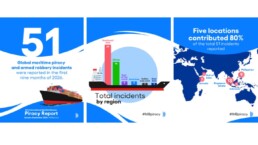
Maritime piracy incidents remain at historic lows despite Somali piracy concerns
The ICC International Maritime Bureau (IMB) has reported the lowest level (51) of piracy and armed robbery incidents since 1992 in the first nine…

Piraeus Port Authority main sponsor of Ferry Shipping Summit 2026
With the participation of more than 200 delegates from several European countries, the Ferry Shipping Summit 2026 took place on 8–9 October 2026 in…

EuroDry announces order for the construction of a third modern 82,000 DWT Kamsarmax Bulk Carrier
EuroDry , an owner and operator of drybulk vessels and provider of seaborne transportation for drybulk cargoes, announced that it has signed a…

India urges Russia, Ukraine to protect Black Sea shipping
India has urged both Russia and Ukraine to ensure safe passage for commercial shipping through the Black Sea as attacks on merchant vessels put…

PD Ports strengthens its commitment to the River Tees with multi-million pound Marine investment
PD Ports has officially opened a new multi-million-pound Marine facility on the banks of the River Tees, reinforcing its long-term commitment to the…

Maritime leaders head to Shanghai for the Annual Summit 2026
Shared seas, shifting horizons Maritime trade stands at a turning point. The rules-based order on which shipping has long depended is under…

Indian Register of Shipping grants type approval to Medha Energy’s 92 kWh LTO Lithium-Ion battery system
Indian Register of Shippinghas successfully completed the Type Approval process for the 92 kWh Lithium-Ion Battery System developed by M/s Medha…
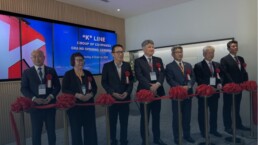
KLine opens a Singapore New Hub for Consolidated Ship Management and Maritime Talenτ
Three Companies, One Roof — Singapore's New Hub for Consolidated Ship Management and Maritime Talenτ A ceremony for around 280 guests sets the stage…
ASA explores measures to Safeguard Free and Safe Navigation at Critical International Maritime Chokepoints
The Asian Shipowners’ Association which accounts for 56% of the world’s fleet capacity and consists of China, Cook Islands, Hong Kong, Japan, Korea…
Subscribe to our newsletter!
if you dont want to swim alone in the ocean of news, sign up for the newsletter, and you will receive daily all the important news of world shipping!
