Better Crew training needed for CO2 Firefighting Systems
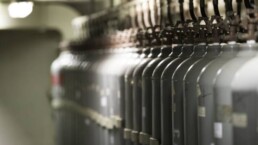

Global safety leader Survitec is advising the maritime industry to ensure fixed fire-fighting systems are commissioned by their original equipment manufacturers and that crews undergo basic system configuration training, following a spate of incidents where ship fires have been exacerbated through incorrect use or installation of CO2-based extinguishing systems.
While the International Maritime Organization’s FSS Code provides engineering and design standards for all types of fire extinguishing systems, there are no mandatory regulations governing their installation and commissioning, only recommendations. Standards on operation and maintenance have improved over the last years but in many cases, they are still seen as guidelines
Survitec said that although these guidelines should be followed, there have been several incidents in recent times where fixed fire extinguishing systems have failed.
“While it is difficult to put a number on all the fire related incidents where incorrect installation, operation or maintenance of a fixed firefighting system has resulted in system failure, injury or death, the subsequent accident investigations offer a difference perspective on the effectiveness of the current regulations and guidelines,” said Mats Hestmann, Survitec Group QHSE Manager.
“Fire safety systems are inherently designed to protect and save lives. However, if these systems are incorrectly used, installed or insufficiently inspected and maintained, the consequences can be severe,” said Hestmann.
MSC.1/CIRC 1318, the Guidelines for the Maintenance and Inspections of Fixed Carbon Dioxide Fire-Extinguishing systems was released in June 2009 and have been adopted by most Flag states, but some are still following their own set of standards.
Hestmann, believes that it would be beneficial for MSC.1/CIRC 1318 to become even more structured as is the case with MSC 1432, clearly defining what should be inspected. Once the majority of flag states have adopted an MSC circular, it then becomes a resolution making it mandatory.
He adds: “Great improvements to safety have come as a result of IACS Z-17 Service provider approvals. However, it’s not the failure of the firefighting system that is resulting in so many incidents, but rather the lack of system knowledge and poor operator training. There should be more effective rules governing system training; because a crew member is familiar with one firefighting system doesn’t mean they are appropriately trained to use another manufacturer’s system or even a different system configuration. While the product itself might be standard, the layout of the system, the location of valves, cylinders, and vents and so on will differ from ship to ship. Certainly, crews need to be better trained in the use, operation and maintenance of these systems.”
Erik Christensen, Technical Director Fire Fighting said: “We have seen a number of incident reports where human error in the use of firefighting systems is a common factor. Valves have been closed when they should have been open, ventilation flaps left open with main generators still running during the fire.
“Carbon Dioxide is a dangerous gas and any system that has been incorrectly installed, maintained or operated could not only fail to extinguish the fire but be very harmful to the crew.”
As the market leader and a champion of maritime safety initiatives, Survitec is fostering greater fire safety and systems awareness across the industry. It has already issued advice notices and is raising wider awareness of the need to ensure firefighting systems are correctly installed, regularly maintained, serviced and that crew operating the systems are trained and understand how to use the specific system.
“We want to ensure that operators and crews have a much better understanding of how fixed firefighting systems operate and the importance of regular, properly carried-out maintenance. With greater knowledge, they will be able to overcome many of the operational challenges they face and prevent system failure when it is required in an emergency.
“Crews can be better equipped to fight fires more effectively, more safely, but any initiative needs to work in harmony with the rules, some of which could do well to be revised,” said Hestmann.



Related News.
5th CSN Greece ICT Conference, Athens 19th November 2026 “Intelligent Skies, Secure Seas: The AI Impact on ICT” – Save the date
About the Conference The 5th CSN Greece Shipping ICT Conference, titled “Intelligent Skies, Secure Seas: The AI Impact on ICT”, will take place on…
Maritime piracy incidents remain at historic lows despite Somali piracy concerns
The ICC International Maritime Bureau (IMB) has reported the lowest level (51) of piracy and armed robbery incidents since 1992 in the first nine…
Piraeus Port Authority main sponsor of Ferry Shipping Summit 2026
With the participation of more than 200 delegates from several European countries, the Ferry Shipping Summit 2026 took place on 8–9 October 2026 in…

EuroDry announces order for the construction of a third modern 82,000 DWT Kamsarmax Bulk Carrier
EuroDry , an owner and operator of drybulk vessels and provider of seaborne transportation for drybulk cargoes, announced that it has signed a…
India urges Russia, Ukraine to protect Black Sea shipping
India has urged both Russia and Ukraine to ensure safe passage for commercial shipping through the Black Sea as attacks on merchant vessels put…
PD Ports strengthens its commitment to the River Tees with multi-million pound Marine investment
PD Ports has officially opened a new multi-million-pound Marine facility on the banks of the River Tees, reinforcing its long-term commitment to the…
Maritime leaders head to Shanghai for the Annual Summit 2026
Shared seas, shifting horizons Maritime trade stands at a turning point. The rules-based order on which shipping has long depended is under…
Indian Register of Shipping grants type approval to Medha Energy’s 92 kWh LTO Lithium-Ion battery system
Indian Register of Shippinghas successfully completed the Type Approval process for the 92 kWh Lithium-Ion Battery System developed by M/s Medha…
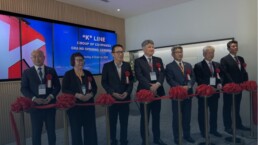
KLine opens a Singapore New Hub for Consolidated Ship Management and Maritime Talenτ
Three Companies, One Roof — Singapore's New Hub for Consolidated Ship Management and Maritime Talenτ A ceremony for around 280 guests sets the stage…
ASA explores measures to Safeguard Free and Safe Navigation at Critical International Maritime Chokepoints
The Asian Shipowners’ Association which accounts for 56% of the world’s fleet capacity and consists of China, Cook Islands, Hong Kong, Japan, Korea…
Subscribe to our newsletter!
if you dont want to swim alone in the ocean of news, sign up for the newsletter, and you will receive daily all the important news of world shipping!
