DNV GL: Fuel choice the essential decision as shipping charts a generational path to decarbonization
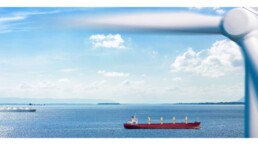

DNV GL – Maritime has released the fourth edition of its Maritime Forecast to 2050. The purpose of Maritime Forecast to 2050 is to enhance the ability of shipping stakeholders, especially shipowners, to navigate the technological, regulatory and market uncertainties in the industry, and set shipping on a pathway to decarbonization. It is based on a library of 30 scenarios which project future fleet composition, energy use, fuel mix, and CO2 emissions to 2050. Sixteen different fuel types and 10 fuel technology systems are modelled in the report.
“The grand challenge of our time is finding a pathway towards decarbonization,” said Knut Ørbeck-Nilssen, CEO of DNV GL – Maritime. “Reducing GHG emissions is rapidly becoming the defining decision-making factor for the future of the shipping industry. The pressure to act decisively is mounting. Perfect is the enemy of good, and so we mustn’t wait for an ideal solution to arrive and risk making no progress at all. Using a wide range of scenarios involving different fuel types and technologies, and varying degrees of regulatory pressure, our new report helps to map a way forward, offering shipowners clear insights on how to meet the challenges and opportunities ahead.”
The Maritime Forecast identifies the choice of fuel as the essential factor in decarbonizing shipping. The industry is at the beginning of a transition phase, with many potential options emerging alongside conventional fuels. This increasingly diverse fuel environment means that engine and fuel choice now represent potential risks that could lead to a stranded asset. Factoring in the impacts of availability, prices and policy, on different fuels, makes the choice even more complex.
To capture this complexity and help make this picture clearer the Maritime Forecast offers a wide range of scenarios, outlining the potential risks of a particular fuel choice. To make the ramifications concrete, alongside the pathways, the Maritime Forecast includes detailed analysis of a Panamax bulk carrier newbuilding. By stress testing technology decisions under the various pathways and scenarios, the Forecast presents potential performance and the carbon robustness of the various design choices.
The 30 scenarios result in widely different outcomes for the fuel mix in the fleet. In the scenarios with no decarbonization ambitions, very low sulphur fuel oil, marine gas oil and LNG dominate. While under the decarbonization pathways, in 2050 a variety of carbon-neutral fuels holds between 60% and 100% market share.
Under the decarbonization scenarios it is hard to identify clear winners among the many different fuel options. Fossil LNG gains a significant share until regulations tighten in 2030 or 2040. Bio-MGO, e-MGO, bio-LNG and e-LNG emerge as drop-in fuels for existing ships. By 2050, E-ammonia, blue ammonia and bio-methanol frequently end up with a strong share of the market and are the most promising carbon-neutral fuels in the long run.
A surprising result from the model is the relative limited uptake of hydrogen as a ship fuel, as a result of both the estimated price of the fuel and the investment costs for the engine and fuel systems. Hydrogen, however, plays an integral role as a building block in the production of several carbon-neutral fuels such as e-ammonia, blue ammonia and e-methanol, all of which gain significant uptake under the decarbonization pathways. It may also find niche applications in some vessel types, such as ferries and cruise vessels, as well as in specific regions where investments have been made into local production and distribution.
The Maritime Forecast to 2050 is part of a suite of Energy Transition Outlook (ETO) reports produced by DNV GL. The ETO has designed, expanded and refined a model of the world’s energy system encompassing demand and supply of energy globally, and the use and exchange of energy between and within ten world regions.



Related News.

5th CSN Greece ICT Conference, Athens 19th November 2026 “Intelligent Skies, Secure Seas: The AI Impact on ICT” – Save the date
About the Conference The 5th CSN Greece Shipping ICT Conference, titled “Intelligent Skies, Secure Seas: The AI Impact on ICT”, will take place on…
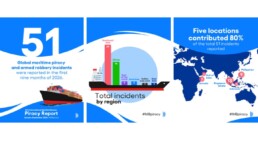
Maritime piracy incidents remain at historic lows despite Somali piracy concerns
The ICC International Maritime Bureau (IMB) has reported the lowest level (51) of piracy and armed robbery incidents since 1992 in the first nine…
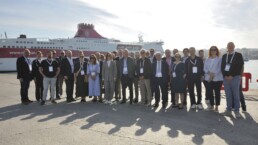
Piraeus Port Authority main sponsor of Ferry Shipping Summit 2026
With the participation of more than 200 delegates from several European countries, the Ferry Shipping Summit 2026 took place on 8–9 October 2026 in…

EuroDry announces order for the construction of a third modern 82,000 DWT Kamsarmax Bulk Carrier
EuroDry , an owner and operator of drybulk vessels and provider of seaborne transportation for drybulk cargoes, announced that it has signed a…

India urges Russia, Ukraine to protect Black Sea shipping
India has urged both Russia and Ukraine to ensure safe passage for commercial shipping through the Black Sea as attacks on merchant vessels put…
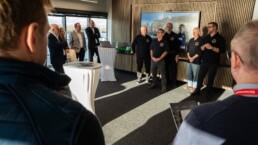
PD Ports strengthens its commitment to the River Tees with multi-million pound Marine investment
PD Ports has officially opened a new multi-million-pound Marine facility on the banks of the River Tees, reinforcing its long-term commitment to the…
Maritime leaders head to Shanghai for the Annual Summit 2026
Shared seas, shifting horizons Maritime trade stands at a turning point. The rules-based order on which shipping has long depended is under…
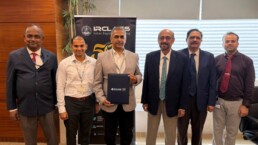
Indian Register of Shipping grants type approval to Medha Energy’s 92 kWh LTO Lithium-Ion battery system
Indian Register of Shippinghas successfully completed the Type Approval process for the 92 kWh Lithium-Ion Battery System developed by M/s Medha…

KLine opens a Singapore New Hub for Consolidated Ship Management and Maritime Talenτ
Three Companies, One Roof — Singapore's New Hub for Consolidated Ship Management and Maritime Talenτ A ceremony for around 280 guests sets the stage…
ASA explores measures to Safeguard Free and Safe Navigation at Critical International Maritime Chokepoints
The Asian Shipowners’ Association which accounts for 56% of the world’s fleet capacity and consists of China, Cook Islands, Hong Kong, Japan, Korea…
Subscribe to our newsletter!
if you dont want to swim alone in the ocean of news, sign up for the newsletter, and you will receive daily all the important news of world shipping!
