Why ammonia may be part of the future fuel mix
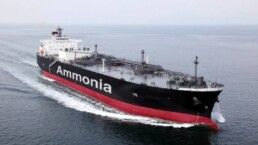

More points to ammonia as a promising zero-emission fuel. When based on wind or solar energy, it is a carbon-neutral option, with the infrastructure already in place, and ready to be mass-produced. After overcoming the challenges such us higher costs and the development of a new engine technology, it may become a part of the future fuel mix.
In connection with the UN Climate Action Summit, MAN Energy Solutions joined the Getting to Zero Coalition in September 2019 to help develop zero-emission vessels by 2030 with its industry partners.
We view the Getting to Zero Coalition’s aims as closely aligned with our own strategy of cooperating with external partners to expand our business with sustainable technologies and solutions, such that they become our main source of revenue by 2030.
As I said, at the time of our joining the coalition, we understand the need to work with a wide group of industry partners to achieve this strategy and the Getting to Zero Coalition is therefore a perfect match. In shipping, MAN Energy Solutions has publicly spoken out in favour of a ‘maritime energy transition’ for some time now, which draws on the increased use of low-emission fuels. For us, the path to decarbonising the maritime economy starts with fuel decarbonisation, which will be a natural step towards the development of zero emission vessels.
But what fuel?
January 1, 2020, marked a milestone for the maritime shipping industry. From that date, all vessels became bound by new IMO rules restricting the use of high-sulphur fuels. While compliance with this was relatively straightforward for shipowners, decarbonisation will prove a tougher nut to crack and requires swift action.
As such, ships launched in 2030 will still be at sea in 2050 when – according to an IMO strategy adopted in April 2018 – the sector must reduce its total annual greenhouse gas emissions by at least 50%.
Potential zero-carbon fuels include alternative fuels like synthetic methane, alcohol, green hydrogen, and ammonia. In this respect, there’s naturally a bit of uncertainty because everybody realises the need for change. But it is also clear that you do not have just one solution.
Ammonia is a promising candidate
As a potential zero-carbon fuel, ammonia is an interesting candidate. Indeed, the DNV-GL declared in 2019: “Ammonia is the most promising, carbon-neutral fuel option for newbuildings.”
Since large quantities of ammonia are already transported around the world, it is a well-established commodity with some 120 ports globally currently importing/exporting it, and some with storage facilities. Thus, using ammonia to power ships would be a natural step with infrastructure already in place.
The companies already producing and distributing ammonia around the world know ammonia technology and have an incentive to showcase it as it is a sustainable technology that could provide new business opportunities.
Sustainable production and competitivity
When discussing future fuels, one thing is clean sulphur-free fuels but the CO2 footprint of such fuels also needs to be looked at. In this context, so-called power-to-X solutions where fuels are produced from sustainable energy sources are worth investigating.
The ammonia you have in the market today is CO2-free but based more on fossil fuel. Manufacturing green ammonia implies that you take electricity created by windmills and react hydrogen with nitrogen to produce ammonia. What is interesting about this is that there is no carbon involved in the process, making it a completely carbon-free fuel.
There are certain barriers, however, for ammonia and green ammonia – as there are with green or synthetic methane. It is relatively expensive, compared to fossil-based fuels. When talking about merchant shipping and the two-stroke business, solutions need to be business-viable.
Even if the cost of moving goods by sea increases in the future due to the introduction of zero-carbon fuels, it will still be the most efficient method as nothing can compete with shipping in terms of transporting goods. What we need to do is to create global coalitions and get the IMO to support a CO2 tax, and then funnel the money into R&D development and into developing solutions for the supply chain and large-scale production of these fuel types.
Ultimately, you need to build a scalable production of ammonia, utilising offshore windmill-fields or solar-power plants to provide the clean electricity required. Hand in hand with this, the ammonia supply-chain will have to be scaled up so that sufficient bunkering capacity is in place to supply vessels. Another requirement is, of course, a suitable engine technology.
First ammonia engine by 2024
MAN Energy Solutions has a convincing track record in developing engines running on alternative fuels, having developed the world’s first oceangoing ships driven respectively by LNG, methanol, ethane, and LPG.
In a technical paper released in late 2019, we noted that the two-stroke ammonia concept is an add-on to our electronic ME-engine and similar to the previous engine concepts for liquid gas injection propane (ME-LGIP) and liquid gas injection methanol (ME-LGIM).
The development of the LGI engine has already addressed challenges similar to those posed by ammonia – namely corrosion, toxicity and low flammability – and there would be little difference between an ammonia engine and the ME-LGIP/LGIM engines. In light of this, we aim to deliver the first ammonia-fuelled, two-stroke engine in 2024.
Ammonia-engine development will take place at our Research Centre Copenhagen (RCC) facility. We already kickstarted the project in early 2020 with a HAZID (hazard identification) workshop. Subsequently, the first engine tests are scheduled to begin in 2021 where the ammonia supply and auxiliary systems will be specified, with an after-treatment (emissions) solution specified by 2022. NOx emissions reductions are expected to be achieved via a Selective Catalytic Reaction (SCR) system, which has already proven itself in the industry.
A full-scale engine test is scheduled for 2023, the success of which will enable the first delivery of an ammonia-fuelled engine to the market in 2024. We are also working diligently towards a dual-fuel, ammonia-retrofit solution for existing engines, which will be available from Q1 2025.
Source: Global Maritime Forum



Related News.
5th CSN Greece ICT Conference, Athens 19th November 2026 “Intelligent Skies, Secure Seas: The AI Impact on ICT” – Save the date
About the Conference The 5th CSN Greece Shipping ICT Conference, titled “Intelligent Skies, Secure Seas: The AI Impact on ICT”, will take place on…
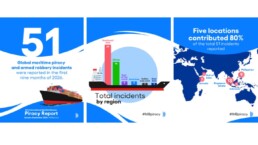
Maritime piracy incidents remain at historic lows despite Somali piracy concerns
The ICC International Maritime Bureau (IMB) has reported the lowest level (51) of piracy and armed robbery incidents since 1992 in the first nine…
Piraeus Port Authority main sponsor of Ferry Shipping Summit 2026
With the participation of more than 200 delegates from several European countries, the Ferry Shipping Summit 2026 took place on 8–9 October 2026 in…
EuroDry announces order for the construction of a third modern 82,000 DWT Kamsarmax Bulk Carrier
EuroDry , an owner and operator of drybulk vessels and provider of seaborne transportation for drybulk cargoes, announced that it has signed a…
India urges Russia, Ukraine to protect Black Sea shipping
India has urged both Russia and Ukraine to ensure safe passage for commercial shipping through the Black Sea as attacks on merchant vessels put…
PD Ports strengthens its commitment to the River Tees with multi-million pound Marine investment
PD Ports has officially opened a new multi-million-pound Marine facility on the banks of the River Tees, reinforcing its long-term commitment to the…
Maritime leaders head to Shanghai for the Annual Summit 2026
Shared seas, shifting horizons Maritime trade stands at a turning point. The rules-based order on which shipping has long depended is under…
Indian Register of Shipping grants type approval to Medha Energy’s 92 kWh LTO Lithium-Ion battery system
Indian Register of Shippinghas successfully completed the Type Approval process for the 92 kWh Lithium-Ion Battery System developed by M/s Medha…
KLine opens a Singapore New Hub for Consolidated Ship Management and Maritime Talenτ
Three Companies, One Roof — Singapore's New Hub for Consolidated Ship Management and Maritime Talenτ A ceremony for around 280 guests sets the stage…
ASA explores measures to Safeguard Free and Safe Navigation at Critical International Maritime Chokepoints
The Asian Shipowners’ Association which accounts for 56% of the world’s fleet capacity and consists of China, Cook Islands, Hong Kong, Japan, Korea…
Subscribe to our newsletter!
if you dont want to swim alone in the ocean of news, sign up for the newsletter, and you will receive daily all the important news of world shipping!
