Event of the Finance Ministers on Financing for Development in the Era of COVID-19 and Beyond
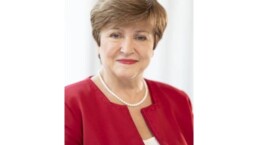

AS PREPARED FOR DELIVERY
I would like to start by thanking Minister Freeland in her new role as Finance Minister. And my thanks to Finance Minister Clarke of Jamaica, and to Deputy Secretary-General Amina Mohammed.
I will focus my remarks today on two issues.
One, the outlook for the world economy. And two, the implications of this outlook for what we must collectively do.
On the outlook, since we last met in the end of May, incoming data paints a picture that is less bleak. In other words, we are seeing some signs of recovery in the world economy.
The outlook for a number of advanced economies is somewhat less bad than we anticipated. China has turned the corner and is recovering a little faster than anticipated.
And all of this is on the grounds of three important factors. First, a very strong and synchronized policy response by finance ministries, and by central banks.
A massive policy response put a floor under the world economy. This included $11 trillion of fiscal measures. And central banks have done miracles to inject huge amounts of liquidity and support their national economies and – through spillovers – the economies of other countries. We have seen it has become easier for emerging market countries with good fundamentals to raise money.
The IMF has been part of this very strong response. Never in our history have we done so much so quickly, supporting over 80 countries through emergency financing and also through our regular lending programs. We have now extended support of $270 billion – out of the Fund’s $1 trillion capacity – and more than a third of this support has been provided in recent months.
The second reason the situation is better is that the world has learned to function while the pandemic is still around us. We wear masks, we socially distance and we follow protocols.
And that has allowed some rebounds. We are seeing that non-contact-dependent activities like manufacturing are doing somewhat better than expected.
Third, there are improved results in testing and treatment. And we are very hopeful to have a vaccine. So, this is on the more optimistic side.
But it is not good or positive news everywhere.
The majority of emerging markets and developing countries – excluding China – are not seeing a reversal of fortunes yet. In fact, some would see a downgrade in our projections.
And, as we know very well, small countries with tourism-dependent economies are on their knees. Countries with high debt levels are in terrible trouble, and the virus is now moving to places where health systems are weaker.
What does that mean for us? I will focus on three priorities.
One, make sure that we maintain support until we see the economy turn around.
We project a recovery that is only partial and uneven.
We are at a point when we can say that the world economy will lose $12 trillion this year and next year.
To continue support in advanced economies, is somewhat easier. With low interest rates, it is more affordable.
For developing economies and for emerging markets with weaker fundamentals, we must all work to boost the financing that is available to them. All of us.
For the Fund, it means that we are expanding the use of existing SDRs, encouraging a shift from advanced economies towards developing economies so they can rely on strong financing capacity at the IMF on concessional terms.
Two, we have to be mindful of debt levels that are high in many emerging and developing economies – high to a point of suffocating capacity to act.
We have had the Debt Service Suspension Initiative — a great achievement. It has to be extended and both the World Bank and the IMF are calling for a one-year extension. And we are calling for greater private sector participation.
And we have to recognize that – for some countries – this is not going to be enough, and some countries will need a restructuring to bring debt down to a sustainable level.
I call for debt transparency as a priority. If we know debt levels, then this issue is much easier to handle.
Last – but not least – we need to recognize that this crisis is telling us to build resilience for the future.
That means investing in education, digital capacity and human capital – the health systems and the social protection systems. We need to make sure the other crises in front of us – like the climate crisis – are well integrated and addressed. And we need to prevent inequality and poverty – including gender inequality – from raising their ugly heads again.
To do this, we have to take care of taxation in a way that transforms and builds resilience for the future.
Yes, it is going to be hard. Everybody on the political side knows how hard this will be. But after the global financial crisis, we built resilience in the banking sector by reforming it.
Now, we have to do it for the functioning of our economies as a whole.
Thank you very much.
Source: By Kristalina Georgieva, IMF Managing Director Washington, DC



Related News.

5th CSN Greece ICT Conference, Athens 19th November 2026 “Intelligent Skies, Secure Seas: The AI Impact on ICT” – Save the date
About the Conference The 5th CSN Greece Shipping ICT Conference, titled “Intelligent Skies, Secure Seas: The AI Impact on ICT”, will take place on…
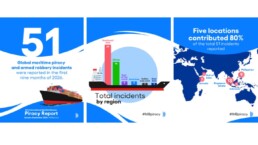
Maritime piracy incidents remain at historic lows despite Somali piracy concerns
The ICC International Maritime Bureau (IMB) has reported the lowest level (51) of piracy and armed robbery incidents since 1992 in the first nine…
Piraeus Port Authority main sponsor of Ferry Shipping Summit 2026
With the participation of more than 200 delegates from several European countries, the Ferry Shipping Summit 2026 took place on 8–9 October 2026 in…

EuroDry announces order for the construction of a third modern 82,000 DWT Kamsarmax Bulk Carrier
EuroDry , an owner and operator of drybulk vessels and provider of seaborne transportation for drybulk cargoes, announced that it has signed a…
India urges Russia, Ukraine to protect Black Sea shipping
India has urged both Russia and Ukraine to ensure safe passage for commercial shipping through the Black Sea as attacks on merchant vessels put…

PD Ports strengthens its commitment to the River Tees with multi-million pound Marine investment
PD Ports has officially opened a new multi-million-pound Marine facility on the banks of the River Tees, reinforcing its long-term commitment to the…
Maritime leaders head to Shanghai for the Annual Summit 2026
Shared seas, shifting horizons Maritime trade stands at a turning point. The rules-based order on which shipping has long depended is under…

Indian Register of Shipping grants type approval to Medha Energy’s 92 kWh LTO Lithium-Ion battery system
Indian Register of Shippinghas successfully completed the Type Approval process for the 92 kWh Lithium-Ion Battery System developed by M/s Medha…

KLine opens a Singapore New Hub for Consolidated Ship Management and Maritime Talenτ
Three Companies, One Roof — Singapore's New Hub for Consolidated Ship Management and Maritime Talenτ A ceremony for around 280 guests sets the stage…
ASA explores measures to Safeguard Free and Safe Navigation at Critical International Maritime Chokepoints
The Asian Shipowners’ Association which accounts for 56% of the world’s fleet capacity and consists of China, Cook Islands, Hong Kong, Japan, Korea…
Subscribe to our newsletter!
if you dont want to swim alone in the ocean of news, sign up for the newsletter, and you will receive daily all the important news of world shipping!
