Peru and Ecuador get set to tackle invasive aquatic species
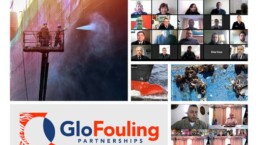

The IMO-led GloFouling Partnerships project is tackling the introduction of invasive aquatic organisms into new marine environments. Such invasions have the potential to not only affect biodiversity and ecosystem health, but may also have measurable impacts on several economic sectors.
The project is working with 12 Lead Partnering Countries across the globe. Ecuador and Peru were the last two to hold their first National workshops and national task force meetings, to kick start the work in those countries. The meetings, originally scheduled for earlier this year but postponed due to the COVID-19 pandemic, were successfully organized and held virtually.
The first meeting in Ecuador (8-9 July), led by DIRNEA (National Directorate of Aquatic Spaces), highlighted the Galapagos Islands – a biodiversity reserve for marine species, which is now at risk from potential invasive aquatic species. Since 2019 scientists have identified more than 53 non-native species in the Galapagos marine environment and this number is expected to grow. (Read more here.)
Peru held its national task force meeting on 14 July, led by DICAPI (General Directorate of Captaincy and Coast Guard) and the IMARPE (Institute of the Sea of Peru). For Peru, a key concern is to preserve the biodiversity of its extensive coastline, including guano islands and peninsulas, the national marine reserves of Paracas and San Fernando, and the Illescas Reserved Zone. (Read more here.)
During both meetings, the representatives of national navy, port and environmental authorities discussed the challenges and opportunities related to the development of the national strategies and action plans to implement the IMO Biofouling Guidelines. They agreed on the next steps.
GloFouling Partnerships is a joint initiative of the Global Environment Facility (GEF), United Nations Development Programme (UNDP) and IMO to assist developing countries to reduce the transfer of harmful organisms through biofouling. Biofouling is the accumulation of microorganisms, plants, algae, or small animals on ship hulls or other marine mobile structures. It is one of the main vectors for unintentional transfer of invasive aquatic species.



Related News.

Navigating the Multi-Orbit Era: In Conversation with Intellian’s Jon Harrison at SMM 2026
At SMM 2026 in Hamburg, the rapid evolution of maritime satellite communications took centre stage. Across the exhibition halls, discussions among…

Cyprus ports need joint energy and investment strategy, shipping agents chief says
Cyprus needs a coordinated strategy for shipping, energy and environmental protection to support port investment and modernisation, Cyprus shipping…

MASO Public Affairs introduces MASO Regulatory Intelligence
A new subscription service helping businesses understand what is changing and what it means for them MASO Public Affairs introduces MASO Regulatory…

Anglo-Eastern helps turn CMBTECH’s ammonia ambition into an operational reality
From early feasibility study and risk-based design to newbuilding supervision, crew readiness and technical management, Anglo-Eastern drew on its…

Escalation of attacks threatens to derail recovery in Middle East oil exports
World oil demand is forecast to fall by 2.5 mb/d y-o-y in 4Q26 and 2.6 mb/d on average in 2026. As the Iran war manifests itself through restricted…

New study finds shipping pays twice its share to EU ETS earmarked revenues should triple to help build market for sustainable fuels and technologies
Shipping is responsible for around 10% of EU ETS emissions but pays almost 20% of the ETS bill. Unlike other sectors, it has never received free…

MSARC strengthens maritime mass rescue readiness through training and national live exercise off Dakar, Senegal
Joint MSARC–FHAS programme combines three days of SAR training with a national multi-agency live exercise The Maritime Search and Rescue Council ,…

Sogese report deliveries are still being delayed as container freight rates fluctuate
FOR IMPORTERS Spot rates into the Mediterranean are back at January levels, Far East to Europe reliability sits at pandemic lows, and nearly…

Glencore begins trading on Australian Securities Exchange
Glencore has begun trading on the Australian Securities Exchange under the ASX code GLC. Gary Nagle, Glencore’s CEO, said it was an exciting day for…

BIMCO Shipping Number of the Week
Suez Canal container ship transits exceed 50% of pre-disruption levels "During the first two weeks of October, weekly container ship capacity…
Subscribe to our newsletter!
if you dont want to swim alone in the ocean of news, sign up for the newsletter, and you will receive daily all the important news of world shipping!
