Time to get ready: EU Conflict Minerals Regulation coming into force in 2021
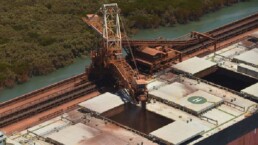

The growing pressure and urgency across all fields of society to respond to environmental, social and governance (ESG) issues has led to some rethinking within the marine insurance industry. In this context, IUMI will play a role by facilitating a dialogue and raising awareness among our membership on ESG topics with a direct impact on marine insurers. One such issue is the new regulatory requirements related to conflict minerals.
Increasingly, due diligence requirements in the supply chain are aimed at providing greater transparency throughout the entire process. EU Regulation 201/821 puts in place a framework for EU based importers of certain metals and minerals originating from conflict-affected and high-risk areas (CAHRAs). Its objective is to ensure that trade into the EU does not fund conflicts or in any way enable human rights abuses. The key requirements will come into force on 1 January 2021.
Importers, traders, smelters and refiners of the following materials have to carry out obligatory due diligence checks on their suppliers and origin of the products:
- Concentrates and ores containing 3TG (tin, tantalum, tungsten and gold).
- Metals containing or consisting of 3TG.
Importers must declare minerals and/or metals for release and circulation in the EU. This includes companies which are not legally established within the EU. Downstream users who do not directly import do not fall under the due diligence obligation. On the contrary, smelters and refiners who exercise any form of extraction or metallurgy processing aiming at producing a metal from a mineral are required to comply with the due diligence obligations. These obligations can be summarised as follows:
- Adopt a supply chain policy for 3TG and communicate this to suppliers and the public. This includes risk assessment, a strategy to respond to identified risks, and third-party independent audits in the supply chain.
- Implement due diligence standards as per OECD guidance.
- Senior management to establish strong company management systems to control and hold records of the process, and to report about the process.
- Incorporate appropriate contractual provisions in the supply chain.
- Provide information and disclosure to relevant authorities.
- Establish a complaint procedure for stakeholders, including access to an external expert.
Similar provisions are part of the U.S. Dodd-Frank Act (section 1502) which came into force in 2010 and specifically aims at the Democratic Republic of Congo and neighbouring countries.
With the EU regulation coming into force soon it is recommended that marine insurers check with concerned insureds if due diligence procedures will be in place.
By Eric de Smet, Manager, Marine & Transport, Baloise Insurance and member of IUMI’s Policy Forum



Related News.

Navigating the Multi-Orbit Era: In Conversation with Intellian’s Jon Harrison at SMM 2026
At SMM 2026 in Hamburg, the rapid evolution of maritime satellite communications took centre stage. Across the exhibition halls, discussions among…

Cyprus ports need joint energy and investment strategy, shipping agents chief says
Cyprus needs a coordinated strategy for shipping, energy and environmental protection to support port investment and modernisation, Cyprus shipping…

MASO Public Affairs introduces MASO Regulatory Intelligence
A new subscription service helping businesses understand what is changing and what it means for them MASO Public Affairs introduces MASO Regulatory…

Anglo-Eastern helps turn CMBTECH’s ammonia ambition into an operational reality
From early feasibility study and risk-based design to newbuilding supervision, crew readiness and technical management, Anglo-Eastern drew on its…

Escalation of attacks threatens to derail recovery in Middle East oil exports
World oil demand is forecast to fall by 2.5 mb/d y-o-y in 4Q26 and 2.6 mb/d on average in 2026. As the Iran war manifests itself through restricted…

New study finds shipping pays twice its share to EU ETS earmarked revenues should triple to help build market for sustainable fuels and technologies
Shipping is responsible for around 10% of EU ETS emissions but pays almost 20% of the ETS bill. Unlike other sectors, it has never received free…

MSARC strengthens maritime mass rescue readiness through training and national live exercise off Dakar, Senegal
Joint MSARC–FHAS programme combines three days of SAR training with a national multi-agency live exercise The Maritime Search and Rescue Council ,…

Sogese report deliveries are still being delayed as container freight rates fluctuate
FOR IMPORTERS Spot rates into the Mediterranean are back at January levels, Far East to Europe reliability sits at pandemic lows, and nearly…

Glencore begins trading on Australian Securities Exchange
Glencore has begun trading on the Australian Securities Exchange under the ASX code GLC. Gary Nagle, Glencore’s CEO, said it was an exciting day for…

BIMCO Shipping Number of the Week
Suez Canal container ship transits exceed 50% of pre-disruption levels "During the first two weeks of October, weekly container ship capacity…
Subscribe to our newsletter!
if you dont want to swim alone in the ocean of news, sign up for the newsletter, and you will receive daily all the important news of world shipping!
