Hill Dickinson – Coronavirus and force majeure
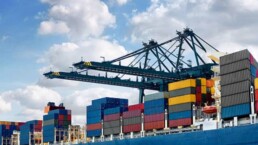

On Thursday 30 January, the China Council for the Promotion of International Trade released a statement confirming that China was offering force majeure certificates to local companies unable to fulfil their international contractual obligations due to the coronavirus outbreak. The relevant directives and certificates do not, for the time being, apply to Hong Kong law contracts where the counterparty is a non-Chinese entity.
The widening quarantine restrictions in China, together with airlines suspending and reducing flights to and from China and the closure of ports in Hubei province, indicate disruption to import and export of crude, iron ore, soybean and steel, to name but a few. Given the importance of China, in addition to the human cost of novel coronavirus, the financial impact and disruption to global trade look set to continue.
Where parties are trading with Chinese entities, it appears that the Chinese state is endeavouring to facilitate the exercise of force majeure clauses in international sale contracts for local companies. The validity of claiming force majeure will be subject to the scope of the specific contractual provisions and evidence that alternative means of contractual performance were not available. We highlight the main issues that arise below.
In English law, force majeure is a contractual term that cannot be implied. It arises solely on the basis of provisions which are included in a contract and, as such, there is no standard clause and force majeure provisions vary from contract to contract. The effect is usually to relieve a party from performance of their obligations when one of a defined number of events occur.
Whether the delay and disruption resulting from the novel coronavirus is a force majeure event will depend on the particular wording of a contract and not the parties’ intentions. In circumstances where there is no specific reference to disease, epidemic or quarantine, the same may be caught by ‘Acts of God’, ‘Acts of Government’ or by general wording such as ‘other circumstance beyond the parties’ control’.
If a force majeure event can be identified, then it must be the only effective cause of default. In Classic Maritime Inc –v- Limbungan Makmur SDN BHD [2019] EWCA Civ 1102, the charterers argued that they should be relieved of their obligations to provide cargoes for shipment following a dam collapse. The Court of Appeal held that the clause was not a true force majeure clause but was instead an exception clause and, further, that the charterers would not have been able to perform in any event. As such, a party may not be excused performance of its obligations under the contract despite the occurrence of an unexpected and extraordinary event, when it would not have been able to perform its obligations even in the absence of such an event.
The effect of a force majeure clause may vary from contract to contract. Some operate to suspend obligations during the period of the applicable event (for example the GAFTA ‘prevention of shipment clause’), some give rise to a right to terminate and some may relieve the non-performing party of liability. Almost all clauses require that notice be given of the force majeure event.
A force majeure clause usually requires the defaulting party to show that it used its reasonable endeavours to prevent, or at least mitigate, the effects of the force majeure. In Channel Island Ferries Ltd –v- Sealink UK Ltd [1988] 1 Lloyd’s Rep 323, the Court of Appeal held that any clause which included language referring to events ‘beyond the control of the relevant party’ could only be relied upon if all reasonable steps had been taken by aid party to mitigate its results.
If force majeure does not apply, then the doctrine of frustration may provide relief in circumstances where the issue goes to the root of the contract and renders it impossible to perform or the performance is essentially different to the contract envisaged. Whether frustration may apply is both fact and contract sensitive.
As disruption in China, a key market for import and export, is set to continue, traders and shippers alike should:
(a) review applicable force majeure provisions to ascertain whether the provision is appropriate together with any notice requirements in the clause;
(b) obtain information and evidence regarding the issue and assess whether the particular delay or disruption results from the force majeure event, or whether it is a consequence of force majeure being declared elsewhere;
(c) consider whether the spread of novel coronavirus may impact other facilities in the supply chain, and make contingency plans (or trigger existing ones);
(d) when in receipt of a force majeure notice, consider whether it applies at all, and whether back to back force majeure notices need to be given;
(e) consider and take appropriate mitigation steps; and
(f) take advice.
Source: Hill Dickinson, By Damien Laracy – Head of HK, Beth Bradley – Partner and John Agapitos – Paralegal



Related News.

Navigating the Multi-Orbit Era: In Conversation with Intellian’s Jon Harrison at SMM 2026
At SMM 2026 in Hamburg, the rapid evolution of maritime satellite communications took centre stage. Across the exhibition halls, discussions among…
Cyprus ports need joint energy and investment strategy, shipping agents chief says
Cyprus needs a coordinated strategy for shipping, energy and environmental protection to support port investment and modernisation, Cyprus shipping…

MASO Public Affairs introduces MASO Regulatory Intelligence
A new subscription service helping businesses understand what is changing and what it means for them MASO Public Affairs introduces MASO Regulatory…
Anglo-Eastern helps turn CMBTECH’s ammonia ambition into an operational reality
From early feasibility study and risk-based design to newbuilding supervision, crew readiness and technical management, Anglo-Eastern drew on its…

Escalation of attacks threatens to derail recovery in Middle East oil exports
World oil demand is forecast to fall by 2.5 mb/d y-o-y in 4Q26 and 2.6 mb/d on average in 2026. As the Iran war manifests itself through restricted…
New study finds shipping pays twice its share to EU ETS earmarked revenues should triple to help build market for sustainable fuels and technologies
Shipping is responsible for around 10% of EU ETS emissions but pays almost 20% of the ETS bill. Unlike other sectors, it has never received free…

MSARC strengthens maritime mass rescue readiness through training and national live exercise off Dakar, Senegal
Joint MSARC–FHAS programme combines three days of SAR training with a national multi-agency live exercise The Maritime Search and Rescue Council ,…
Sogese report deliveries are still being delayed as container freight rates fluctuate
FOR IMPORTERS Spot rates into the Mediterranean are back at January levels, Far East to Europe reliability sits at pandemic lows, and nearly…
Glencore begins trading on Australian Securities Exchange
Glencore has begun trading on the Australian Securities Exchange under the ASX code GLC. Gary Nagle, Glencore’s CEO, said it was an exciting day for…
BIMCO Shipping Number of the Week
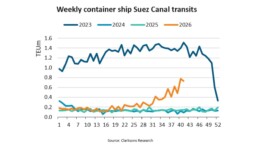
Suez Canal container ship transits exceed 50% of pre-disruption levels "During the first two weeks of October, weekly container ship capacity…
Subscribe to our newsletter!
if you dont want to swim alone in the ocean of news, sign up for the newsletter, and you will receive daily all the important news of world shipping!
