NGO Platform publishes list of ships dismantled worldwide in 2019

Most shipping companies continue to opt for the highest price at the worst scrapping yards
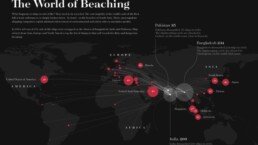
According to new data released today by the NGO Shipbreaking Platform, 674 ocean-going commercial ships and offshore units were sold to the scrap yards in 2019. Of these vessels, 469 large tankers, bulkers, floating platforms, cargo- and passenger ships were broken down on only three beaches in Bangladesh, India and Pakistan, amounting to near 90% of the gross tonnage dismantled globally.
“Bangladesh remains the favoured dumping ground for end-of-life ships laden with toxics. There is wide-spread knowledge of the irreparable damage caused by dirty and dangerous practices on tidal mudflats, yet profit is the only decisive factor for most ship owners when selling their vessels for breaking.” Ingvild Jenssen – Executive Director and Founder – NGO Shipbreaking Platform
Last year, at least 26 workers lost their lives when breaking apart the global fleet. The Platform documented accidents that killed 24 workers on the beach of Chattogram (formerly known as Chittagong), making 2019 the worst year for Bangladeshi yards in terms of fatalities since 2010. At least another 34 workers were severely injured. Whilst the total death toll in Indian yards is unknown, local sources and media confirmed at least two deaths at shipbreaking yards that claim to be operating safely, but have failed to be included in the EU list of approved ship recycling facilities.
DUMPERS 2019 – Worst practices
UNITED ARAB EMIRATES and GREECE top the list of country dumpers in 2019. UAE owners were responsible for the highest absolute number of ships sold to South Asian shipbreaking yards in 2019: 45 ships in total. Greek owners closely followed with 40 beached vessels.
The ‘worst corporate dumper’ prize goes to the Taiwanese container shipping line Evergreen. In the last years, the company has been under the spotlight for its damaging shipbreaking practices. In January 2018, the Norwegian Central Bank announced its decision to divest from Evergreen due to the ship owner’s repeated sale of vessels for dirty and dangerous breaking on the beach of Chattogram. Since then, the company has clearly not changed its policy. Eleven of Evergreen’s vessels ended up in South Asia in 2019. On 23 July, cutter man Shahidul lost his life while working at Kabir Steel’s Khawja shipbreaking yard in Bangladesh. Shahidul was dismantling Evergreen’s EVER UNION when he fell from a great height. He died on the spot.
Dry bulk shipping company Berge Bulk is runner-up for worst corporate practice. Four ships owned by the Bermuda-based ship owner ended up in Bangladesh for dirty and dangerous breaking. Berge Bulk’s scrapping practices should prompt the Lloyd’s List Asia Awards to withdraw the prize for “Excellence in Environmental Management” the company recently received for its commitment to environmental conservation. Indeed, there is nothing laudable about putting workers lives at serious risk and polluting sensitive coastal environments.
Danish container shipping giant Maersk scrapped four vessels on the Indian beaches last year. The company did not hesitate to leave the Danish shipping registry in order to circumvent the new EU laws requiring the use of EU-approved recycling facilities, and at least two of the ships even left EU waters in breach of an international and European ban on the export of hazardous waste to developing countries. In November, Bangladesh Courts condemned the illegal breaking of Maersk’s FPSO North Sea Producer which had been sold to cash buyer GMS and fraudulently exported from the UK in 2016. Criminal investigations are underway in the UK.
Other well-known shipping companies that in 2019 dumped their toxic ships on South Asian beaches include: Costamare, CMA CGM, Diamond Offshore, ENSCO, MOL, MSC, NYK Line, Tidewater and Vale.
In India, many yards now boast having upgraded their beaching facilities to comply with the requirements set by the International Maritime Organisation’s Hong Kong Convention. Recent inspection visits by the European Commission in Alang and media reports, however, flag serious concerns related to pollution of the intertidal area; absence of medical facilities; breaches of labour rights and lack of capacity to safely manage a number of hazardous waste streams, including mercury and radioactive contaminated materials that are typically found on offshore oil & gas units. No facility located in South Asia meets the safety and environmental requirements for EU approval.
All ships sold to Chattogram, Alang and Gadani pass via the hands of scrap-dealers, better known as cash buyers. These pay the highest price for end-of-life vessels and are inherently linked to the beaching yards. Cash buyers typically re-name, re-register and re-flag the vessels on their last voyage. Black-listed flags, such as Palau, Comoros and St Kitts & Nevis, were particularly popular in 2019: almost half of the ships sold to South Asia changed flag to one of these registries just weeks before hitting the beach. None were beached under an EU flag, despite many vessels having been sold by a European shipping company.
“Policy makers need to adopt effective measures to divert ships towards the sites that have been approved by the EU. The fact that old ships are registered under flags known for the poor implementation of international maritime law sheds serious doubt over the effectiveness of legislation based on flag state jurisdiction only, including the EU Ship Recycling Regulation.” Ingvild Jenssen – Executive Director and Founder – NGO Shipbreaking Platform
Today banks, pension funds and other financial institutions are actively taking a closer look at how they might contribute to a shift towards better ship recycling practices off the beach, taking into account social and environmental criteria, not just financial returns, when selecting asset values or clients [2]. Police and environmental authorities are also increasingly monitoring the movements of end-of-life vessels. Following the Seatrade judgement in the Netherlands where, for the first time, a ship owner was held criminally liable for having intended to sell four end-of-life ships to Indian beaching yards, several other cases of illegal traffic are under investigation. [3] Aiding and abiding environmental crime is equally punishable: insurers, brokers and maritime warranty surveyors could therefore also be held liable. By unravelling the murky practices of shipbreaking, these cases highlight the importance of conducting due diligence when choosing business partners.
“Clean and safe solutions are already available. We applaud companies, such as Dutch Van Oord, that have had a responsible ship recycling policy ‘off the beach’ for many years. Whilst other ship owners lament over the lack of capacity to recycle sustainably, only 31 vessels were recorded recycled in EU-approved facilities, which represent a minor fraction of what these yards are able to handle.” Nicola Mulinaris – Communication and Policy Officer – NGO Shipbreaking Platform
Related News.
October 16, 2026
Navigating the Multi-Orbit Era: In Conversation with Intellian’s Jon Harrison at SMM 2026
At SMM 2026 in Hamburg, the rapid evolution of maritime satellite communications took centre stage. Across the exhibition halls, discussions among…

October 16, 2026
Cyprus ports need joint energy and investment strategy, shipping agents chief says
Cyprus needs a coordinated strategy for shipping, energy and environmental protection to support port investment and modernisation, Cyprus shipping…

October 16, 2026
MASO Public Affairs introduces MASO Regulatory Intelligence
A new subscription service helping businesses understand what is changing and what it means for them MASO Public Affairs introduces MASO Regulatory…

October 16, 2026
Anglo-Eastern helps turn CMBTECH’s ammonia ambition into an operational reality
From early feasibility study and risk-based design to newbuilding supervision, crew readiness and technical management, Anglo-Eastern drew on its…

October 16, 2026
Escalation of attacks threatens to derail recovery in Middle East oil exports
World oil demand is forecast to fall by 2.5 mb/d y-o-y in 4Q26 and 2.6 mb/d on average in 2026. As the Iran war manifests itself through restricted…

October 16, 2026
New study finds shipping pays twice its share to EU ETS earmarked revenues should triple to help build market for sustainable fuels and technologies
Shipping is responsible for around 10% of EU ETS emissions but pays almost 20% of the ETS bill. Unlike other sectors, it has never received free…

October 16, 2026
MSARC strengthens maritime mass rescue readiness through training and national live exercise off Dakar, Senegal
Joint MSARC–FHAS programme combines three days of SAR training with a national multi-agency live exercise The Maritime Search and Rescue Council ,…

October 16, 2026
Sogese report deliveries are still being delayed as container freight rates fluctuate
FOR IMPORTERS Spot rates into the Mediterranean are back at January levels, Far East to Europe reliability sits at pandemic lows, and nearly…

October 16, 2026
Glencore begins trading on Australian Securities Exchange
Glencore has begun trading on the Australian Securities Exchange under the ASX code GLC. Gary Nagle, Glencore’s CEO, said it was an exciting day for…

October 16, 2026
BIMCO Shipping Number of the Week
Suez Canal container ship transits exceed 50% of pre-disruption levels "During the first two weeks of October, weekly container ship capacity…
Subscribe to our newsletter!
if you dont want to swim alone in the ocean of news, sign up for the newsletter, and you will receive daily all the important news of world shipping!
Design & Development by P.KAN.DESIGNER
© 2026 Cyprus Shipping News. All rights reserved
Design & Development by P.KAN.DESIGNER
© 2026 Cyprus Shipping News. All rights reserved



