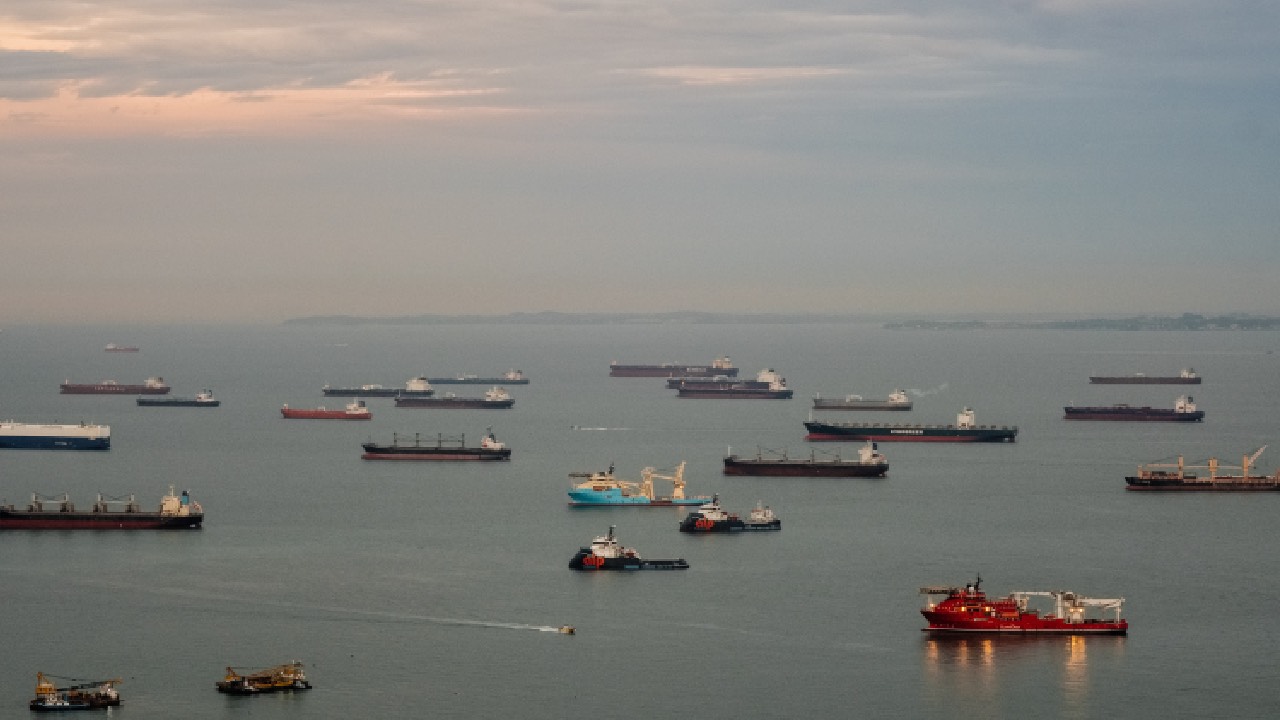

KOBC warns port bottlenecks and vessel backlogs persist even after transit resumes
On April 2, the Korea Ocean Business Corporation (KOBC) stated in a special report titled ‘The Time Lag Between the Resumption of Transit in Hormuz and Market Normalization,’ “the physical resumption of transit through the Strait of Hormuz does not immediately mean a smooth market recovery.”
According to the report, the laden ratio of Very Large Crude Carriers (VLCCs) within the Persian Gulf has surged from 49% before the war to 95%, indicating a severe internal accumulation. The ballast ratio of VLCCs in the Gulf of Oman, east of Hormuz, has also jumped from a pre-war average of 68% to 86%. This means that vessels waiting due to blocked entry and those that have moved preemptively in anticipation of the strait’s reopening are concentrated inside the strait and at its eastern entrance.
The report assessed that if the closure period of the Strait of Hormuz is less than 40 days, the normalization of the shipping market would proceed relatively smoothly. This judgment is based on the consideration that the standard round-trip duration for a VLCC on the Persian Gulf-Northeast Asia route is 38 to 45 days. If the closure does not exceed 40 days, the demand for cargo reloading would not be significant, leading to only a one-time bottleneck upon the lifting of the blockade.
However, the situation changes if the closure period exceeds 40 days. A problem arises when the vessels that depart en masse (the ‘first wave’) immediately after the strait reopens return to the Persian Gulf after unloading at their destinations. Competition to pass through the strait and load cargo before rivals will lead to collective transit, causing a ‘second wave’ of congestion at Northeast Asian ports and resulting in recurring bottlenecks.
It was also pointed out that the movements in the insurance market could be a factor delaying normalization. Currently, the Strait of Hormuz is designated as a high-risk area, and war risk insurance premiums have soared. While some risk-taking shipowners might lead an initial ‘departure rush’ to secure high freight rates immediately after a war, it was analyzed that conservative shipowners or vessels with constraints under financial contracts will likely maintain a wait-and-see approach until insurance normalization is confirmed, forming a ‘dual-rate market’.
The report divided the shipping market normalization process into three stages. The first 1-8 weeks are the ‘departure rush’ stage, driven by concentrated sailings; the next 2-6 months are the ‘wave absorption’ stage, where recurring bottlenecks ease; and the period from 6 to 24 months or more is the ‘structural normalization’ stage, involving the lifting of the high-risk area designation and fleet redeployment. In particular, it was projected that complete normalization is not possible through diplomatic declarations alone; substantial recovery, such as a decrease in insurance premiums, will only be possible after a sufficient amount of incident-free transit data has been accumulated.
The report emphasized, “The key short-term risk for energy-importing countries is not supply availability but terminal handling capacity,” and “A contingency plan is needed for congestion exceeding normal levels for 4-8 weeks.” It added, “Rather than the timing of the end of the war or the resumption of transit itself, the subsequent second-wave bottleneck and the delayed normalization period must be managed as a separate risk phase.”
Source: BusinessKorea


Related News.
Register Now for the 2nd Northern European Crewing Conference in Hamburg – 22 September 2026
“Crewing 5.0: Bridging the Gap Between Digital Efficiency and Human Reliability” REGISTER HERE Date: 22 September 2026 Time: 09:00-15:00 Venue: Hotel…

Island Oil Group Highlights People, Governance and Sustainability Progress in 2025 ESG Report
Island Oil Group has released its 2025 ESG Report, presenting the Group’s latest progress across environmental, social and governance priorities and…

Clean Shipping Alliance and Marine Fuels Alliance sign MoU to advance emissions compliance and fleet decarbonisation
The Clean Shipping Alliance and the Marine Fuels Alliance have signed a Memorandum of Understanding to support the shipping industry and bunker…

A.P. Moller Holding finalises acquisition of Ocean Yield
The major acquisition of Ocean Yield by A.P. Moller Holding has been successfully concluded. Following the initial agreement announced on 2 July…

Danish Shipping warmly welcomes EU proposal to include Indian ship recycling facilities on EU list
The European Commission has proposed adding two Indian ship recycling facilities in Alang to the European List of approved ship recycling…
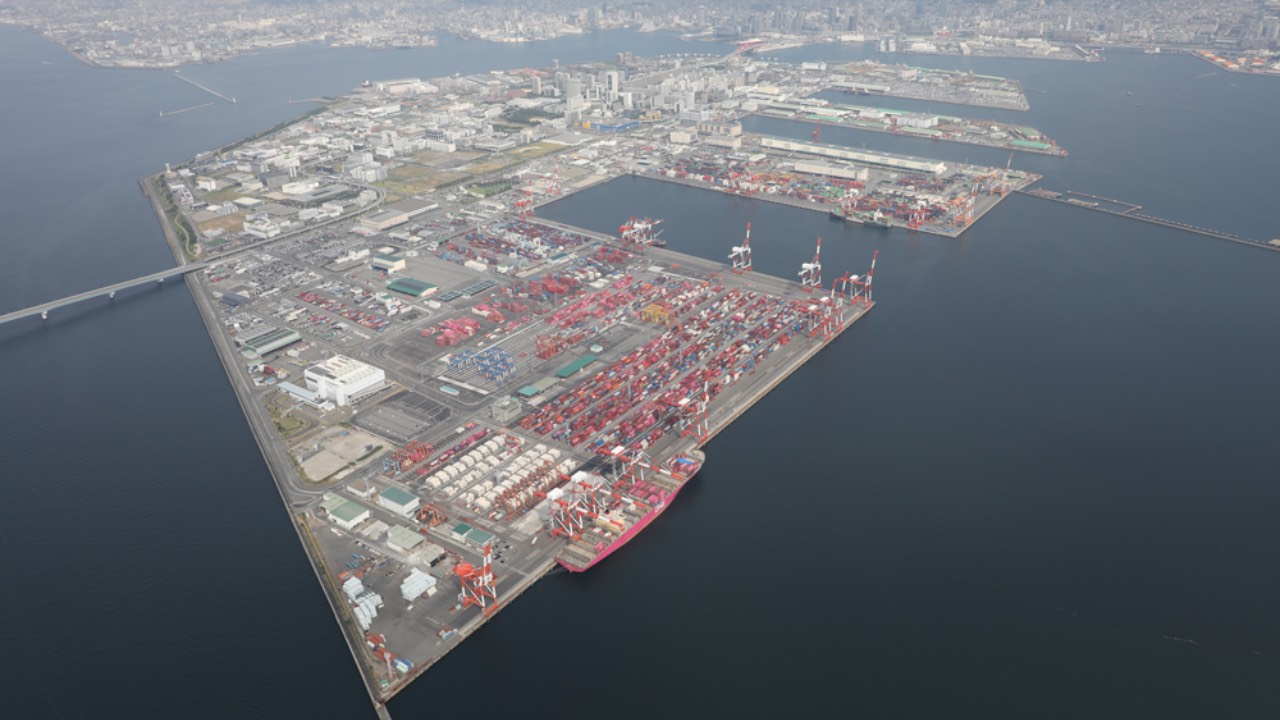
“K” LINE announces Commencement of Operations at Port of Kobe Container Terminals PC14-17
Kawasaki Kisen Kaisha, announces it will commence operations at container terminals PC14-17 on the southern pier of the Port Island) area of the…

Intermodal Report Week 33 2026
Pls find below the Intermodal Report - Week 33 2026 Intermodal Report Week 33 2026
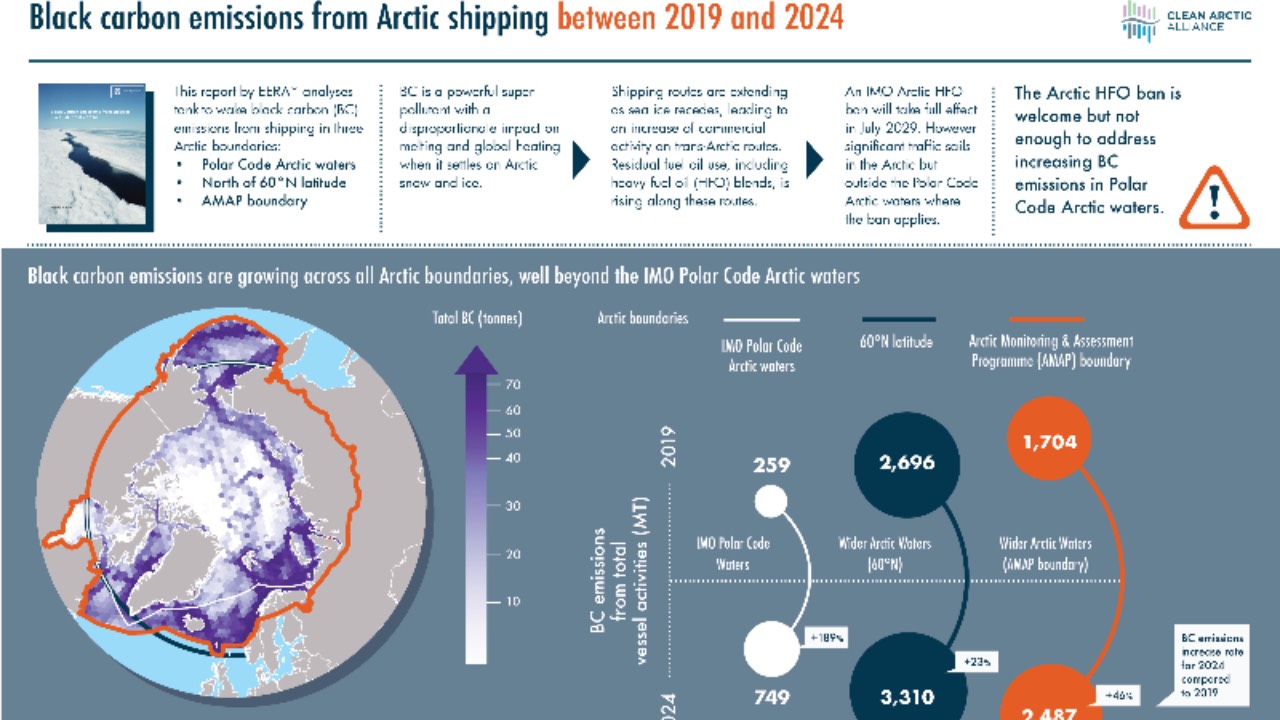
Clean Arctic Alliance reacts to ships sailing from Asia to Europe via Arctic Route
Responding to reports that the Liberian-flagged container vessel Dubai Tower has departed the Chinese port city of Ningbo in an attempt to cross the…

Mental Health Support Solutions expands support for Filipino seafarers with digital communication hygiene programme for families
As shipping has become more connected than ever before, Mental Health Support Solutions , member of OneCare Group, is helping Filipino seafarers and…

NorthStandard joins the SSI as a member with a focus on the SSI’s Human Risk and Resilience platform
The Sustainable Shipping Initiative announced that NorthStandard, one of the world's leading marine insurers and a leading member of the…
Subscribe to our newsletter!
if you dont want to swim alone in the ocean of news, sign up for the newsletter, and you will receive daily all the important news of world shipping!
