Clean Arctic Alliance reacts to ships sailing from Asia to Europe via Arctic Route

Responding to reports that the Liberian-flagged container vessel Dubai Tower has departed the Chinese port city of Ningbo in an attempt to cross the Northern Sea Route through the Arctic, and news that South Korea’s PanStar has purchased a ship for an imminent Arctic crossing, Dr Sian Prior, Lead Advisor to the Clean Arctic Alliance said:
“The Clean Arctic Alliance is seriously concerned about the interest in the Northern Sea Route as a regular trade route and the consequences for the Arctic, Indigenous communities and wildlife. Increased commercial shipping activity will lead to increased climate impacts, increased pollution and increased loss of biodiversity.”
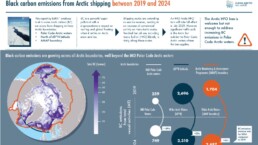
“Emissions of black carbon – a potent short-lived climate forcer which results from burning fossil maritime fuels – will result in further climate heating and speed up the melting and loss of both sea ice and land-ice when it settles out of the atmosphere.”
“When black carbon falls on sea ice, it hastens the melting of the sea ice which is a crucial part of the natural climate cycle. Arctic sea ice acts as the planet’s refrigerator, controlling the planet’s temperature. Arctic sea ice extent is currently at the eight lowest on record, with still a month to go before the Autumn equinox.“
“Using LNG to power shipping is not a suitable alternative fuel due to emissions of methane associated with its whole life-cycle. Methane is also a very potent short-lived climate forcer which is driving global heating. Other sources of ship pollution such as oil and wastewater discharges and increased underwater noise will undermine overall Arctic ocean health and also impact Arctic Indigenous communities who depend on Arctic resources for food.”
“It is imperative that any shipping seeking to use the Arctic as a route from Asia to Europe or vice versa, strictly follows the international regulations and guidance agreed by the International Maritime Organization, including calls for ships to use cleaner distillate fuels or alternative fuels with lower black carbon emissions while in the Arctic, and to measure and report their black carbon emissions.”
According to media reports, the Dubai Tower, operated by Chinese company Sea Legend is expected in the port of Felixstowe in the United Kingdom on September 7, followed by stops in Hamburg, Germany and Gdynia, Poland.
How the IMO can address pollution in the Arctic:
“Recent IMO regulations to reduce the use of heavy fuel oil in the Arctic and designation of the Northeast Atlantic Emission Control Area (ECA) adopted by the IMO on May 1st this year are welcome steps towards reducing risks of oil spills and emissions of air pollutants SOx and NOx, but will not adequately address black carbon emissions which lead to climate heating in the Arctic”, said Dr Prior. “This is because ships can still use traditional heavy fuel oils in the wider Arctic beyond the area covered by the Arctic HFO ban and in ECAs in combination with scrubbers or use ultra low sulphur fuel oils to comply with the sulphur requirements. Both these regulations will not reduce black carbon emissions to the same low levels that using polar fuels can do.”
A proposal on polar fuels, co-sponsored by Denmark, Germany, France and the Solomon Islands is currently on the table at the International Maritime Organization.
“The Clean Arctic Alliance is calling on other Arctic countries to support Denmark in the creation of this new regulation requiring the use of cleaner maritime fuels in order to protect the Arctic”, added Prior. “It is important that the regulation is applied within the area used as the basis of the Arctic Monitoring and Assessment Programme (AMAP) by the Arctic Council – in order to maintain a level playing field across the whole Arctic since black carbon emissions can be transported hundreds to thousands of kilometres in the atmosphere and when emitted further south can still settle on to Arctic snow and ice.”
A polar fuel standard would fill an important gap in the IMO’s current regulatory framework, by directly targeting black carbon emissions from ships. This polar fuel measure would require the use of cleaner distillate fuels such as marine gas oil (MGO) and new zero carbon fuels which are beginning to enter the market. It would prevent the use of ultra-low sulphur fuel oils (ULSFOs), or heavy residual fuel oils (HFOs) with scrubbers, which would still be able to be used under an ECA designation. The Clean Arctic Alliance is calling on Arctic and other states to support the measure.



Related News.
Italy and Cyprus chart a shared course for the blue economy: Italy-Cyprus Maritime Business Forum in Limassol on 9 October
Institutions and businesses from both countries will meet at the DP World Terminal for three sessions on sustainable ports, shipping and maritime…
Satellite monitoring reveals recurring vessel activity across three of Cyprus’s marine protected areas
More than two thousand detections at Lady’s Mile, Latsi-Akamas and Cavo Greco within the months of June-August highlight distinct activity patterns…

Shipbuilding Labor talks hit fresh snags after tentative deal rejected
This year’s wage and collective bargaining negotiations in the shipbuilding industry are drifting back into uncertainty just as they appeared to be…

SEA.AI brings Machine Vision to multiple USV platforms at NATO’s REPMUS 2026
Maritime AI specialist demonstrated a shared perception layer across crewed and uncrewed vessels during the Portuguese Navy-led exercise, held in…
Clean tanker markets size up impact of potential US diesel export curbs
HIGHLIGHTS Trump floats diesel export ban amid soaring prices MR tanker demand could fall by 1.35 million b/d Russian diesel exports…
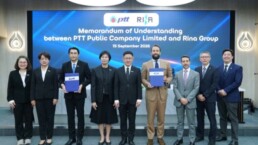
RINA and PTT sign strategic agreements to advance innovation and decarbonization across the energy and maritime sectors
RINA, the inspection, certification and engineering consulting multinational, announces the signing of two Memoranda of Understanding with PTT…

IMEC and The Hood launch Sisterhood Box to support the next generation of female seafarers
The International Maritime Employers’ Council and The Hood Platform have joined forces to launch the Sisterhood Box, a new initiative providing…

The Port Authority and Valencia City Council launch the countdown to the River Mouth Park
The Port Authority of Valencia (APV) and Valencia City Council have reached an agreement on the River Mouth Park setting out the commitments of both…

Newbuild order for two very large ammonia acriers in combination with long term time charters
SFL Corporation announced that it has agreed to build two 93,000 cbm Very Large Ammonia Carriers. The vessels will be able to carry a wide range of…

xclusiv S&P Report 05th October 2026
Pls find below the [xclusiv] S&P Report 05th October 2026 [xclusiv] 2026_10_05
Subscribe to our newsletter!
if you dont want to swim alone in the ocean of news, sign up for the newsletter, and you will receive daily all the important news of world shipping!
