COP31 sets gigatonne-scale ambition for carbon capture by 2035
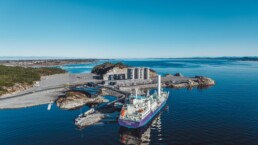

Norway already building supply chains with scale the next challenge
This is no longer theoretical. Northern Lights in Norway provides an operating example of the model emerging in Europe.
The direction of the market is also evident in Havstjerne CCS, a large-scale offshore carbon storage project being developed in the Norwegian North Sea by Harbour Energy, as operator, together with Stella Maris CCS, a Yinson Production company. The project is targeting a peak gross injection rate of 10 Mtpa and approximately 200 million tonnes of gross storage capacity.
Together with Yinson Production, Provaris is developing a proprietary 25,000 m³ low-pressure LCO₂ tank specifically to address the need for scalable and cost-effective infrastructure for large-volume CO₂ transport, intermediate storage and offshore injection. The design is being advanced for Yinson’s floating storage and injection unit development, as well as LCO₂ carriers and terminal storage applications.
It is important to recognise that the COP31 wording represents a collective global aspiration rather than a binding target, and it does not prescribe how much capacity will be developed in Europe or delivered through any particular technology, transport solution or project. Nevertheless, the direction is significant.



Related News.

Crewing After 2026: How AI Will Take Over the Routine in 2027
The crewing market of late 2026 is not the market of 2025. Artificial intelligence has moved from presentations into daily crewing work, while the…

Dualog launches secure maritime AI service amid surge in seafarer AI use
The new service, Sparks lets crew and shore teams search company emails, documents and conversations without exposing sensitive fleet information to…

Time Ticking: Two weeks for Governments to Green-Light Framework for Cutting Shipping Emissions
As a crucial fortnight of meetings opens at the International Maritime Organization opens in London, the Clean Shipping Coalition calls on member…

“K” LINE signs contract for construction of two LPG dual-fuel VLGCs
Kawasaki Kisen Kaisha, announces today that it has signed agreements with South Korea-based HD Hyundai Samho regarding the construction of two LPG…

Equinor and VNG sign 18-year gas sales agreement for supplies to Germany
Equinor will supply natural gas to the German energy company VNG until the end of 2044. The 18-year agreement is the longest gas sales agreement…

Open letter to MEPs to reject the motion for a resolution and support the inclusion of Indian ship recycling yards on the European List
Dear Members of the European Parliament, Ahead of this week’s plenary vote, European Shipowners | ECSA, BIMCO, the Cruise Lines International…

ShipVet appoints James Stairmand as Chief Executive Officer
Founder Captain Fintan Cullen moves to a non-executive role as the company builds on investment in its vetting team and technology. ShipVet, the…

USD ≈7bn lost per year the hidden cost of how shipping trades
New Torvald Klaveness study quantifies around USD 7bn a year in potentially avoidable costs in dry bulk and product tanker shipping, with a possible…

APM Terminals Maasvlakte II and Port of Rotterdam Authority take next step in terminal development
APM Terminals Maasvlakte II and the Port of Rotterdam Authority are moving forward in terminal’s development with preparations for a new phase of…

ABP inspiring the next generation
ABP host 500 young people to explore maritime and transport careers More than 500 young people from across Hampshire and the Solent explored career…
Subscribe to our newsletter!
if you dont want to swim alone in the ocean of news, sign up for the newsletter, and you will receive daily all the important news of world shipping!
