Integr8 Fuels Bunker Quality Trends October 2026

Integr8 Fuels’ latest Bunker Quality Trends Report finds that marine fuel quality remains broadly stable, but increasing variability at port and supply-chain level is changing where buyers face
risk.
The biannual report, covering fuel quality performance from February to July 2026, finds that global quality averages increasingly mask significant differences between ports, supply chains and fuel characteristics. Changes in crude flows, refinery slates and regional supply pools are contributing to more localised quality exposure.
Key findings include:
• Localised quality risk: Quality performance varies significantly by port, grade and supply chain, with global averages often masking higher-risk locations and specific quality characteristics.
• Changing fuel characteristics: Shifts in crude and product supply are changing the composition of local fuel pools, with sulphur, cold-flow properties, sediment and other characteristics varying across regions.
• Quality beyond specification: Energy content, density, water, sediment and additional heating or handling requirements can affect the value delivered, demonstrating that specification compliance does not necessarily capture the full commercial impact of a fuel.
• MGO flash point exposure: Flash point risk remains concentrated in specific supply chains, with significant differences between major barge-supplied hubs and smaller truck-supplied locations.
• Biofuel quality: Headline notification rates for biofuel blends remain elevated against conventional ISO reference grades, but much of the apparent exposure is linked to parameters that may not reflect contractual or operational risk.
Author quote: Chris Turner, Technical Manager at Integr8 Fuels
“The headline quality rates tell only part of the story. What stands out in this period is how concentrated the underlying variability has become. Risk is increasingly determined by the port, the supply chain and the characteristics of the available fuel pool, rather than by the global average for a grade. Buyers therefore need to look beyond specification and headline price to understand the value and operational implications of the fuel they are actually purchasing.”
The report also examines loss control in bunker procurement, showing how energy variance, density differences, additional heating and handling requirements can create costs that remain invisible when fuel is assessed solely against specification limits.
The findings reinforce the importance of using recent, granular quality data when selecting bunkering locations and supply chains, particularly where multiple procurement options are available.
Trusted by shipowners, operators and bunker buyers worldwide, the Bunker Quality Trends Report provides data-driven insights to support more informed fuel procurement and quality risk management.
The full report is free to download here: https://eu1.hubs.ly/H0yVKwk0



Related News.
Italy and Cyprus chart a shared course for the blue economy: Italy-Cyprus Maritime Business Forum in Limassol on 9 October
Institutions and businesses from both countries will meet at the DP World Terminal for three sessions on sustainable ports, shipping and maritime…
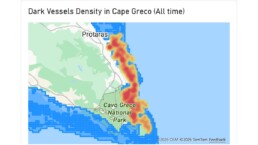
Satellite monitoring reveals recurring vessel activity across three of Cyprus’s marine protected areas
More than two thousand detections at Lady’s Mile, Latsi-Akamas and Cavo Greco within the months of June-August highlight distinct activity patterns…

Shipbuilding Labor talks hit fresh snags after tentative deal rejected
This year’s wage and collective bargaining negotiations in the shipbuilding industry are drifting back into uncertainty just as they appeared to be…

SEA.AI brings Machine Vision to multiple USV platforms at NATO’s REPMUS 2026
Maritime AI specialist demonstrated a shared perception layer across crewed and uncrewed vessels during the Portuguese Navy-led exercise, held in…

Clean tanker markets size up impact of potential US diesel export curbs
HIGHLIGHTS Trump floats diesel export ban amid soaring prices MR tanker demand could fall by 1.35 million b/d Russian diesel exports…
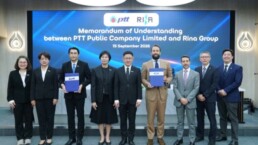
RINA and PTT sign strategic agreements to advance innovation and decarbonization across the energy and maritime sectors
RINA, the inspection, certification and engineering consulting multinational, announces the signing of two Memoranda of Understanding with PTT…
IMEC and The Hood launch Sisterhood Box to support the next generation of female seafarers
The International Maritime Employers’ Council and The Hood Platform have joined forces to launch the Sisterhood Box, a new initiative providing…

The Port Authority and Valencia City Council launch the countdown to the River Mouth Park
The Port Authority of Valencia (APV) and Valencia City Council have reached an agreement on the River Mouth Park setting out the commitments of both…

Newbuild order for two very large ammonia acriers in combination with long term time charters
SFL Corporation announced that it has agreed to build two 93,000 cbm Very Large Ammonia Carriers. The vessels will be able to carry a wide range of…

xclusiv S&P Report 05th October 2026
Pls find below the [xclusiv] S&P Report 05th October 2026 [xclusiv] 2026_10_05
Subscribe to our newsletter!
if you dont want to swim alone in the ocean of news, sign up for the newsletter, and you will receive daily all the important news of world shipping!
