Reinforcement of the Afsluitdijk completed Coastal protection
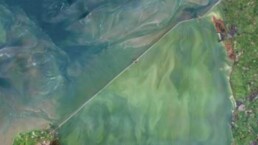

Dutch Minister of Infrastructure and Water Management, Vincent Karremans, officially commissioned the new pumping station and new discharge sluices at Den Oever, marking the completion of the large-scale reinforcement and modernisation of the Afsluitdijk. The upgrades strengthen the Netherlands’ protection against high water from the sea and increase the capacity to discharge water from Lake IJsselmeer into the Wadden Sea.
The commissioning of the pumping station and sluices represents the culmination of one of the Netherlands’ largest hydraulic engineering projects in recent years. On behalf of Rijkswaterstaat, construction consortium Levvel, comprising Van Oord, BAM and Rebel, strengthened the Afsluitdijk along its entire 32-kilometre length.
In addition to constructing the new pumping station and discharge sluices, the flood defence was raised and reinforced to help safeguard the Netherlands in a changing climate. New storm surge barriers were also built at Den Oever and Kornwerderzand to close the openings in the dike during extreme high-water events. Furthermore, a new opening in the dike at Kornwerderzand was created to facilitate the Fish Migration River, allowing fish to move between the Wadden Sea and Lake IJsselmeer.
While the main works have now been completed, Rijkswaterstaat and its partners continue to work on several projects on and around the Afsluitdijk, including the renovation of the Vlietermonument, the replacement of bridges at Den Oever and Kornwerderzand, and life-extension maintenance of the historic discharge sluices dating from 1932.
Discharge when possible, pump when necessary
The new pumping station is equipped with six powerful pumps with a combined capacity of 275 cubic metres of water per second. Together with the new discharge sluices, the Afsluitdijk’s water discharge capacity has increased by 45%, enabling larger volumes of water to be transferred from Lake IJsselmeer to the Wadden Sea.
The preferred method of water management remains gravity discharge, whereby water flows naturally from Lake IJsselmeer to the Wadden Sea when sea levels are lower. However, rising sea levels are shortening the periods during which gravity discharge is possible, reducing the volume of water that can be released in this way.
When discharge through sluices is not possible, the pumps ensure that excess water can still be removed. This helps maintain manageable water levels in Lake IJsselmeer and prevents flooding across large parts of the Netherlands. The principle is simple: discharge when possible, pump when necessary.
The commissioning of the pumping station coincides with the start of the Dutch storm season, a period during which Rijkswaterstaat traditionally manages large volumes of water.
‘We live in a new reality: rising sea levels and more extreme rainfall are changing the battle the Netherlands has fought against water for centuries. Ninety-four years after the completion of the Afsluitdijk, we are once again making history. In every respect, the Afsluitdijk is an icon of innovative water management. Together, we are ensuring that the Netherlands remains safe, now and in the future.’
Hundreds of specialists contributed to the modernisation
Over the past several years, hundreds of engineers, technicians, hydraulic engineering specialists and construction professionals have worked on the renewal of the Afsluitdijk. Their combined expertise in water safety and water infrastructure has been instrumental in delivering the reinforcement and modernisation programme.
Looking ahead: the future of the Afsluitdijk
Due to rising sea levels, additional capacity will be needed from around 2045 onwards to discharge water from Lake IJsselmeer into the Wadden Sea. At the same time, the discharge sluices at Kornwerderzand and Den Oever, which date back to 1932, have reached the end of their technical lifespan.
Studies indicate that expanding discharge capacity is the most effective first step. Over the longer term, water management will increasingly rely on additional pumping capacity. This approach provides flexibility and allows for future developments, including climate change impacts and policy choices under the Dutch Delta Programme.



Related News.

ONE WEEK TO GO until the CSN London Maritime Forum “Shipping: Predicting an Unpredictable Future” – REGISTER NOW
“Shipping: Predicting an Unpredictable Future” REGISTER HERE Date: 13 October 2026 Time: 09:00-15:00 Venue: Marriott Hotel Regent's Park Following…
ECONSHIP 2026 Chios at the centre of international maritime research
More than 200 researchers from 90 universities and organisations in 25 countries, 126 research papers, and a substantive dialogue between academia…

BSM appoints Andreas Solomonides to lead BSM Cyprus and BSM Hellas
Bernhard Schulte Shipmanagement has appointed Andreas Solomonides, currently Managing Director of BSM Cyprus, to lead the integrated Ship Management…
IMO Secretary-General mourns seafarers killed during rescue of hijacked ship
While three hijacked vessels have been freed after months in captivity, five seafarers have reportedly died in the crossfire of rescue operations.……

Cav expands U.S. Coast Guard Deployment Fleetwide as Federal Agencies prioritise continuous Cyber Assurance
Agentic AI platform cut the Coast Guard's authorization timeline by 90% aboard USCGC Storis; Expanded contract reflects continued momentum for Cav…
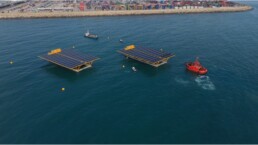
Spain’s first pre-commercial offshore solar demonstrator completes installation at the Port of València and enters its testing phase
With the support of Naturgy, BlueNewables has completed the deployment of the two 500-kW platforms that make up the 1-MW demonstration project The…
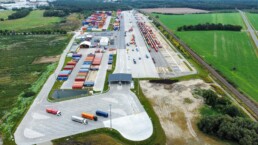
METRANS expands terminal in Poznań and significantly increases handling capacity
HHLA’s subsidiary METRANS has completed the extensive expansion of its terminal in Poznań/Gadki, Poland. Two new remote-controlled railway gantry…
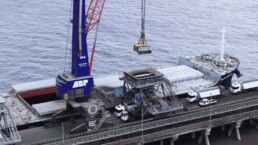
Bunge and ABP Reach One Million Metric Tonnes Milestone at Immingham
Bunge and Associated British Ports announced that they have handled more than one million metric tonnes of grains and oilseeds through their…
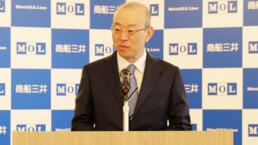
MOL President & CEO Tamura addresses company’s entrance ceremony
'Building the Future Together with MOL CHARTS in Our Hearts Mitsui O.S.K. Lines, announced that on October 1, it welcomed 28 new employees. President…
DORIC WEEKLY INSIGHT 02 OCTOBER 2026
Pls find below the DORIC WEEKLY INSIGHT 02 OCTOBER 2026 Weekly_Report_02.10.2026
Subscribe to our newsletter!
if you dont want to swim alone in the ocean of news, sign up for the newsletter, and you will receive daily all the important news of world shipping!
