S-100 and the Connected Bridge: In Conversation with Stephan Dimke of Teledyne Raymarine Commercial

Following the strategic unification of ChartWorld and Raymarine Commercial earlier this year, the maritime industry has gained a powerful new entity in digital bridge solutions: Teledyne Raymarine Commercial. This merger seamlessly blends software-driven digital solutions with robust marine hardware, offering shipowners a single, cohesive partner for their bridge requirements.
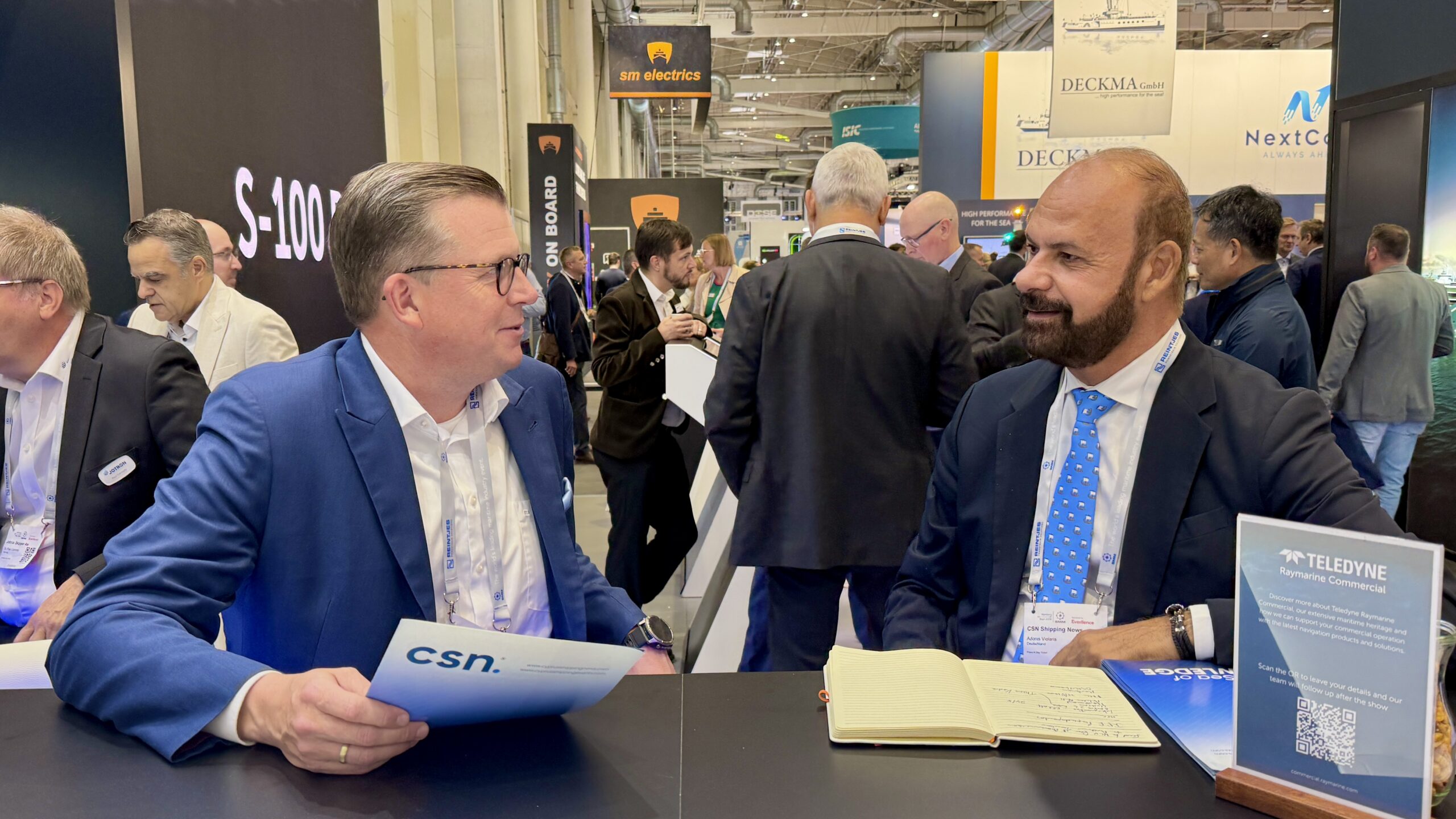
To dive deeper into what this integration means for the future of maritime operations, Adonis Violaris of CSN sat down with Stephan Dimke, General Manager of Teledyne Raymarine Commercial. With the impending transition to S-100 standards, the growing need for maritime cybersecurity, and the ongoing push for decarbonisation, bridge teams face an increasingly complex operating environment.
In this exclusive Q&A, Dimke shares his insights on how the new Pathfinder ECDIS simplifies chart management, the evolution of the “ECDIS as a Service” model, and the tangible benefits of solid-state radar technology for modern fleets.
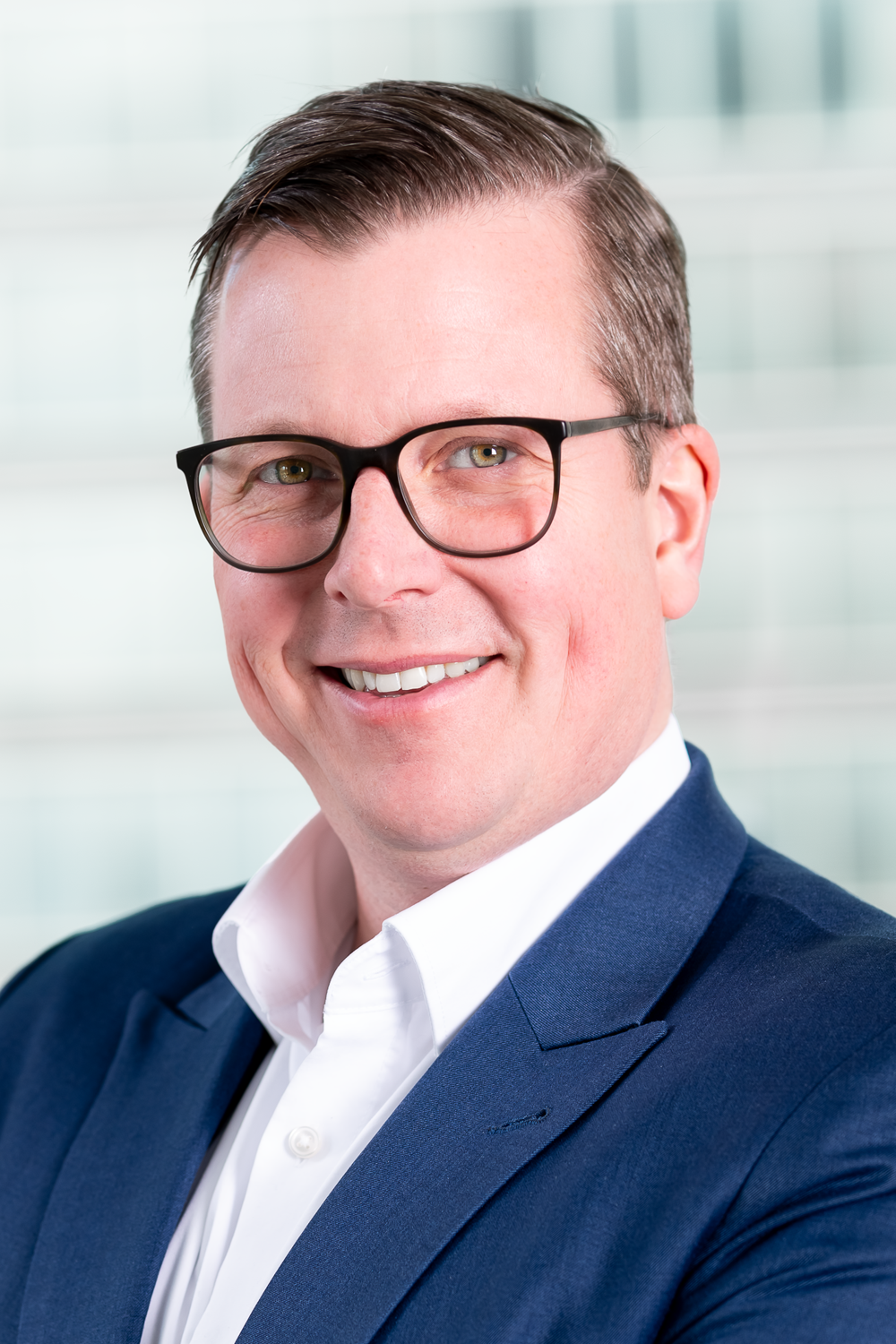
Earlier this year we saw the strategic unification of ChartWorld and Raymarine Commercial under a single global navigation brand. This brings together software-driven digital navigation and robust marine hardware into one cohesive organisation. How has this integration progressed so far, and what are the main synergies visitors will see at your stand during SMM Hamburg?
The unification of ChartWorld and Raymarine Commercial under one global navigation brand – Teledyne Raymarine Commercial – isn’t only a brand name change; it’s a reaction to how the commercial maritime navigation market is altering, in particular the shift to S-100 navigational standards. Software-driven digital navigation and marine hardware have historically sat separately, often with different vendors, contracts, and support lines. Bringing them together means a shipowner now has one accountable partner across the full navigation stack: charts and data, ECDIS and hardware, and the service and support model that ties them together.
We were able to demonstrate some of our navigation tools at this year’s SMM Hamburg – like our Pathfinder ECDIS running live alongside our radar and bridge hardware. We demonstrated the navigation ecosystem as one cohesive system rather than a collection of separate products – a preview of exactly how S-100 can optimise data usage for navigation.
The transition to the new S-100 universal hydrographic data model is a major focal point for the shipping industry right now. Your recently launched Pathfinder ECDIS was specifically designed to support this next-generation ENC standard. Can you walk us through how this new system simplifies chart installation and what shipowners need to know to ensure a smooth transition?
Ultimately, S-100 changes what ‘chart installation’ even means – for example, under S-57, installing charts is a manual task: you load a subscription and apply the updates. S-100 replaces that static, single-source picture with continuously updated, multi-layered data: bathymetry, water levels, surface currents, navigational warnings, each on its own update cycle.
Pathfinder ECDIS was designed for that world as an S-100-ready system built to run the new data layers as they mature, not a slicker or ‘updated’ version of the old model. The point isn’t a one-off installation; it’s taking the manual update burden off the bridge, so the vessel is always working from current data without the crew managing that by hand.
S-100-capable ECDIS has been permitted since January 2026, and starting in January 2029, every new installation and retrofit must meet the standard. However, type-approved S-100 ECDIS aren’t expected to be commercially available until around 2028, so no one is operating a finished, type-approved S-100 system today. In the meantime, S-57 and S-100 run side by side in dual-fuel mode, with no withdrawal date set for the older standard — both will be supported for the foreseeable future. That overlap could pose real risk as bridge teams work with two data standards at once, with genuine potential for confusion in critical moments during a voyage.
So a smooth transition turns less on the box on the bridge and more on the decisions around it. Which data layers are mandatory for a given voyage? Whose call is it when bridge and shore read the same dataset and reach different conclusions? How are officers trained and supported through the first months of live operation? This is why we talk about subscribing to be ready rather than rushing to install: a managed, service-based model lets a fleet get onto the transition path now, prepare its people and processes on its own timescale, and switch fully to S-100 when the moment is right — rather than working it all out in real time once dual-fuel operation begins. The system matters, but mainly because it buys the runway to get the people and processes right, and that’s where the safety and efficiency gains are realised or lost.
Bridge teams today face an unprecedented amount of data, which can often lead to cognitive overload during critical watchkeeping duties. Raymarine has traditionally focused on intuitive, user-friendly interfaces to mitigate this issue. How are your latest integrated bridge solutions engineered to reduce this burden and minimise the need for extensive crew training?
The change is not simply more data; it is data of a different kind: dynamic, time-dependent data that is continuously updated. This creates a system incorporating layers of information for crews on the bridge, providing a universal standard, allowing for real-time updates, and enabling access to route optimisation that can vastly improve environmental performance and commercial efficiency simultaneously.
For bridge crews, the training processes and support during the transitional phase will be key to ensuring smooth implementation. Officers will need to focus more on interpreting system outputs, validating recommendations, and maintaining situational awareness, rather than manually processing raw navigational data. At Teledyne Raymarine Commercial, we are committed to investing in the people and processes that will determine whether the system’s potential is realised.
You personally pioneered the “ECDIS as a Service” concept back in 2011, which shifted the industry from viewing navigation as a hardware purchase to a subscription-based platform. Now, under the unified Teledyne Raymarine Commercial umbrella, how is this subscription-based navigation model evolving to meet the cost efficiency and operational demands of modern fleet managers?
With S-100, AI and hardware platforms that develop this quickly, an as-a-Service model makes more sense than ever. Nobody can say today which processor will be needed in five years to run the software that future navigation systems require. Shipowners who want a predictable budget for their bridge equipment and the lowest possible lifetime cost for their navigation systems will find it hard to avoid a service-based approach.
With vessels becoming increasingly connected to shore-based infrastructure, maritime cybersecurity is no longer optional. We note that systems like the Pathfinder ECDIS utilise an embedded operating system and the eSync onboard gateway. How do these architectural choices actively protect the vessel’s navigational network from external cyber threats and ensure compliance with international cybersecurity standards?
One of the fundamental changes S-100 will trigger is the shore-based team having access to the same operational data the bridge is working with, in near real time. This development is unprecedented in terms of optimising the relationship between the office and the vessel for safer and more efficient fleet operations. For cybersecurity standards, for example, not only will the data be equipped to incorporate up-to-date security intelligence, but the embedded operating system – which is fundamental to the Pathfinder ECDIS – also reduces exposure from uncontrolled external connectivity.
Environmental compliance and decarbonisation are dominating boardroom discussions across the maritime sector. While much of the focus is on alternative fuels, voyage optimisation plays an equally critical role in immediate fuel savings. How do your connected voyage planning tools and navigation data services directly support shipowners in reducing their carbon footprint?
Fuel costs, particularly in recent months, will be a hot topic for shipowner and operator boardroom conversations, while shipping’s energy transition will play out over many years. What fuel costs today and longer-term decarbonisation share is that voyage optimisation is paramount; fuel costs are high, and will only become incrementally higher with new, alternative fuels.
Our connected planning tools draw on live weather, current, and tidal data to determine the routing and speed profile that consumes the least fuel, and the available independent evidence is consistent. The IMO itself estimates weather routing fuel savings at between three per cent and 10%, depending on ship type.
With the IMO’s global Net-Zero Framework adoption postponed last October, the rules that apply today are regional. The EU Emissions Trading System and FuelEU Maritime both price emissions per tonne and impose a cost. Every tonne of fuel a better route avoids is a tonne you don’t buy an ETS allowance for, a lighter FuelEU penalty, and a stronger carbon-intensity rating for the vessel. And because carbon intensity is measured per tonne-mile, carrying more cargo on the same optimised voyage improves the number twice over.
The dynamic layers S-100 introduces, i.e., near-real-time surface currents and hour-by-hour water levels, are precisely the inputs route optimisation depends on, and the next phase of the standard is focused specifically on route planning. As a result, the picture a planning tool works from becomes far richer and more current than static charts ever allowed. However, type-approved S-100 systems aren’t expected on the market until around 2028, and the gains from this will depend on training and workflow changes alongside the technology.
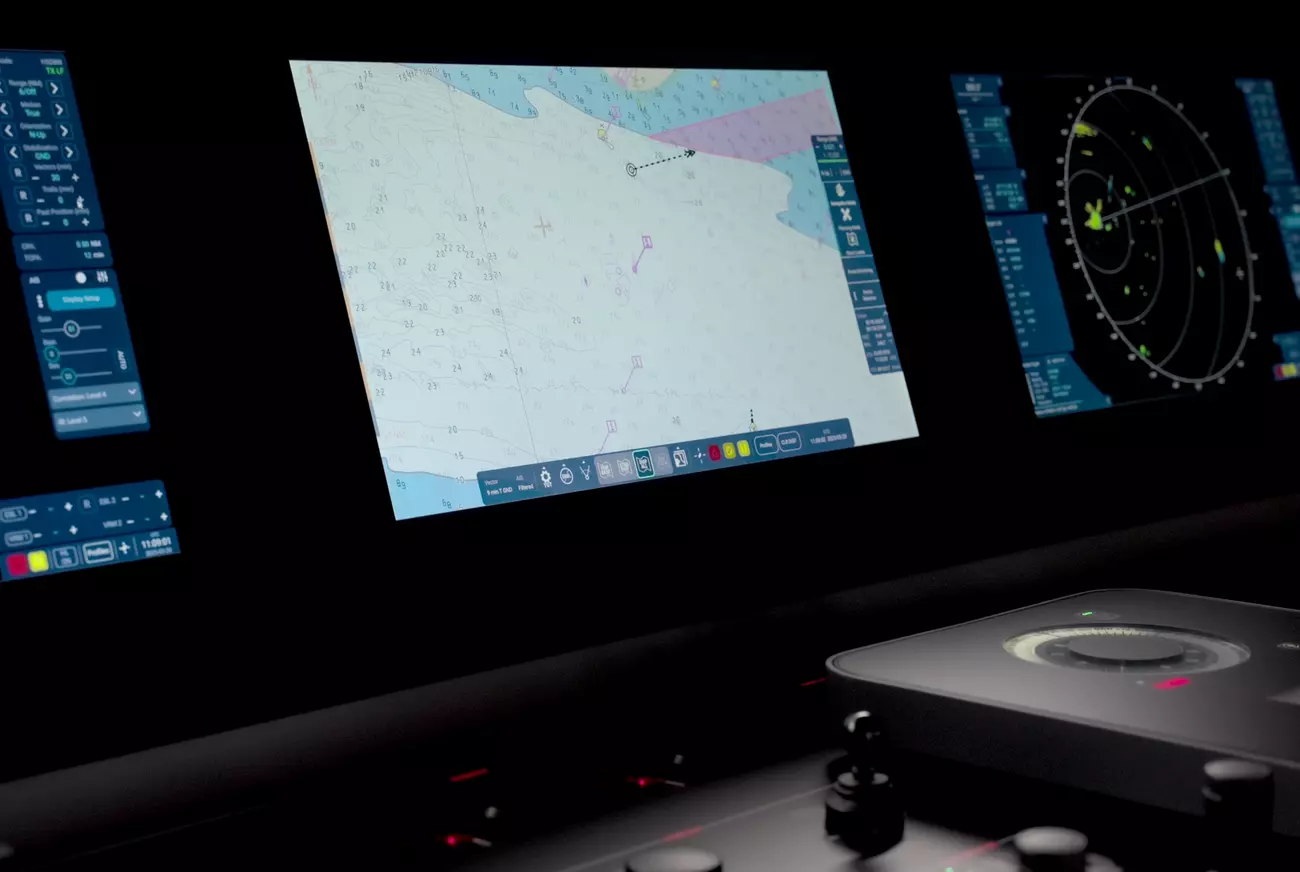
Radar technology is foundational to situational awareness, yet we still see many fleets relying on legacy magnetron systems. Raymarine has been disrupting this space with the IMO-compliant Pathfinder solid-state X-band radar. What are the tangible operational benefits of moving to solid-state technology regarding hazard detection, maintenance reduction, and overall vessel safety?
A solid-state radar changes things for everyone who deals with it, starting with the mariner. Because the transmitter is phase-locked, it is optimally tuned for every pulse, so the operator no longer has to re-tune it. Coherent signal processing detects small targets in clutter better and improves the automatic clutter algorithms. The radar also checks its own performance and alerts the crew, which removes the need for manual records. And because a solid-state transmitter keeps its detection capability over time, operators can rely on what they see on the screen.
For the maintainer, built-in test equipment finds errors quickly without major teardowns. A quick-install cabling kit and a lightweight design make installation and repairs simpler.
For owners and operators, it comes down to cost. A magnetron typically needs replacing every year, and that often leads to unplanned and expensive repairs. Our Pathfinder solid-state radar avoids these frequent service needs and the damage that can come with them. That lowers service costs and makes it more cost-effective over its lifetime.
Looking beyond current compliance cycles, the maritime industry is steadily moving towards highly automated and data-driven operating environments. With the combined expertise of ChartWorld, SevenCs, and Raymarine now at your disposal, what major technological shifts do you foresee in commercial navigation over the next three to five years, and how are you preparing your clients for that future?
We do see guided navigation. As the data available for decision-making grows and updates become more frequent, the navigator on board will focus on supervising decision suggestions. Day-to-day voyage planning will become less important and take less time. The winning skill set in the future will be the ability to act on a situation picture, including fused sensor data and automatically generated voyage plans.



Related News.
Columbia Group calls for greater focus on retaining women at sea as second She Beyond Conference takes place
Columbia Group has called on the maritime industry to create a future where women can thrive, progress and lead at sea, as it celebrated the second…
Neptune Group Welcomes “NIKOS TRAVLOS”
The new vessel proudly bears the name of Neptune's founder, who laid the foundation for the creation and enduring evolution of the Group. Her…
Wildcat Defense enters into exclusive agreement to acquire Fraser Shipyards
American family firm takes the next step in its strategy to rebuild U.S. shipbuilding and repair capacity, following its offer for Austal USA.…
Kawasaki signs strategic partnership MOU with Romania’s Transgaz for Onshore Hydrogen Gas Transport
Establishing a model for large-scale hydrogen supply and transport via pipelines Kawasaki Heavy Industries, announced at the Romania–Japan…

UK P&I Club and TT Club secure regulatory approval for Thomas Miller acquisition
The UK P&I Club and TT Club announce the successful completion of their joint acquisition of the Thomas Miller Holdings group, marking a major…

Valenciaport presents its Sandbox at PEIC’26 as a tool to bridge the gap between innovation and implementation
The opening session featured a discussion between Valenciaport President Mar Chao and Valenciaport Foundation Director Antonio Torregrosa. The…
Major investments strengthen Gothenburg RoRo Terminal
Expanded terminal areas, new rail connections and modernised quays are among the investments that have strengthened Gothenburg RoRo Terminal in…
ABP appoints key roles in the Humber
Associated British Ports has made two key appointments at its container terminals strengthening its unitised operations at the ports of Immingham…

Xinhua Silk Road 2026 North Bund Forum unveils 20 shipping-related achievements
The 2026 North Bund Forum opened in Shanghai on October 20 with 20 key shipping-related achievements spanning international cooperation, green…
Ports encouraged to prepare now for advanced nuclear in maritime and clean energy
New joint Lloyd’s Register and British Ports Association paper sets out a practical readiness pathway for ports considering nuclear-powered vessels,…
Subscribe to our newsletter!
if you dont want to swim alone in the ocean of news, sign up for the newsletter, and you will receive daily all the important news of world shipping!
