Opsealog whitepaper identifies the “missing loop” behind offshore fleets’ data problem


Ten years of operational data across 1,000+ offshore support vessels shows that most fleets aren’t short on data. They’re short on a way to convert it into decisions.
Opsealog, a provider of data integration and performance management services for the marine offshore industry, today published a new whitepaper arguing that the offshore industry’s data problem is conversion rather than collection. The Conversion Gap: What Offshore Fleets Lose Between Data and Decision draws on a decade of work across more than 1,000 offshore support vessels to explain why fleets that have invested heavily in digital tools still struggle to turn that data into faster, better decisions.
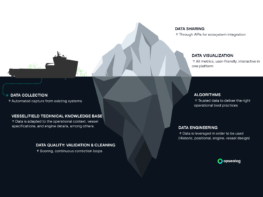
Credit: Opsealog
The paper’s central finding is what Opsealog calls the “missing loop.” Most digital tools are deployed on the assumption that data will convert itself into operational decisions. In practice, conversion requires someone accountable for reading the data, someone qualified to interpret it, and a mechanism for decision-making and implementation that sees action taken back on the vessel. When any one of those three elements is missing, OSV operators end up with dashboards nobody owns, reports that never travel back to the people who filed them, and limited meaningful action to improve vessel performance.

Credit: Opsealog
“Nobody gets fitter simply by wearing a smartwatch. Progress begins when data is turned into recommendations, and recommendations into action. Offshore fleets are no different, they need to turn data into actionable insights,” said Guillaume Robert, Chief Product & Technology Officer at Opsealog.
The paper backs this up with results from Opsealog’s own work. On the ‘MV Flat Confidence’, a Ghanaian-owned AHTS (Anchor Handling Tug Supply) operating under a long-term Tullow Ghana contract, a year of structured fuel monitoring saved 732.6 m³ of fuel and 1,984 tonnes of CO2, worth close to $850,000 at current fuel prices.

Applied across a 24-vessel mixed fleet off Angola over six months, the same method saved 1,108 m³ of fuel and 3,055 tonnes of CO2, worth roughly $1.85 million.
A third case study shows what happens when the data is right, but the decision stalls: a vessel caught between conflicting instructions from its charterer and shipowner, resolved only once both parties sat down and reviewed the same figures together.
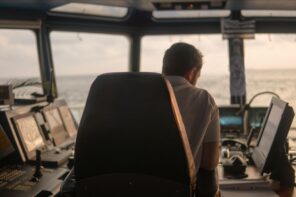
Credit: Opsealog
The timing matters too, with EU MRV already covering offshore vessels of 400 GT and above, and the European Commission’s July 2026 proposals potentially extending the EU ETS to smaller offshore vessels from 2031. Norway has gone further, confirming greenhouse gas intensity cuts for vessels operating on its continental shelf from 2029. Rystad Energy estimates most of the current fleet, including LNG dual-fuel vessels, would miss the first threshold as things stand today. For operators, the paper argues, the fastest lever available is to run the existing fleet on data it can already defend, instead of waiting for new vessels or fuels.

Credit: Opsealog
“We’ve spent a decade proving that offshore fleets can collect more data than ever. The real test now is whether that data changes what happens on deck. This paper is about closing the loop between insight and action, vessel by vessel,” said Arnaud Dianoux, Founder & CEO of Opsealog.
The whitepaper also includes detailed breakdowns of where offshore digital programmes most commonly break down, and a short self-assessment allowing fleet operators to score where their own operation sits between collecting data and converting it into results, and identify which archetype reflects their current approach; the Collector, the Firefighter and the Converter.

Credit: Opsealog
The Conversion Gap: What Offshore Fleets Lose Between Data and Decision is available to download at https://opsealog.com/the-conversion-gap-what-offshore-fleets-lose-between-data-and-decision/



Related News.

Meet the panellists of the CSN London Maritime Forum – Panel Discussion – “International Rule of Law; Is it a thing of the past?”
Meet the Panellists of the CSN London Maritime Forum "Shipping: Predicting an Unpredictable Future" - Panel Discussion - “International Rule of Law;…

1ST Joint Maritime Committee Meeting Cyprus and India
The 1st meeting of the Cyprus–India Joint Maritime Committee was held yesterday in Limassol, within the framework of the Bilateral Agreement on…

BSM expands offshore services with strategic investment in OffshoreCrew
Bernhard Schulte Shipmanagement has agreed to acquire a 50% stake in OffshoreCrew AS, a Norwegian specialist in offshore recruitment and crewing…

Australia’s accelerated coal phase-out demands swift dispatchable capacity replacement, says GlobalData
Australia operates one of the world’s fastest-decarbonizing power systems, marked by a rapid structural shift away from thermal baseload generation…
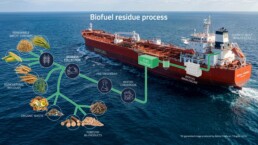
From residue to resource – the Rise and Risks of Marine Biofuels
While corn, sugarcane, wheat, or vegetable oils can be converted into fuel, their use for food is driving demand to develop waste or bi-products from…

PATH TO NET ZERO: Shipping companies face slow low-carbon bunker transition
Intensity reduced, not total emissions Cost of green fuel much higher Cargo owners less willing to pay premiums This is the sixth…

Allied Weekly Market Review Week 39
Pls find below the Allied - Weekly Market Review - Week 39 ALLIED - Weekly Market Report- Week 39

DORIC MONTHLY CHINA BAROMETER SEPTEMBER 2026
Pls find below the DORIC MONTHLY - CHINA BAROMETER SEPTEMBER 2026 CHINA_BAROMETER_SEPTEMBER_2026

Intermodal Report Week 39 2026
Pls find below the Intermodal Report - Week 39 2026 Intermodal Report Week 39 2026

New Direct Travel sustainability report sets context for lower-carbon crew change travel
Scope 1, 2 and 3 emissions baseline established across the combined organisation Report highlights marine expertise in addressing travel-related…
Subscribe to our newsletter!
if you dont want to swim alone in the ocean of news, sign up for the newsletter, and you will receive daily all the important news of world shipping!
