Navigating the Multi Fuel Future: Exclusive Interview with WinGD’s Carmelo Cartalemi at SMM
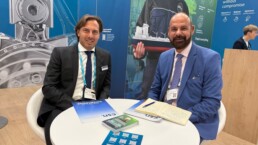

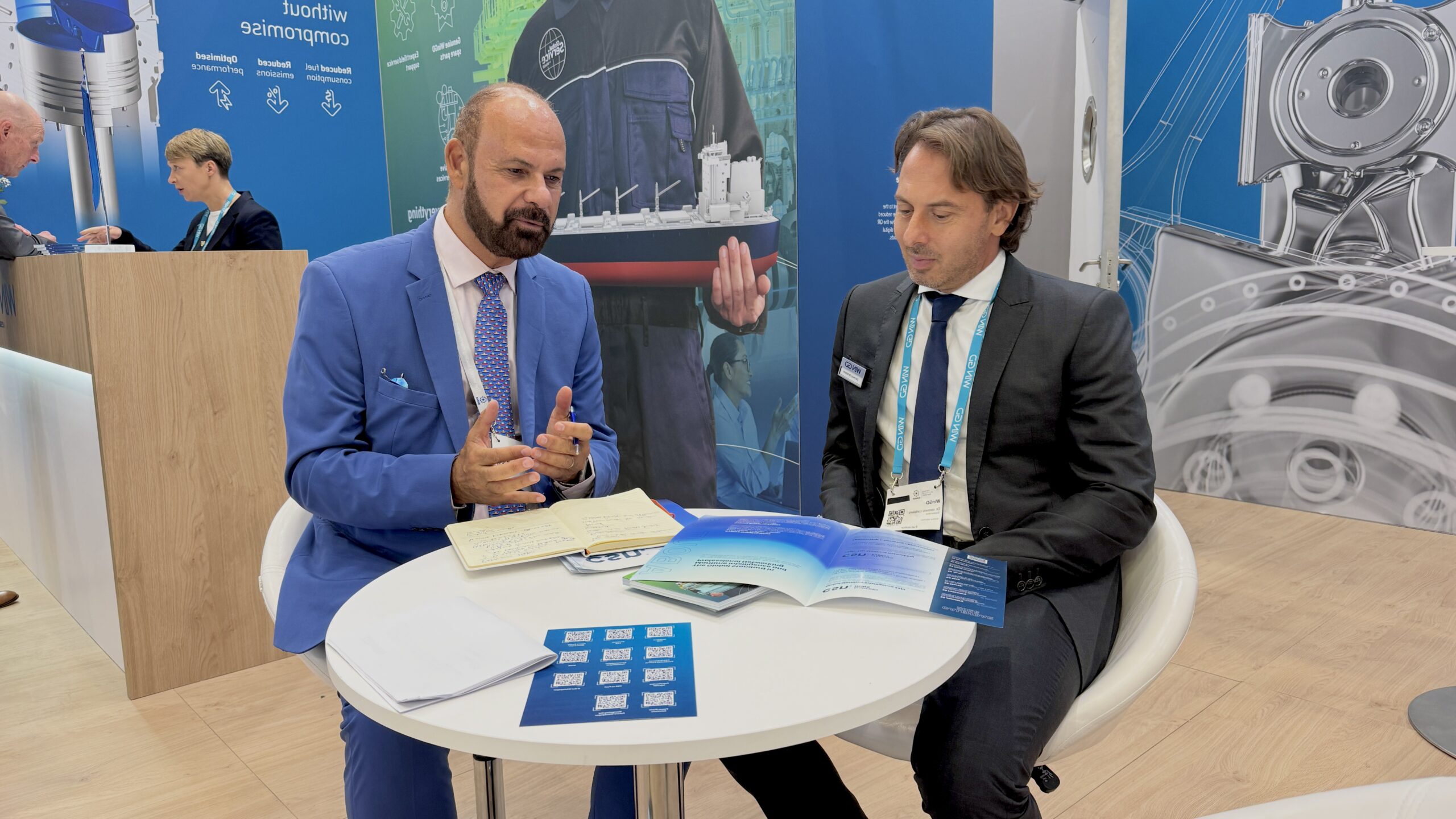
As the maritime industry faces mounting regulatory pressures from FuelEU Maritime and the urgent need to decarbonise, shipowners are navigating one of the most complex fleet renewal periods in history. During the recent SMM exhibition, Adonis Violaris of Cyprus Shipping News sat down with Carmelo Cartalemi, Head of Strategic Marketing at WinGD, to discuss how the engine designer is guiding owners through this period of profound uncertainty. The candid conversation explores WinGD’s pragmatic approach to an alternative fuel future, covering recent operational breakthroughs in ammonia and ethanol engines, high pressure solutions for methane slip, the commercial realities of vessel retrofitting, and how intelligent digital systems are actively easing the operational burden on today’s seafarers.
Carmelo Cartalemi serves as the Head of Strategic Marketing at WinGD. In this pivotal role, he is instrumental in aligning WinGD’s advanced propulsion technologies with the commercial, regulatory, and environmental strategies of global shipowners. With extensive expertise bridging marine engineering and market dynamics, Carmelo drives the commercial narrative for WinGD’s evolving portfolio. His work focuses on positioning the company’s next generation alternative fuel engines, hybrid energy management systems, and smart digital optimisation tools to help the maritime sector successfully accelerate its energy transition.
Your CEO Dominik Schneiter is participating in the Fleet Renewal panel here at SMM. European shipowners are currently caught between the immediate pressures of FuelEU Maritime and the uncertainty of future green fuel availability. From your discussions on the exhibition floor, how is WinGD advising owners who feel paralysed by the choice between LNG, methanol, or waiting for ammonia to fully mature?
Our message to shipowners is that there is no single fuel pathway that will be right for every vessel. The important thing is to avoid allowing uncertainty to become a reason for inaction.
Our role is to support whichever pathway best fits the vessel, its operating profile and the owner’s decarbonisation strategy, while preserving as much flexibility as possible. That can mean choosing LNG today with a pathway towards bio- or synthetic methane, selecting methanol or ethanol, preparing for ammonia, or considering a retrofit later in the vessel’s life.
We are increasingly designing that flexibility into our platforms. The X-DF-M/E concept, for example, enables operation on both methanol and ethanol capability, giving owners additional options as fuel availability and economics develop.
Our latest Fuel Economics Report also reinforces an important point: the technology is increasingly available, but fuel price, availability and regulation will ultimately determine the pace of adoption. LNG therefore continues to have a significant role, while stronger incentives and greater availability are needed to bring renewable fuels to the scale required by the industry.
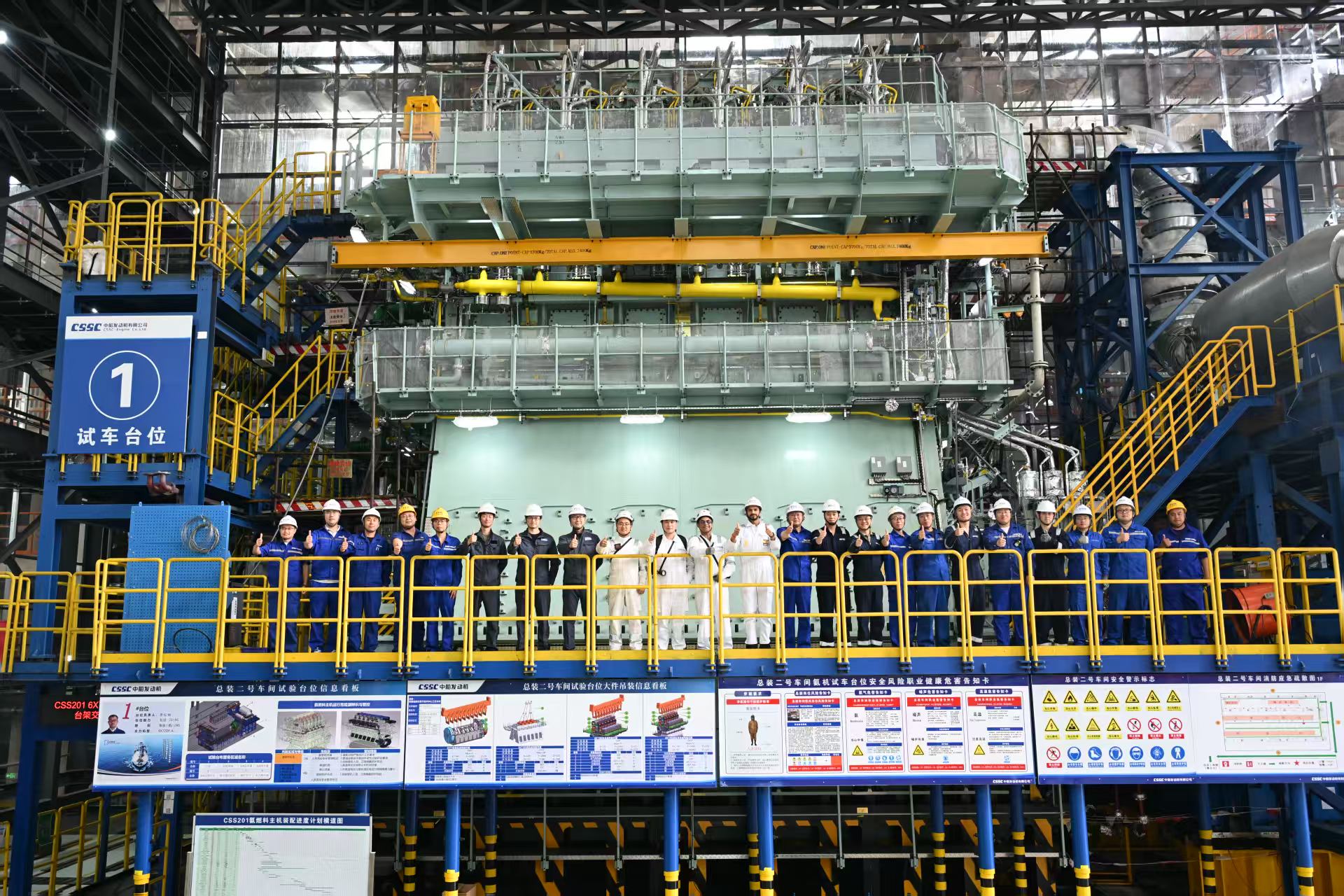
Early in 2026, WinGD completed Type Approval and Factory Acceptance Testing for the X52 ammonia engine with HD Hyundai, and just this June, you achieved further approvals for the larger X72 series. With these major technical hurdles cleared under the supervision of Lloyd’s Register and EXMAR, what did the actual test data prove regarding the safe containment of ammonia and the strict mitigation of nitrous oxide emissions?
These milestones were important because ammonia has now moved beyond being simply a development programme. We have demonstrated the technology at full engine scale and we are now gaining real operational experience with the first vessels.
Our testing confirmed that the engine can achieve thermal efficiency comparable with diesel operation while maintaining very low emissions. During full-load testing we measured ammonia emissions below 10 ppm and N₂O below 3 ppm, while NOx emissions during ammonia operation were well below those generated in diesel operation.
Safety has been fundamental from the start. Fuel lines are double-walled, with the space between the pipes held at negative pressure and continuously monitored for ammonia. If ammonia is detected, the engine automatically switches to diesel operation. This safety architecture has been developed and validated in close cooperation with engine builders, shipowners, shipyards and classification societies.
With EXMR’S ANTWERPEN now in commercial operation , we have also moved from testbed validation into actual vessel operation. So far, performance and operation have met expectations. That real operating experience will be extremely valuable as ammonia propulsion moves towards broader commercial adoption.
While methanol continues to dominate the alcohol fuel conversation, WinGD has recently highlighted ethanol as a highly viable alternative marine fuel. Considering the massive infrastructure already being built around methanol, what specific operational or commercial advantages make ethanol an attractive proposition, and how seamlessly can your current engine platforms adapt to it?
We do not see ethanol as competing with methanol in every market. We see it as broadening the range of viable renewable fuels available to shipowners.
Ethanol already has substantial global production and, in some regions, renewable ethanol can be available at very attractive prices. This is particularly interesting for operators with access to established bioethanol supply chains.
From an engine perspective, methanol and ethanol are closely related. They have similar combustion and fuel-handling characteristics, which means we can build on the technology already developed and proven for our X-DF-M platform. The main adaptations concern areas such as injection parameters and fuel volume because of the difference in energy density.
That has enabled us to develop the X-DF-M/E platform, giving shipowners the flexibility to operate on either methanol or ethanol depending on fuel availability, pricing and their decarbonisation strategy.. The first commercial ethanol-fuelled two-stroke engine orders are already secured, which is an important signal that this is moving from technical possibility to a real commercial pathway.
LNG remains the primary transitional fuel for the deep-sea fleet, but regulatory bodies are increasingly penalising methane slip. At SMM you are showcasing both your established low-pressure platforms and the newer high-pressure X-DF-HP concepts. How does this high-pressure architecture specifically address the methane slip issue, and what thermal efficiency gains does it offer to the ultra-large container sector?
What is important is that we can now offer shipowners two optimised LNG pathways rather than arguing that one technology is universally better.
Our low-pressure X-DF platform has accumulated extensive operational experience and, combined with technologies such as iCER and VCR, provides a very efficient solution with substantially reduced methane slip.
X-DF-HP addresses a different operating requirement. With high-pressure direct injection, methane slip is inherently very low, while the diesel-cycle combustion concept delivers very high fuel efficiency and power density. That is particularly attractive for ultra-large container vessels, where propulsion power, engine footprint and electrical demand are all major considerations.
Rather than giving one generic efficiency percentage, the benefit needs to be evaluated against the specific vessel and operating profile. Our objective is to deliver best-in-class fuel efficiency with very low methane slip.
The key differentiator for WinGD is choice: we can work with the owner to determine whether low-pressure or high-pressure LNG delivers the better overall solution for their vessel.
Newbuilds capture all the headlines, but the immediate crisis for many German and European fleet managers is avoiding severe carbon penalties on their existing tonnage. When undertaking a complex mid-life retrofit to convert a traditional two-stroke engine to run on ammonia or methanol, what are the most severe engineering and shipyard integration challenges you are currently seeing?
Retrofit is going to be a critical part of shipping’s decarbonisation because the vessels sailing in 2035 and beyond are not all going to be ships that we build tomorrow. A significant part of today’s fleet will still be operating.
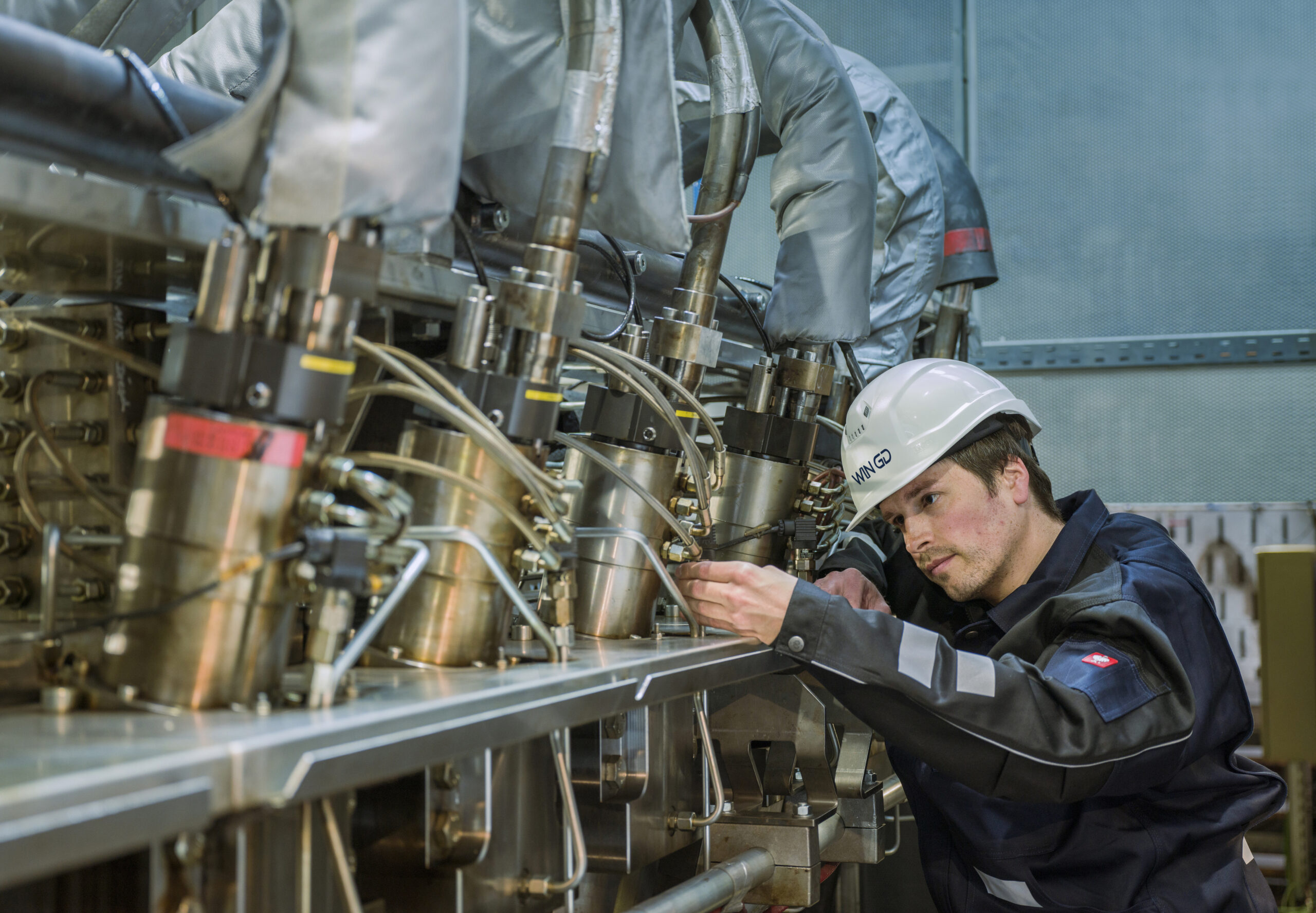
I would, however, challenge the assumption that the engine conversion itself is necessarily the most severe part of the project. Our future-fuel engines have been developed from the existing WinGD engine platform, and for suitable engines we can modify elements such as the injection system and fuel-related components.
Very often the bigger challenge is around the vessel: fuel storage, fuel preparation and supply systems, piping, safety systems, available space, classification requirements and, critically, how the conversion is integrated into a realistic shipyard schedule.
This is why retrofit needs to be assessed at the vessel level rather than just the engine level. The economics are also important. Our latest analysis shows that the decision is increasingly driven by the long-term fuel and regulatory economics rather than simply the CAPEX of modifying the engine.
Energy efficiency is a central theme at this year’s SMM, and WinGD is expanding its focus beyond the engine block with the X-EL hybrid energy management system. For large deep-sea commercial vessels, how does integrating battery technology and smart power management fundamentally alter the emissions profile during pilotage and port operations?
The biggest change is that we stop looking at the main engine, auxiliary engines, shaft generator and batteries as individual components and start optimising the vessel as one integrated energy system.
X-EL continuously determines how power can be produced and consumed most efficiently. For example, the main engine can generate electrical power through a shaft generator when this is more efficient than operating auxiliary engines. Batteries can support transient loads and peak demand, helping to reduce unnecessary auxiliary-engine running.
This becomes particularly valuable during manoeuvring, pilotage and other highly dynamic operating conditions, where load changes are frequent.
A battery itself does not automatically make an operation zero-emission — that depends on how the energy was generated — but intelligent integration can significantly reduce fuel consumption, emissions and auxiliary-engine running hours .
The real value of X-EL is therefore not simply adding batteries. It is having the engine and electrical system communicate and operate as one optimised power plant.
We regularly discuss the human element at our CSN Crewing Conferences. Operating modern multi-fuel engines with complex gas safety frameworks and dynamic cylinder lubrication puts immense pressure on our seafarers. How is the WinGD WiDE digital platform actively reducing this cognitive load and helping chief engineers interpret performance data without suffering from alarm fatigue?
Digitalisation should reduce complexity for the crew, not create another layer of information that they need to manage.
That is exactly the philosophy behind WiDE, our WinGD Integrated Digital Expert. Modern engines generate an enormous amount of data. The value is not in simply presenting more data to the chief engineer, but in converting it into information that supports better decision making.
WiDE continuously monitors engine and vessel data, identifies trends and unusual behaviour and helps the crew focus on the information that actually requires attention. It also connects the vessel with WinGD expertise ashore, allowing our specialists to investigate abnormal behaviour and proactively support the crew before an issue develops into a failure.
This also supports condition-based maintenance. Instead of treating every engine and every component according to a purely fixed schedule, operating data can help determine how components are actually being used and where attention is required.
So I would describe WiDE not as a digital watchdog replacing the chief engineer, but as an additional expert supporting the crew and helping them interpret increasingly complex systems and make better-informed decisions.



Related News.
Spyros Papavassiliou honoured with the “Ge’ Néo Epicheirein” 2026 Award in the Shipping Enterprises category
Celebrating leadership, entrepreneurial excellence and a strong contribution to Cyprus shipping. Island Energies is proud to announce that Mr Spyros…
ABP welcomes HANSEATIC spirit the largest ever cruise ship to visit the Port of Ipswich
Hapag-Lloyd Cruises’ expedition vessel, HANSEATIC spirit, becomes the largest cruise ship ever to visit Ipswich, highlighting the growing appeal of…
Prime Tanker Management deploys ShipIn across its entire fleet to improve safety performance
Master-led use of operational insight supports measurable improvement across PPE, bridge, and technical performance while strengthening fleet-wide…
Goltens Worldwide enters into agreement for sale to HD Hyundai Marine Solution
Proposed acquisition supports long-term growth while preserving Goltens’ independence and commitment to customers Goltens Worldwide announced that it…
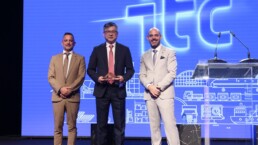
Port of Piraeus receives special award marking 10 years since COSCO SHIPPING joined its Shareholding Structure
Award presented at the 9th Infrastructure and Transport Conference ITC 2026 A significant milestone in the history of Piraeus Port Authority and the…
Seafarers’ voices must shape the future of mental health support at sea, says OneCare Group
The shipping industry must listen more closely to the lived experiences of seafarers if it is to build working environments that genuinely protect…
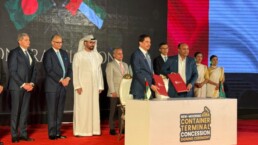
Bangladesh’s Chittagong Port Authority and DP World sign 15 year concession for new Mooring Container Terminal
The Chittagong Port Authority and DP World have signed a 15-year concession agreement for the operation and maintenance of the New Mooring Container…
ABP’s HELM Immingham opens for business
Associated British Ports marked the official opening of its HELM Immingham site, a 227-acre industrial and logistics development site. Seen as one…
Veson Nautical and Marcura expand partnership to Streamline Demurrage Management
Marcura Claims now integrates with IMOS, giving joint clients another way to manage demurrage. Global maritime technology leaders Veson Nautical and…
Thermal Weakness Drags Global Coal Flows Lower
Global seaborne coal flows fell 6.7% year on year in September 2026 to 115 Mt. Thermal coal drove the decline, and a rise in met coal flows was not…
Subscribe to our newsletter!
if you dont want to swim alone in the ocean of news, sign up for the newsletter, and you will receive daily all the important news of world shipping!
