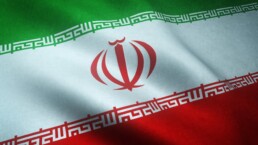

Can land corridors offset the impact of the maritime blockade on Iran? The US-led maritime blockade targeting Iranian ports has severely disrupted trade through its southern ports, but it is also accelerating a strategy Tehran had discussed for years: moving more commerce through northern ports, railways and land corridors.
Economy Minister Ali Madanizadeh, visiting Moscow for talks with Russian officials, said Iran should activate its northern borders and shift a significant share of imports and exports away from the country’s southern maritime routes.
The idea is straightforward. Iran has seven land neighbors, access to the Caspian Sea and several routes linking it to Russia, Central Asia, Turkey, Iraq, Pakistan and the Caucasus. In theory, that gives Tehran more options than a country dependent on a single maritime gateway.
The question is whether those routes have enough capacity to replace what is being lost at sea.
Northern routes offer room to expand
Alireza Salavati, a London-based political economy commentator, told DW that Iran does have unused capacity.
“Iran has more room to maneuver than its dependence on southern ports might suggest,” he said.
Iranian authorities said in late 2025 that the country’s northern ports had more than 30 million tons of nominal annual capacity, with less than one-third in use. That suggests room for more grain, food and general cargo through the Caspian Sea.
Turkey provides another route toward Europe. Rail freight between Iran and Turkey depends partly on train ferries across Lake Van, which carried about 477,000 tons in 2024.
To the northeast, Sarakhs and Incheh Borun connect Iran through Turkmenistan toward Central Asia, Russia and potentially China. To the northwest, Astara is part of the International North-South Transport Corridor linking Iran to Azerbaijan and Russia, he said.
The Astara freight terminal is designed for 3.5 to 4 million tons a year, but handled only about 345,000 tons in the first five months of 2026. The unfinished Rasht-Astara rail link remains an important bottleneck.
For specific goods, these routes matter. Grain from Russia and Kazakhstan, medicines, industrial inputs and regional trade can be redirected more easily than crude oil.
Volume is the main obstacle
Jafar Ghaderi, a member of Iranian parliament’s Economic Commission, recently said that 83% of what he described as Iran’s 210 million tons of imports had traditionally moved through southern maritime borders, a tremendous volume of goods.
“Whenever we are under a maritime blockade, we face problems,” hhe said. “How much capacity do our eastern, western and northern corridors actually have?”
The cost difference is also large. Majidreza Hariri, head of the Iran-China Chamber of Commerce, said shipping one container from China to Iran through southern ports costs about $3,000 (€2,580), and that moving the same container overland costs roughly $12,000.
With around 2 million containers entering through the south annually, Hariri estimated that a prolonged shift to land routes could add about $18 billion to Iran’s trading costs.
Salavati said the physical arithmetic helps explain why.
A 50,000-ton shipload would require around 2,000 truck journeys if each lorry carried 25 tons. Those trucks would then be unavailable for domestic distribution, while longer journeys increase fuel, insurance, warehousing and border costs.
Low-value goods are particularly vulnerable because transport expenses account for a larger share of their final price.
Energy is much harder to reroute
Umud Shokri, an energy strategist and senior visiting fellow at George Mason University, said Iranian officials are often discussing two different kinds of alternatives.
One involves alternative navigation lanes around Hormuz. The other involves shifting trade toward Pakistan, Iraq, Turkey, the Caspian region, Jask and Chabahar.
Neither provides a full substitute for southern energy exports.
A large crude tanker can carry roughly 1.5 to 2 million barrels. Replicating that volume by road would require thousands of tanker trucks.
Rail is more efficient, but still cannot match the cost, speed or scale of maritime transport.
Pakistan can help move imports through Karachi, Port Qasim and Gwadar. Iraq can support regional trade and limited fuel flows. Caspian routes can connect Iran to Russia, Kazakhstan and Azerbaijan.
But none can replace large-scale crude shipments to Asian buyers.
“So the plan is realistic as a resilience strategy, but not as a replacement strategy,” Shokri told DW.
Jask pipeline shows both potential and limits
The Goreh-Jask pipeline was built specifically to reduce Iran’s dependence on the Strait of Hormuz by moving crude to the Gulf of Oman.
That gives Jask greater strategic importance than most overland corridors.
But Shokri says actual usable capacity has remained far below the project’s original ambition.
The lesson is broader: building a pipeline is not the same as creating a functioning export system. Storage, terminals, buyers, insurance, security and financial settlement all have to work together.
Fixed infrastructure also creates new vulnerabilities during wartime.
A resilience strategy, not an escape route
Land corridors can help Iran keep essential economic activity alive.
They can move food, medicine, industrial inputs and some regional exports. They can also deepen Iran’s economic links with Russia, Central Asia, Turkey, Pakistan and Iraq.
If investment continues, the blockade may accelerate infrastructure projects that Tehran had previously treated as long-term opportunities.
But these routes come with higher costs, limited capacity and their own political dependencies.
For Iran, that means the blockade could leave a lasting structural effect by pushing trade away from the south and making northern and overland connections more important.
It does not mean Iran can replace maritime trade.
The corridors can reduce vulnerability, distribute risk and buy time. They cannot reproduce the scale of the Persian Gulf ports and seaborne energy exports on which much of Iran’s economy has long depended.
Source: Deutsche Welle



Related News.
WISTA Cyprus brings the next generation closer to the sea
As part of its activities for World Maritime Day 2026, WISTA Cyprus brought its members and their families together for “Here Only Monachus”, a…

Europe remains top destination for US LNG in September amid winter storage rebuild
HIGHLIGHTS Europe receives 53% of September cargoes Netherlands, Egypt top September destinations EU storage trails prior years……

NORDEN raises full-year guidance
On the back of strong operational performance, NORDEN upgrades the 2026 full-year net profit On the back of strong operational performance, NORDEN…
South Korea, China clash over LNG carrier market
Fierce competition is unfolding between South Korea and China in the market for large liquefied natural gas )carriers, which represent high…
Iran insists it controls Hormuz as rial hits record low and exports dry up
Iran's military insisted it retained full control of Hormuz and the foreign minister said the strait could reopen within seven days if Tehran's…

“K” LINE holds opening ceremony for new consolidated office in Singapore
Bringing Together the Knowledge, Human Resources, and Functions of Three Group Companies to Strengthen Its Business Foundation in Southeast Asia On…

Intermodal Report Week 40 2026
Pls find below the Intermodal Report - Week 40 2026 Intermodal Report Week 40 2026

Allied Weekly Market Review Week 40
Pls find below the Allied - Weekly Market Review - Week 40 ALLIED - Weekly Market Report- Week 40

FIS-RDC, EnPower, Trafigura and Gridworks join forces to deliver landmark power interconnector to supply the DRC’s Copperbelt
A 700MW cross-border transmission line will bring affordable power to the DRC's Copperbelt, unlock new mining and industrial capacity, open export…

Ocean Network Express expands partnership with Project Maji to Nigeria
Ocean Network Express announced the expansion of its partnership with Project Maji, a pan-African safe water social enterprise, in Nigeria.…
Subscribe to our newsletter!
if you dont want to swim alone in the ocean of news, sign up for the newsletter, and you will receive daily all the important news of world shipping!
