Better fishing prospects with modern technology
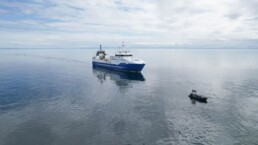

Calanus finmarchicus, commonly known as Norwegian red copepod, is a small crustacean-like zooplankton species measuring just 2–4 mm. Rich in omega-3 fatty acids and other nutrients, it is used in health supplements and as a feed ingredient for, among others, farmed fish. However, it can be difficult to locate.
When fishing for more traditional species, vessels typically rely on echosounders that look directly beneath the boat to detect fish. Calanus occurs in parts of the water column where it is also advantageous to see ahead of the vessel – preferably further ahead than the vessel’s own echosounder can reach.
PROSJEKTSFI Harvest
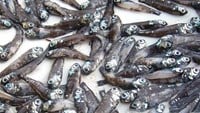
Against this backdrop, researchers from SINTEF and NTNU, through the research centre SFI Harvest, have been testing the use of unmanned and autonomous vehicles on, under and above the water surface. The aim is to help fishing vessels locate commercially viable concentrations of Calanus without wasting time and fuel searching for them.
The first round of testing last year demonstrated that the concept was feasible, with the vehicles remotely operated near Mausund, 180 km from the control room at the Trondheim Biological Station (TBS). This year’s trials introduced improved communication systems and two days of full-scale testing with the fishing trawler Nordbas from the Nordnes Group.
“We have developed a new way of communicating, both between the different units and the control room. The communication protocol allows us to manage the entire operation as a single system and makes it easier to integrate new technology when needed,” says Professor Martin Ludvigsen at the Department of Marine Technology (NTNU) and work package leader in SFI Harvest.
The two-day collaboration with Nordbas enabled the system to be tested at full scale.
In addition to Nordbas’ own echosounders, two unmanned surface vehicles (USVs) operated ahead of the vessel. These were remotely controlled from the control room at TBS.
“This allowed us to identify areas with high and low concentrations of Calanus, enabling the vessel to steer towards the most promising catches,” explains Ludvigsen.
The trials lasted 12 days and involved two wave-powered unmanned surface vehicles (USVs), two conventional USVs and two autonomous underwater vehicles (AUVs). Four of these platforms were equipped with echosounders, while two carried SINTEF’s SilCam system, which is used to observe and classify particles in the water column.
The vehicles were also fitted with water and wave sensors, and water samples were collected every eight hours. The two wave-powered vehicles operated continuously throughout the entire test period, generating a large amount of data for further research.
Four engineers were deployed in the field to support the equipment, but all planning, control and data processing were carried out at TBS.
At first glance, deploying six additional units alongside a fishing operation may seem excessive. However, this is not the intended commercial use case when fishing vessels eventually adopt the technology.
“We envision two possible scenarios,” says Ludvigsen. “Either a group of smaller fishing vessels share access to a USV, or larger trawlers carry a USV and deploy it in front of the vessel themselves. They would then decide whether to operate it remotely or control it directly from an onboard control station.”
Asked about cost-effectiveness, Ludvigsen points out that leasing the equipment will most likely be the more attractive option than purchasing it outright, since it is only needed for a few weeks each year. The cost of a few weeks’ rental could be offset by savings in fuel and the reduction of non-productive search time when locating profitable catches.
“This is a good example of how new technology that we are developing through SFI Harvest can make fisheries more precise and sustainable. When advanced stock assessment models, autonomous vessels and sensors can provide fishers with a better basis for decision-making before they deploy their gear, we can reduce both search time and fuel consumption while increasing the value of the catch,” says Ingunn Marie Holmen, Centre Director and Research Director at SINTEF Ocean.



Related News.
Hong Kong Global Maritime Trade Summit to return for third edition
The International Chamber of Shipping, in collaboration with the Transport and Logistics Bureau of the Government of Hong Kong and the Hong Kong…
Appetite for US crude oil exports climbs despite high freight
South Korea tops US crude destinations at 568,600 b/d VLCC rates to Asia double, closing arbitrage window European refining margins…
Shipping stocks Rally as Hormuz Traffic plunges 75%
Ship traffic through the Strait of Hormuz — a critical chokepoint handling about 20% of global crude oil and liquefied natural gas shipments — has…
Diana Shipping announces Time Charter Contract for m/v G P Zafirakis with Classic Maritime
Diana Shipping, a global shipping company specializing in the ownership and bareboat charter-in of dry bulk vessels, announced that, through a…
New IMO ESP Code framework for Remote Inspection Techniques
The International Maritime Organisation, through Resolution MSC.584(111) , has adopted amendments to the International Code on the Enhanced…
ABS opens Offshore & Marine Support Center in Bergen
ABS has expanded its capabilities in the Norwegian maritime market with the opening of a cutting-edge support center in Bergen, bringing advanced…
MOL holds giant step memorial ceremony and beach cleanup at Kashima Coast
Memorial and Reflection 20 Years After the Accident: Learning from the Past to Foster an Even Stronger Safety Culture Mitsui O.S.K. Lines, announced…
KEZAD-based Arabian Gulf Steel Industries achieves lowest verified Carbon Footprint for Rebar
CARES UK verified Environmental Product Declaration confirms 139 kg CO₂e per tonne for rebar produced at AGSI’s KEZAD Abu Dhabi facility Arabian…
Indian Register of Shipping announces launch of first fleet support ship INS Surya
Indian Register of Shipping continues to strengthen its role in supporting the Indian Navy and India’s naval shipbuilding capabilities through the…
VLCCs Climbing the Record Charts
LR2 The TC1 75kt MEG/Japan index decreased by only a single point this week to WS928. The corresponding Baltic round-trip TCE fell by $2,000 to…
Subscribe to our newsletter!
if you dont want to swim alone in the ocean of news, sign up for the newsletter, and you will receive daily all the important news of world shipping!
