War Risks, Emerging Fuels and Personal Service: Alexandros Vourgos on Charting Aphentrica’s Next Chapter

In an era defined by global broker consolidation, volatile trading corridors and rapid regulatory transformation, the core value of specialist marine insurance broking is undergoing a profound test. While mega-mergers create vast corporate portfolios, a distinct and agile model continues to thrive on direct relationships, specialist advocacy and immediate accountability.
At the heart of the Limassol maritime cluster, Aphentrica Marine Insurance Brokers has built a formidable reputation rooted in deep family legacy and uncompromising client service. Today, as a new generation steps into leadership, the firm is pairing decades of established trust with forward-looking legal, technical and technological expertise.
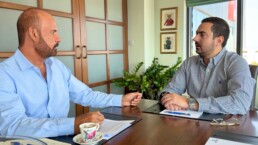
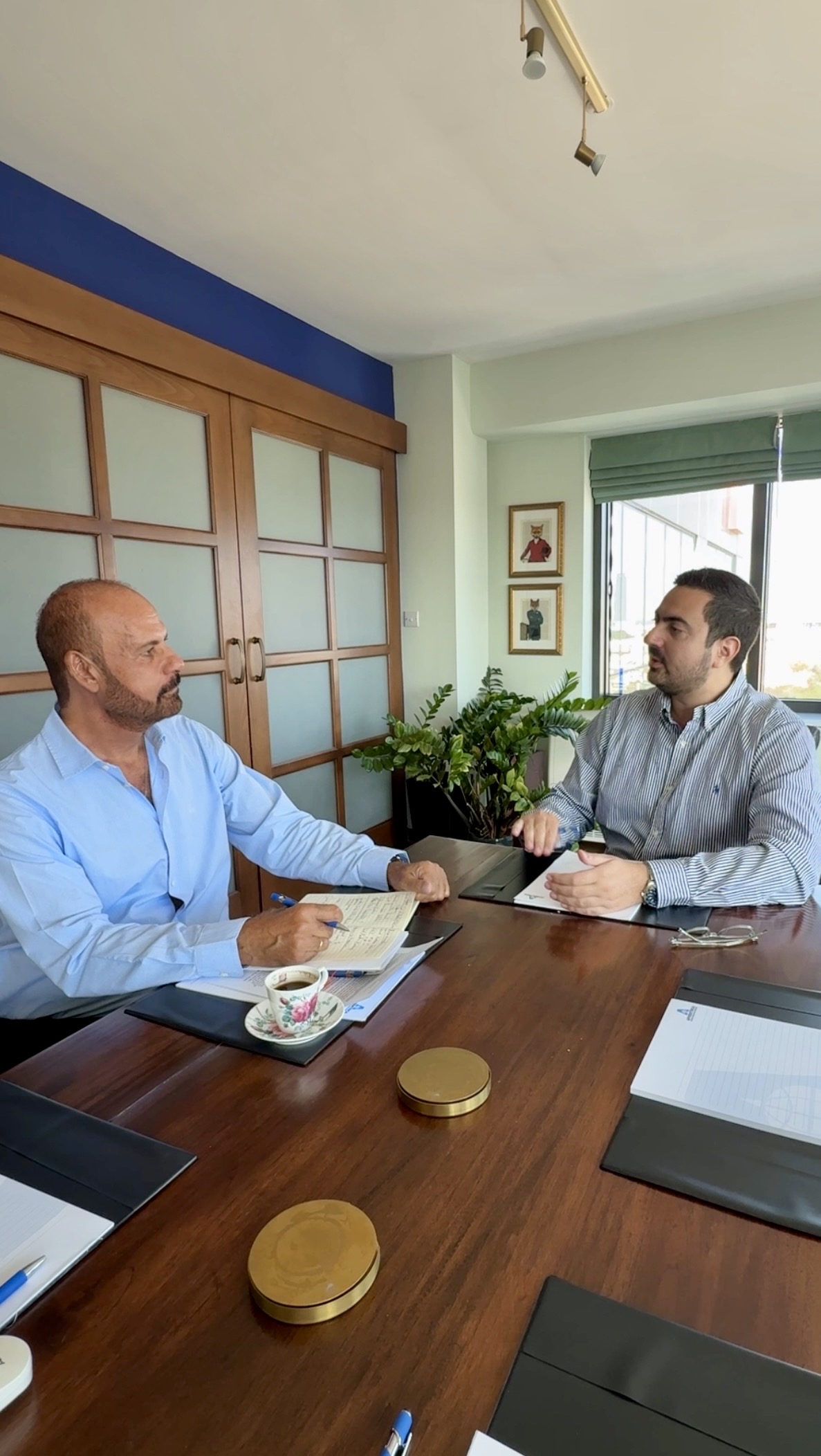
In this exclusive interview with Adonis Violaris of CSN, Alexandros Vourgos shares an unvarnished perspective on stepping into leadership, the realities of managing war risk volatility, the complex underwriting challenges posed by alternative fuels, and why true independence remains a decisive competitive edge in modern shipping.
Alexandros Vourgos is a marine insurance broker at Aphentrica Marine Insurance Brokers in Limassol and the next generation of the firm’s leadership alongside his parents, Marinos and Anna. Born into the business, he studied law at Queen Mary University of London, followed by maritime law at City, University of London, and returned to the firm in 2022. Today he is responsible for placement across its core classes, P&I, Hull and Machinery, war risks and specialist covers, negotiating daily with the International Group Clubs, the London market and specialist underwriters on behalf of shipowners and managers in Cyprus, Greece and internationally.

Growing up with your parents, Marinos and Anna, steering Aphentrica, marine insurance must have always been a big part of your life. Did you always know you would eventually join the family business, or did you ever consider a different career path?
Deep down I believe I always sensed it. My mind stayed restless as a child and I toyed with all manner of possibilities, a doctor, a stockbroker, and most of all a crime scene investigator. Puzzles and problem solving always came easily to me. That interest slowly turned into the idea of working as a criminal lawyer, so I studied law and then maritime law, which left the way open to the company. By the time university arrived it was already plain to me that I would return.
In a sense the solving of puzzles is precisely what broking involves. Every problem has an answer, the task is simply to locate it, and that is the ground where I excel and where we as a firm excel. Looking back those other career ideas never truly stood apart. All of them pointed this way.
Stepping into a leadership role within a successful family-owned company comes with its own unique set of expectations. How have you found the experience of building your own professional identity while honouring the strong legacy your parents have built?
For me the legacy has never felt like a burden, it is an asset. It is something I build upon, and my task is to earn in my own name the trust that attaches to the family name, client by client and market by market. Having Anna and Marinos as mentors is a blessing, a form of learning no one else can give you.
It also began very early. They took me with them everywhere from a young age and treated me as an adult, and as a result the market and our clients did the same. So my own identity was never something I had to build from scratch. It was always present, and it merges naturally with the identity of my parents and the Aphentrica name, drawing on the strengths of both of their personalities. At the same time I am forming my own ties with the new generation rising in the market, the people I shall work alongside for the next thirty years, and that is how a legacy renews itself.
Working so closely with your family, what is the most valuable piece of advice they have given you about navigating the complexities of the shipping industry and managing client relationships?
The counsel I carry with me is simple, and I heard it in different forms across many years. One, every problem has a solution, otherwise it is not a problem, and our job is to find it before anyone else does. Two, every client must feel they are the most important client we have, because in the moment we are working for them, they are. And three, the relationships in this market grow through mutual support. We make sure our clients know when an underwriter has stood by them, and we encourage them to stand by that underwriter when he needs their support in return, and we say exactly the same to our markets about our clients. Terms come and go with the cycle, but a relationship where both sides have supported each other in the difficult moments is what lasts.
None of this is complicated. The difficulty, and the craft, is living it every single day for decades, which is exactly what my parents have done.
Aphentrica has built a very strong and respected reputation in the market. Could you share some insights into the company’s current status and what you consider to be the main drivers behind your growth over the last few years?
We are coming off the strongest years in the firm’s history, and I say that with gratitude rather than complacency. We have grown the team deliberately, bringing in experienced people we specifically sought out, and our client retention is very high, which for me is the number that matters most in this business.
As for the drivers, I honestly believe there is no secret. It is personal service, immediate communication and specialist knowledge, delivered consistently over a long time. Clients stay because they feel the difference when something goes wrong, and almost all of our growth comes from referrals and from our name in the market. Reputation compounds. It is the slowest form of growth and the strongest, and it has delivered. The firm has grown significantly over the last few years, in clients, in people and in the volume of business we place, and it has done so on service and reputation alone
We are currently seeing unprecedented geopolitical conflicts affecting critical shipping lanes. How is Aphentrica guiding shipowners through the complexities of war risk covers and the volatility in war risk premiums?
War risks is a class where the last few years changed everything. Listed areas have been redrawn, additional premiums for breach transits move with events, sometimes week by week, and capacity and appetite shift quickly.
Our approach rests on three things. Swift response, because a war risk quotation is often needed within hours and the vessel cannot wait. Strong market access, so that when a transit is difficult we can test more than one door and keep the terms honest. And constant communication with our clients, before the voyage is committed and not after. We monitor developments daily and we make sure an owner is never surprised. They know what a transit will cost and what the cover does and does not respond to before the decision is made. In a volatile class, the broker’s job is to take the uncertainty out of everything that can be made certain.

From the push for decarbonisation and alternative fuels to the cyber threats that come with a rapidly digitalising fleet, the maritime risk landscape is changing quickly. How are these emerging risks reshaping underwriting, and how does Aphentrica prepare its clients for them?
When it comes to decarbonisation I will speak honestly, because owners appreciate honesty on this subject and there is far too little of it. Shipping carries more than eighty per cent of world trade by volume and produces around three per cent of global emissions. Already the most efficient way humanity has ever found to move goods, it is nevertheless being singled out for a regulatory burden that is heavy, fragmented and expensive, and every euro of it will be paid by the end consumer of every product moved by sea.
What many in this industry think quietly I will say openly. I am not convinced the science is as settled as it is presented to be. The climate has moved in cycles for as long as records exist, and I am twenty nine so I know it only from the record, but the record shows that the same publications warning of warming today were warning the world of global cooling in the 1970s. Much of today’s momentum traces back not to measured science but to the campaign of alarm built by Al Gore, whose confident predictions failed to arrive, one after another, without consequence and without apology. A movement that punishes questions is politics, not science. Meanwhile the burden is carried by Europe and America while economies producing close to forty per cent of global emissions carry nothing comparable, so we prejudice our own economic capacity in order to be seen to act, the rules keep moving, and an owner is asked to plan an asset with a twenty five year life around a fuel choice that may not comply in five.
Whatever one thinks of the politics, the risk is real and it is ours to manage. The alternative fuels carry serious dangers of their own. Ammonia is highly toxic, a leak in an engine room or in port endangers the crew and everyone near the vessel, and it corrodes the very systems that carry it. Hydrogen is extremely explosive and difficult to contain. Methanol is toxic and burns nearly invisible in daylight, which changes how a crew fights a fire. LNG is stored at minus one hundred and sixty degrees. Each one rewrites the machinery, crew, fire and pollution profile of a vessel, and the training, the firefighting techniques and the claims experience behind them are still being built. For us as brokers this is the real work, and the insurance conversation must happen before the technology decision, not after it. We engage underwriters and class early so the new risk is understood and priced rather than feared, we keep disclosure, surveys, valuations and wordings up to date with what is actually on board, from machinery damage to crew injury to a pollution event that looks nothing like an oil spill, and we make sure crew training sits in the underwriting file where it earns terms. Our clients should not be penalised twice, once by the cost of compliance and again by uninsured risk, and it is our job to see that they are not.
Cyber has seen the conversation reach the boardroom, and the market has answered by clarifying traditional covers with express exclusions on one side while standalone products develop on the other. It is not yet a standard purchase in our segment. We keep clients aware of exactly where cyber sits across their existing covers, and where an operation warrants it we bring the specialist markets to the table.
In what remains a disciplined P&I market, what strategies does Aphentrica employ to ensure your clients secure the best possible terms at renewal?
Discipline rewards preparation, and our renewals start far earlier than most would expect. A renewal for us is not an event, it is the conclusion of months of work. The conversations begin early, internally, with the client and with the Club, so that by the time terms are on the table there are no surprises on either side, and we prepare proper renewal reports for both our clients and the Clubs, presenting the fleet properly, honestly and completely.
We also refuse to take the loss record at face value. Before any renewal we go through it claim by claim, pressing for reserves to be reviewed and reduced where they are overstated, pushing stale files towards closure, and establishing what actually happened behind each entry and where the record truly lies. A record as first reserved and a record that has been properly worked are two very different starting points for a negotiation, and a number without its story always reads worse than it is, so we make sure the story is told.
Beyond that, we know our Clubs and underwriters personally and we know their appetite, so we know when to defend an incumbent relationship and when to test the market, and we are honest with our clients about which of the two truly serves them. And we never simply roll terms. Deductibles and structures are reviewed every year against how the fleet has actually performed. The result is terms that reflect the client’s true risk rather than the market average, and that is the whole job.

We are witnessing significant consolidation among the global mega brokers. How does an independent, specialised marine insurance broker like Aphentrica maintain its competitive edge and personal touch against these corporate giants?
I will say something that may sound provocative. Consolidation among the global brokers is a gift to firms like ours. Every merger creates distance between the client and the person who actually places their risk, and distance is exactly what we do not sell.
At Aphentrica, the person who negotiates your terms is the person who answers your call at midnight when something has gone wrong, and decisions are taken here in Limassol by the people whose name is on the door, not referred to a committee in another time zone. At the same time, independence does not mean isolation. Through our London and international partners we access Lloyd’s and every market a global broker can access. So the client gives up nothing in reach and gains everything in attention.
Our clients are not account numbers on a segmented portfolio, they are relationships measured in decades. That is a model the giants cannot replicate, because it does not scale. It was never meant to.
Limassol has grown into one of the leading maritime centres in the region. How do you see Cyprus’s role as a shipping and marine insurance hub developing, and where does Aphentrica fit within that story?
Limassol has quietly become one of the most complete maritime centres anywhere. We are one of the largest ship management centres in the world, and around that sits the full cluster, owners, managers, lawyers, class societies, banks and insurance, all within a few square kilometres of each other. The direction of travel is clearly upwards, and every year the conversations at the industry events confirm it.
For marine insurance specifically I believe the opportunity is significant. Decisions about risk are best taken close to the people who operate the ships, and the more of that intelligence sits in Limassol, the stronger the case for the broking and the servicing to sit here too. Aphentrica’s story is a Limassol story. We grew with this cluster and our relationships live here, and my ambition for the next generation of the firm is not only to grow with the city, but to be one of the reasons the city’s maritime name keeps growing.
Looking ahead over the next three to five years, what are your strategic priorities for Aphentrica, and how do you see the traditional role of the marine insurance broker evolving to meet future industry demands?
Our priorities are clear. One, to go even deeper in the specialist classes where we are strongest, war risks, P&I and hull, because volatility is not going away and specialist advice is what a volatile world pays for. Two, to keep growing the team with people who share our standard of service. And three, technology, where our record shows we mean it. In the five years since I joined the firm we have gone fully paperless, from clusters of box files to a system where every placement and every document is instantly accessible, and we have adopted dedicated broker software and new accounting software. Our housekeeping became dramatically more efficient, and that efficiency makes us better brokers, because time not spent searching for paper is time spent on the client.
The next frontier is AI, and we are deliberately not rushing it. I follow the technology very closely and I am personally testing its boundaries, and where and how it can be implemented seamlessly and safely, so that when it enters our office it takes on the mechanical work and frees us to handle the important things better ourselves. Technology will not replace the broker, but brokers who use it well will replace brokers who do not.
As for the role itself, information is becoming a commodity. Everyone can see the same data. What cannot be commoditised is judgment, advocacy and trust, and that is where the broker’s role is heading, less intermediary and more advisor, someone who stands next to the client in the difficult moment. That has been Aphentrica’s philosophy from the beginning, so the future we are heading towards looks very much like the way we already work.



Related News.
Spyros Papavassiliou honoured with the “Ge’ Néo Epicheirein” 2026 Award in the Shipping Enterprises category
Celebrating leadership, entrepreneurial excellence and a strong contribution to Cyprus shipping. Island Energies is proud to announce that Mr Spyros…
ABP welcomes HANSEATIC spirit the largest ever cruise ship to visit the Port of Ipswich
Hapag-Lloyd Cruises’ expedition vessel, HANSEATIC spirit, becomes the largest cruise ship ever to visit Ipswich, highlighting the growing appeal of…
Prime Tanker Management deploys ShipIn across its entire fleet to improve safety performance
Master-led use of operational insight supports measurable improvement across PPE, bridge, and technical performance while strengthening fleet-wide…
Goltens Worldwide enters into agreement for sale to HD Hyundai Marine Solution
Proposed acquisition supports long-term growth while preserving Goltens’ independence and commitment to customers Goltens Worldwide announced that it…
Port of Piraeus receives special award marking 10 years since COSCO SHIPPING joined its Shareholding Structure
Award presented at the 9th Infrastructure and Transport Conference ITC 2026 A significant milestone in the history of Piraeus Port Authority and the…

Seafarers’ voices must shape the future of mental health support at sea, says OneCare Group
The shipping industry must listen more closely to the lived experiences of seafarers if it is to build working environments that genuinely protect…
Bangladesh’s Chittagong Port Authority and DP World sign 15 year concession for new Mooring Container Terminal
The Chittagong Port Authority and DP World have signed a 15-year concession agreement for the operation and maintenance of the New Mooring Container…
ABP’s HELM Immingham opens for business
Associated British Ports marked the official opening of its HELM Immingham site, a 227-acre industrial and logistics development site. Seen as one…
Veson Nautical and Marcura expand partnership to Streamline Demurrage Management
Marcura Claims now integrates with IMOS, giving joint clients another way to manage demurrage. Global maritime technology leaders Veson Nautical and…
Thermal Weakness Drags Global Coal Flows Lower
Global seaborne coal flows fell 6.7% year on year in September 2026 to 115 Mt. Thermal coal drove the decline, and a rise in met coal flows was not…
Subscribe to our newsletter!
if you dont want to swim alone in the ocean of news, sign up for the newsletter, and you will receive daily all the important news of world shipping!
