Design choices ‘make or break’ subsea pipeline integrity, finds LR study for Havtil
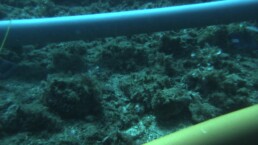

The report, commissioned by Havtil, provides an updated industry experience base for assessing the performance of welded and mechanical connectors used in subsea systems and pipeline infrastructure.
Pipelines and subsea facilities are critical components of offshore energy production, connecting fields to processing and export infrastructure while operating in some of the world’s most demanding environments. Ensuring their structural integrity throughout decades of service remains a key challenge for operators and regulators alike.
Drawing on industry data to map common fault mechanisms and performance trends, LR concludes that decisions taken at the design stage have a direct impact on failure risk throughout an asset’s life.
The findings come as Norway pushes ahead with renewed offshore activity, including 70 new blocks for offshore exploration as part of the APA 2026 licensing round aimed at sustaining energy supply to Europe.
Against that backdrop, regulators are tightening focus on structural safety in critical infrastructure such as pipelines and subsea facilities.
LR’s study supports Havtil’s risk-based approach to oversight, reinforcing the need for operators to ensure that connector design and qualification processes are sufficiently robust for such critical components. Comprehensive qualification provides confidence in the integrity of the connector throughout service life, while early involvement of the original equipment manufacturer can support life extension by validating key design assumptions and performance limits.
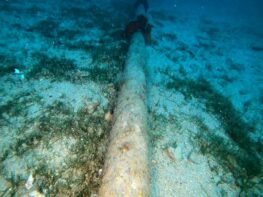
Sean Murray, Global Technical Authority – Pipelines and Subsea at Lloyd’s Register, said: “Subsea systems are expected to perform safely and reliably for many years in challenging operating conditions. The choices made during design have a lasting impact on their integrity and long-term performance.
“This project consolidates industry experience, operational data, and failure insights to support improved risk-based decision-making across the lifecycle of subsea assets. It highlights that, while subsea connectors generally demonstrate high reliability, their performance is strongly dependent on robust design, manufacturing quality, installation control, and rigorous qualification.
“By better understanding how different connector solutions perform in service, operators can make more informed decisions that enhance safety, reduce risk and improve through-life reliability of these critical components.”
Havtil has made structural safety a priority area, closely tracking incidents and near-misses with major accident potential. LR’s contribution adds technical depth to that work, giving operators a clearer evidence base to support design and integrity decisions in increasingly complex offshore developments.
Steffen Andreasen, Principal Engineer at Havtil, said: “Sharing experience and knowledge across the industry is key to reducing risk and improving structural safety. This study highlights how the integrity of subsea connectors depends on robust design, qualification, and integrity management, which together are essential for maintaining safe and reliable operations throughout the lifetime of subsea infrastructure.”



Related News.

Navigating the Multi-Orbit Era: In Conversation with Intellian’s Jon Harrison at SMM 2026
At SMM 2026 in Hamburg, the rapid evolution of maritime satellite communications took centre stage. Across the exhibition halls, discussions among…
Cyprus ports need joint energy and investment strategy, shipping agents chief says
Cyprus needs a coordinated strategy for shipping, energy and environmental protection to support port investment and modernisation, Cyprus shipping…

MASO Public Affairs introduces MASO Regulatory Intelligence
A new subscription service helping businesses understand what is changing and what it means for them MASO Public Affairs introduces MASO Regulatory…
Anglo-Eastern helps turn CMBTECH’s ammonia ambition into an operational reality
From early feasibility study and risk-based design to newbuilding supervision, crew readiness and technical management, Anglo-Eastern drew on its…

Escalation of attacks threatens to derail recovery in Middle East oil exports
World oil demand is forecast to fall by 2.5 mb/d y-o-y in 4Q26 and 2.6 mb/d on average in 2026. As the Iran war manifests itself through restricted…
New study finds shipping pays twice its share to EU ETS earmarked revenues should triple to help build market for sustainable fuels and technologies
Shipping is responsible for around 10% of EU ETS emissions but pays almost 20% of the ETS bill. Unlike other sectors, it has never received free…

MSARC strengthens maritime mass rescue readiness through training and national live exercise off Dakar, Senegal
Joint MSARC–FHAS programme combines three days of SAR training with a national multi-agency live exercise The Maritime Search and Rescue Council ,…

Sogese report deliveries are still being delayed as container freight rates fluctuate
FOR IMPORTERS Spot rates into the Mediterranean are back at January levels, Far East to Europe reliability sits at pandemic lows, and nearly…

Glencore begins trading on Australian Securities Exchange
Glencore has begun trading on the Australian Securities Exchange under the ASX code GLC. Gary Nagle, Glencore’s CEO, said it was an exciting day for…
BIMCO Shipping Number of the Week
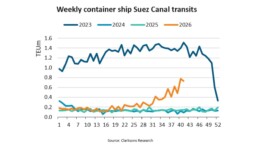
Suez Canal container ship transits exceed 50% of pre-disruption levels "During the first two weeks of October, weekly container ship capacity…
Subscribe to our newsletter!
if you dont want to swim alone in the ocean of news, sign up for the newsletter, and you will receive daily all the important news of world shipping!
