CMT introduces engine energy loss detector
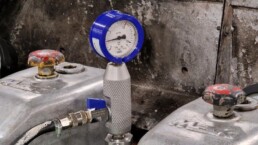

Germany’s CM Technologies (CMT) has introduced a compact Pressure Drop Test Instrument (PDTI) designed to identify cylinder pressure leaks before the result in increased fuel consumption, costly repairs and ship downtime.
During a diesel engine’s compression process, a pressure loss can provide an early indication of deteriorating piston rings (“blow by”), cylinder liner wear or damage or leakage at air inlet and exhaust valves.
Although the initial symptoms may appear relatively minor, pressure loss can actually point to developing wear within the combustion chamber, said CMT managing director David Fuhlbrügge.
“Any loss of cylinder pressure also represents a loss of energy that would otherwise act on the piston during combustion. As a result, an engine will require more fuel to compensate for the reduced pressure and maintain the required power output,” he said.
The company said pressure drop testing should form part of routine engine condition monitoring, but the availability of a simple, purpose-specific test is limited.
“Checking whether a cylinder is losing pressure should be a standard test, but there are relatively few dedicated instruments available,” said Fuhlbrügge. “Some crews have developed their own rudimentary tests, which may work, but do not provide a uniform solution across a fleet. Customers approached us because they wanted a simple, standardised instrument capable of more consistent results.”
The PDTI works by introducing pressurised air into the combustion chamber through the engine indicator valve. Once the required pressure has been established, the system is locked and allowed to stand for a defined period. The pressure loss over a fixed time is measured.
By repeating the procedure across the engine and comparing the rate of pressure decay between individual cylinders, engineers can identify cylinders that lose pressure more rapidly than others.
These outliers may indicate leakage associated with worn or damaged piston rings, cylinder liner condition, or leaking valves.
“Acceptable pressure loss depends on the engine and its specified operating limits. However, comparing results across cylinders provides engineers with a practical means of identifying deviations and determining where further inspection may be required,” Fuhlbrügge said.
“If pressure is escaping from the combustion chamber, energy is being lost. That can contribute to higher fuel consumption because additional fuel may be required to compensate for the loss. Pressure drop testing can also indicate common problems such as piston-ring deterioration or problems with the exhaust-valve.”
The PDTI itself is manufactured using additive manufacturing, with stainless-steel powder formed layer by layer using a specialised 3D-printing process. This method allows complex internal pathways to be incorporated while maintaining the integrity of the instrument’s external structure.
“Pressure leakage is easy to overlook, but it can be an early indication that the engine is beginning to deteriorate. A simple comparison of pressure decay between cylinders will help saving fuel and give engineers useful information before it becomes a costly problem,” he said.



Related News.

Navigating the Multi-Orbit Era: In Conversation with Intellian’s Jon Harrison at SMM 2026
At SMM 2026 in Hamburg, the rapid evolution of maritime satellite communications took centre stage. Across the exhibition halls, discussions among…

Cyprus ports need joint energy and investment strategy, shipping agents chief says
Cyprus needs a coordinated strategy for shipping, energy and environmental protection to support port investment and modernisation, Cyprus shipping…

MASO Public Affairs introduces MASO Regulatory Intelligence
A new subscription service helping businesses understand what is changing and what it means for them MASO Public Affairs introduces MASO Regulatory…

Anglo-Eastern helps turn CMBTECH’s ammonia ambition into an operational reality
From early feasibility study and risk-based design to newbuilding supervision, crew readiness and technical management, Anglo-Eastern drew on its…

Escalation of attacks threatens to derail recovery in Middle East oil exports
World oil demand is forecast to fall by 2.5 mb/d y-o-y in 4Q26 and 2.6 mb/d on average in 2026. As the Iran war manifests itself through restricted…

New study finds shipping pays twice its share to EU ETS earmarked revenues should triple to help build market for sustainable fuels and technologies
Shipping is responsible for around 10% of EU ETS emissions but pays almost 20% of the ETS bill. Unlike other sectors, it has never received free…

MSARC strengthens maritime mass rescue readiness through training and national live exercise off Dakar, Senegal
Joint MSARC–FHAS programme combines three days of SAR training with a national multi-agency live exercise The Maritime Search and Rescue Council ,…

Sogese report deliveries are still being delayed as container freight rates fluctuate
FOR IMPORTERS Spot rates into the Mediterranean are back at January levels, Far East to Europe reliability sits at pandemic lows, and nearly…

Glencore begins trading on Australian Securities Exchange
Glencore has begun trading on the Australian Securities Exchange under the ASX code GLC. Gary Nagle, Glencore’s CEO, said it was an exciting day for…

BIMCO Shipping Number of the Week
Suez Canal container ship transits exceed 50% of pre-disruption levels "During the first two weeks of October, weekly container ship capacity…
Subscribe to our newsletter!
if you dont want to swim alone in the ocean of news, sign up for the newsletter, and you will receive daily all the important news of world shipping!
