The Week in Alt Fuels: EU omits e-fuel earmarking – ENGINE
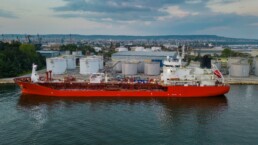

The EU’s revised ETS could reserve 110 million allowances to reduce green bunker fuel price premiums from 2028-2040. But the absence of dedicated e-fuel earmarking raises some concerns.
The European Commission has proposed amendments and additions to the current EU Emissions Trading System (EU ETS) as part of its revision, published on 17 July. One of the additions includes a new Sustainable Maritime Alternative Propulsion (SMAP) mechanism to help fund shipping’s transition away from fossil bunker fuels.
Under the new Article 3gaa of the ETS Directive, the Commission would reserve a maximum of 110 million EU Allowances (EUAs) between 1 January 2028 and 31 December 2040 for shipping companies using fuels or propulsion technologies with low- and zero-emission potential, including electric and wind-assisted systems.
The EUAs are intended to cover part of the price differential between conventional fossil bunker fuels and eligible alternatives, as well as the additional costs of deploying zero-emission propulsion systems on ships.
Coverage rates are tiered by fuel type.
For instance, a shipowner that bunkers renewable fuels of non-biological origin (RFNBOs) would receive EUAs worth 90% of the price difference between the fuel and conventional bunker fuel. The most commonly discussed RFNBO bunker fuels are e-ammonia, e-methanol and e-methane, which are all green hydrogen derivatives.
Zero-emission propulsion technologies would be covered at 90% of the additional deployment and operating cost, scaled to the emissions cuts achieved.
Low-carbon hydrogen and its derivatives would be covered at 80%, while biogas and advanced biofuels would be covered at 55% of the price gap. In practice that mostly means blue hydrogen, produced from fossil fuel with carbon capture.
But there are still some unanswered questions around how prices of low- and zero-emission fuels would be determined. It is unclear whether calculations would include energy adjustments to account for differences in energy density between fuel types, and whether it would net out existing EU ETS and FuelEU Maritime cost reductions, including FuelEU’s pooling mechanism.
The Commission has also not clarified where it would source its “average market prices” from, how frequently those prices would be updated or how the scheme would handle cases where a shipping company’s actual bunker price differs from the published reference price.
The proposal also includes bonus percentage points in certain cases.
Low- and zero-emission fuels produced from feedstocks sourced in the EU would receive an additional 10 percentage points of fuel price cap coverage. So would fuels produced in countries with emissions trading systems linked to the EU ETS such as the Swiss ETS, and countries participating in the EU’s proposed “ETS as a service” mechanism.
“ETS as a service” was proposed in Article 25b of the revision and could let the EU help non-EU countries price 50% of shipping emissions on EU-to-non-EU voyages that currently fall outside the EU ETS’s scope. The resulting allowance revenue from that 50% would go to the non-EU country that opts for the service, rather than to the EU as with the ETS.
Fuels used on voyages between EU ports and island ports under a member state’s jurisdiction would receive a further five percentage points across all fuel categories. This could for example be a voyage between Rotterdam-Palermo, which is on the island of Sicily and part of the Italian jurisdiction.
Propulsion technologies installed in EU shipyards would also qualify for an additional five percentage points.
Liner shipping trade body World Shipping Council (WSC) welcomed the mechanism, saying it follows the same policy approach already used in aviation.
“Helping close the price gap between conventional and alternative fuels can encourage uptake, support investment in production and position Europe as a leading alternative fuel bunkering hub,” WSC said.
“Under the plan, up to 100% of the price premium for renewable fuels of non-biological origin used in shipping could be subsidised. That could be significant for fuels such as green ammonia, e-methanol and other hydrogen-based maritime fuels, where cost remains one of the main barriers to early deployment,” the International Association for Hydrogen Safety (HySafe) said in a LinkedIn post.
While the percentages determine how much of the renewable-fossil fuel price gap can be covered for each fuel, they do not guarantee the funding needed to deliver the fuels.
The mechanism would allow all eligible fuels and technologies to draw from a single pool of 110 million EUAs rather than ring-fencing allowances by fuel type. RFNBOs would compete with biofuels and zero-emission propulsion technologies for the same allowances.
If annual demand exceeds the available allowances, allocations would be reduced uniformly across all applicants, regardless of the fuel or technology used, according to the proposal.
Aurelia Leeuw, EU policy director at the SASHA Coalition, echoes those concerns. She thinks the lack of a dedicated RFNBO allocation within the 110 million EUA pool is one of the proposal’s main shortcomings.
She also calls the absence of a long-term offtake requirement a drawback, saying the proposal “doesn’t require long term offtake agreements, which really doesn’t make sense considering that’s an improvement being implemented on the aviation side.”
The EU ETS revision is not yet law. The European Parliament and the Council will negotiate the proposal from this autumn, targeting agreement in the first quarter of 2027 and implementation in 2028.
In other news this week, the Port of Long Beach signed an agreement with the US Maritime Administration to examine how small modular nuclear reactors can be safely accommodated on commercial vessels.
Around 25 mt of CO2 captured during an onboard carbon capture and storage (OCCS) pilot has been officially recognised for compliance under the EU ETS, the Global Centre for Maritime Decarbonisation (GCMD) said. Separately, a GCMD proposal to the IMO for recognising mineralisation of carbon as a permanent CO2 storage secured in-principle support from the global shipping regulator.
Bunker supplier SIPG Energy supplied 2,800 mt of bio-methanol to a dual-fuel car carrier owned by Nordic shipping company Wallenius Wilhelmsen in Shanghai. The bio-methanol stem was delivered to the Arctic Tern by SIPG Energy’s methanol bunker barge Hai Gang Zhi Yuan in a ship-to-ship bunker operation.
Germany’s Hamburg Port Authority (HPA) rolled out safety and operational guidelines for ship-to-ship ammonia bunkering at the port. The guidelines are intended to prepare the Port of Hamburg for future ammonia bunker operations, HPA said.
By
Source: ENGINE by Konica Bhatt, https://www.engine.online/news/the-week-in-alt-fuels-eu-omits-e-fuel-earmarking-7ec2



Related News.
Navigating the Multi-Orbit Era: In Conversation with Intellian’s Jon Harrison at SMM 2026
At SMM 2026 in Hamburg, the rapid evolution of maritime satellite communications took centre stage. Across the exhibition halls, discussions among…
Cyprus ports need joint energy and investment strategy, shipping agents chief says
Cyprus needs a coordinated strategy for shipping, energy and environmental protection to support port investment and modernisation, Cyprus shipping…

MASO Public Affairs introduces MASO Regulatory Intelligence
A new subscription service helping businesses understand what is changing and what it means for them MASO Public Affairs introduces MASO Regulatory…
Anglo-Eastern helps turn CMBTECH’s ammonia ambition into an operational reality
From early feasibility study and risk-based design to newbuilding supervision, crew readiness and technical management, Anglo-Eastern drew on its…
Escalation of attacks threatens to derail recovery in Middle East oil exports
World oil demand is forecast to fall by 2.5 mb/d y-o-y in 4Q26 and 2.6 mb/d on average in 2026. As the Iran war manifests itself through restricted…
New study finds shipping pays twice its share to EU ETS earmarked revenues should triple to help build market for sustainable fuels and technologies
Shipping is responsible for around 10% of EU ETS emissions but pays almost 20% of the ETS bill. Unlike other sectors, it has never received free…

MSARC strengthens maritime mass rescue readiness through training and national live exercise off Dakar, Senegal
Joint MSARC–FHAS programme combines three days of SAR training with a national multi-agency live exercise The Maritime Search and Rescue Council ,…
Sogese report deliveries are still being delayed as container freight rates fluctuate
FOR IMPORTERS Spot rates into the Mediterranean are back at January levels, Far East to Europe reliability sits at pandemic lows, and nearly…
Glencore begins trading on Australian Securities Exchange
Glencore has begun trading on the Australian Securities Exchange under the ASX code GLC. Gary Nagle, Glencore’s CEO, said it was an exciting day for…
BIMCO Shipping Number of the Week
Suez Canal container ship transits exceed 50% of pre-disruption levels "During the first two weeks of October, weekly container ship capacity…
Subscribe to our newsletter!
if you dont want to swim alone in the ocean of news, sign up for the newsletter, and you will receive daily all the important news of world shipping!
