SEA-LNG 2026 Mid-Year Market Review underlines a decade of progress along methane decarbonisation pathway
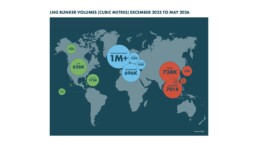

- LNG-fuelled vessels, LNG bunker vessels, and LNG bunkering volumes, as well as biomethane bunkering and production, all continue to grow in 2026.
- 12 July 2026 marked the tenth anniversary of SEA-LNG, with 37 members spanning the methane value chain.
- SEA-LNG granted provisional IMO consultative status, bringing its Members’ practical expertise and evidence-based research to the fore.
According to analysis of vessel orders from January to June 2026 from SEA-LNG member DNV, LNG dual-fuel orders remain robust at 73 vessels, accounting for almost 90% of the alternatively fuelled order book, when compared with ammonia, hydrogen and methanol. Additionally, there are now 67 LNG bunker vessels in operation, plus 42 more on order.
The LNG order book continues to be dominated by vessels serving liner trades especially container vessels and pure car and truck carriers (PCTCs). This is consistent with recent analysis by the World Shipping Council which shows that LNG remains the preferred fuel for container ship owners, accounting for 58% of total tonnage ordered versus conventional fuels at 36%.
There was also an increase in bunkering volumes and infrastructure. According to analysis by Kpler, global LNG bunker volumes were around 770,000 cubic meters (m3) per month in the period January to May 2026. This represents an increase of about 13% on the same period in 2025 as more LNG fuelled vessels have entered into operation together with favourable LNG and conventional fuel prices.
Liquefied biomethane is bunkered routinely today, and liquefied e-methane is in development. Since the introduction of regulations like FuelEU Maritime, LBM supply and demand have grown significantly. Data from the European Biogas Association show biomethane production capacity reached 8.2 bcm a year by the end of Q2 2026. This represents an additional 1 bcm in a single year, or growth of 17%. The number of operational biogas plants rose from 1,678 to 1,975 plants with €36 billion of allocated capital investment driving the sector.
Steve Esau, SEA-LNG COO, said: “Despite geopolitical and regulatory uncertainties in 2026, the industry is maintaining momentum on the methane decarbonisation pathway. This year’s mid-year review confirms that methane is the practical and realistic solution for shipping decarbonisation. This is reflected in the growing numbers of LNG-fuelled vessels, LNG bunker vessels, and LNG bunkering volumes, as well as biomethane bunkering and production growth. As we look ahead, with e-methane also materialising, we are confident in the trajectory of the methane pathway to decarbonisation.”
SEA-LNG is active at the IMO and EU to underline the importance of goal-based and technology-neutral decarbonisation regulations, and ensure a global market for low and net zero fuels. As the methane pathway continues to mature, efforts have shifted from raising awareness to sharing members’ collective expertise on important technical details that will, for example, further reduce global well-to-wake emissions and scale up bio- and e-methane development and deployment.
As part of these efforts, last week SEA-LNG was granted provisional consultative status at the IMO. This status will enable SEA-LNG to engage directly with Members States as it advocates for practical and realistic regulations to help move the maritime industry forward.
Peter Keller, SEA-LNG Chairman, said: “I have been with SEA-LNG since we founded it 10 years ago, and what strikes me is how methane has ramped up from a pathway to a clear runway for shipping decarbonisation. When building the first LNG-powered containership, I didn’t imagine that within ten years over 10% of the global fleet by deadweight could be powered by methane. What started as a solution to reduce harmful local emissions has cemented itself as the practical and realistic option for reducing greenhouse gas emissions today and into the future. As I look ahead, the fundamentals are strong, the orderbook is growing, the bunkering infrastructure is expanding at a record pace, and biomethane and e-methane are building on LNG’s foundation. Just as we expected.”
SEA-LNG was founded in 2016. The coalition has provided a forum for first movers and other innovators to collaborate, share-knowledge and make LNG and the methane pathway an alternative marine fuel reality. These collective efforts have resulted in consistent progress and the continued breaking down of barriers along the methane decarbonisation pathway. Since SEA-LNG was founded, LNG-fuelled ships have grown from 81 to over 1550 in operation and on order, LNG bunker vessels have similarly grown from 9 to 109 in operation and on order, and LNG bunkering locations have risen from 10 to 222 ports worldwide.



Related News.

Navigating the Multi-Orbit Era: In Conversation with Intellian’s Jon Harrison at SMM 2026
At SMM 2026 in Hamburg, the rapid evolution of maritime satellite communications took centre stage. Across the exhibition halls, discussions among…

Cyprus ports need joint energy and investment strategy, shipping agents chief says
Cyprus needs a coordinated strategy for shipping, energy and environmental protection to support port investment and modernisation, Cyprus shipping…

MASO Public Affairs introduces MASO Regulatory Intelligence
A new subscription service helping businesses understand what is changing and what it means for them MASO Public Affairs introduces MASO Regulatory…

Anglo-Eastern helps turn CMBTECH’s ammonia ambition into an operational reality
From early feasibility study and risk-based design to newbuilding supervision, crew readiness and technical management, Anglo-Eastern drew on its…

Escalation of attacks threatens to derail recovery in Middle East oil exports
World oil demand is forecast to fall by 2.5 mb/d y-o-y in 4Q26 and 2.6 mb/d on average in 2026. As the Iran war manifests itself through restricted…

New study finds shipping pays twice its share to EU ETS earmarked revenues should triple to help build market for sustainable fuels and technologies
Shipping is responsible for around 10% of EU ETS emissions but pays almost 20% of the ETS bill. Unlike other sectors, it has never received free…

MSARC strengthens maritime mass rescue readiness through training and national live exercise off Dakar, Senegal
Joint MSARC–FHAS programme combines three days of SAR training with a national multi-agency live exercise The Maritime Search and Rescue Council ,…

Sogese report deliveries are still being delayed as container freight rates fluctuate
FOR IMPORTERS Spot rates into the Mediterranean are back at January levels, Far East to Europe reliability sits at pandemic lows, and nearly…

Glencore begins trading on Australian Securities Exchange
Glencore has begun trading on the Australian Securities Exchange under the ASX code GLC. Gary Nagle, Glencore’s CEO, said it was an exciting day for…

BIMCO Shipping Number of the Week
Suez Canal container ship transits exceed 50% of pre-disruption levels "During the first two weeks of October, weekly container ship capacity…
Subscribe to our newsletter!
if you dont want to swim alone in the ocean of news, sign up for the newsletter, and you will receive daily all the important news of world shipping!
