The looming crisis putting Europe’s energy security at risk
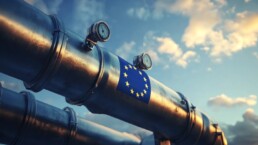

- New methane rules mean the EU risks losing up to 43 percent of its natural gas and up to 87 percent of its oil supply.1
- With a smaller proportion of oil and gas supplies likely to be compliant, less availability means risk of higher prices for households and businesses alike.
- The EU must allow more time to fix the issue and prevent severe market and supply disruptions.
The ongoing crisis in the Strait of Hormuz has highlighted Europe’s urgent need to protect its energy security, shield consumers, and preserve industrial competitiveness.
Separate from the conflict in the Middle East, the EU is on the cusp of knowingly exacerbating its own energy crisis.
From 2027, stringent new methane rules mean the EU risks losing up to 43% of its natural gas and up to 87% of its oil supply, according to a study by Wood Mackenzie. The rules around monitoring, reporting and verification are so stringent that no country (and likely only few suppliers worldwide) will be able to fully meet the requirements in the foreseeable future.
Remember, these rules have nothing to do with lowering levels of methane, which the legislation does not demand until 2030, but are about adhering to measurement, reporting, certification and verification standards for which neither the Commission nor member states have done the work to establish in time for implementation.
With a smaller proportion of oil and gas supplies likely to be compliant, less availability means there’s a real risk this looming crisis will affect energy affordability for households and businesses alike.
Consumers will ultimately bear the burden through anticipated higher gas and/or fuel prices; Wood Mackenzie say gasoline and diesel prices could increase by 24% and 16% respectively. The European Commission knows this but appears unwilling to make the necessary changes to reduce the cost burden on its citizens.
High energy costs would further damage the competitiveness of Europe’s energy intensive industries like steel, chemicals and manufacturing – leading the bloc further down the path of additional self-inflicted deindustrialisation. Make no mistake – the risk is factories close, jobs will be lost and household costs continue to rise.
The pinch point is imminent, as many energy importers are deciding now what orders to place for 2027. The refining sector, already battling to stay competitive, is faced with the uncertainty of not just where to source from, but the prospect of severe penalties for non-compliance; up to 20% of annual turnover.
The Commission’s proposition that this will all be fixed by “guidance”, including relaxing penalties, is misguided. Leaving individual member states to decide whether and how to reduce fines for importers compounds the complexity and removes none of the risk. Penalty or not, no company wants to position itself as legally non-compliant.
I want to be clear – we fully support the EU’s ambition on methane. We’re already deploying leading-edge technology on the ground, in the air, and even in space, to mitigate, monitor, and measure.
In the U.S., our monitoring system operates 24/7 like a “smoke detector” to analyze methane emissions data from hundreds of cameras, thousands of sensors, aerial systems, and satellites. Across more than 850 sites on around 1.4 million net acres, detection is always on, using AI to continuously scan for potential leaks, and enabling a rapid response.
In Germany, we have been reporting methane emissions since 1998 and have achieved methane emissions reductions of more than 95% over the past 20 years.
This year, 2026, globally we expect to achieve our 2030 target to reduce the methane intensity (versus 2016) across all operated assets by 70%-80%. We have joined the U.N. Oil and Gas Methane Partnership and we recently received the UN’s top rating under this program.
While the EU’s ambition is good, it lacks a proper impact assessment and the implementation requirements and relevant timelines are simply not viable. ExxonMobil is raising its voice because we see firsthand the economic disruption, higher prices, and lack of competitiveness that the regulation will provoke. As an operator of two of Europe’s larger and most efficient refineries, we depend on imports from more than 15 countries – only one of which may have the reporting and verification standards in place by 2027.
Simplification is critical; a “stop-the-clock” process would allow for targeted amendments to prevent severe market and supply disruptions for natural gas/LNG and crude oil.
This would have zero negative impact on industry’s methane emissions reduction efforts, which still continue at pace.
Europe must stop implementing legislation that creates confusion, complexity, and ultimately self-harm.
As the region faces its worst energy crunch in decades, its energy strategy must instead prioritise secure supply and competitive prices while ensuring that regulation supports reliability, affordability, and long-term investment.
Source: ExxonMobil



Related News.
Hong Kong Global Maritime Trade Summit to return for third edition
The International Chamber of Shipping, in collaboration with the Transport and Logistics Bureau of the Government of Hong Kong and the Hong Kong…
Appetite for US crude oil exports climbs despite high freight
South Korea tops US crude destinations at 568,600 b/d VLCC rates to Asia double, closing arbitrage window European refining margins…
Shipping stocks Rally as Hormuz Traffic plunges 75%
Ship traffic through the Strait of Hormuz — a critical chokepoint handling about 20% of global crude oil and liquefied natural gas shipments — has…
Diana Shipping announces Time Charter Contract for m/v G P Zafirakis with Classic Maritime
Diana Shipping, a global shipping company specializing in the ownership and bareboat charter-in of dry bulk vessels, announced that, through a…
New IMO ESP Code framework for Remote Inspection Techniques
The International Maritime Organisation, through Resolution MSC.584(111) , has adopted amendments to the International Code on the Enhanced…

ABS opens Offshore & Marine Support Center in Bergen
ABS has expanded its capabilities in the Norwegian maritime market with the opening of a cutting-edge support center in Bergen, bringing advanced…

MOL holds giant step memorial ceremony and beach cleanup at Kashima Coast
Memorial and Reflection 20 Years After the Accident: Learning from the Past to Foster an Even Stronger Safety Culture Mitsui O.S.K. Lines, announced…

KEZAD-based Arabian Gulf Steel Industries achieves lowest verified Carbon Footprint for Rebar
CARES UK verified Environmental Product Declaration confirms 139 kg CO₂e per tonne for rebar produced at AGSI’s KEZAD Abu Dhabi facility Arabian…

Indian Register of Shipping announces launch of first fleet support ship INS Surya
Indian Register of Shipping continues to strengthen its role in supporting the Indian Navy and India’s naval shipbuilding capabilities through the…
VLCCs Climbing the Record Charts
LR2 The TC1 75kt MEG/Japan index decreased by only a single point this week to WS928. The corresponding Baltic round-trip TCE fell by $2,000 to…
Subscribe to our newsletter!
if you dont want to swim alone in the ocean of news, sign up for the newsletter, and you will receive daily all the important news of world shipping!
