Operating scrubbers in OSPAR waters: how the equation is shifting for ferry fleets
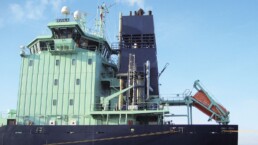

Color Line chose to upgrade its vessels to hybrid exhaust gas cleaning systems not just because the technology was promising, but because embracing this solution offered clear economic advantages for their operations.
That is the current reality in the Northern European scrubber market right now. The OSPAR discharge restrictions themselves are well documented, and the July 2027 and 2029 deadlines are already in the calendar. The shift lies in what those restrictions are quietly doing to the investment case for operators running fixed routes in and out of exactly these waters.
Start with what a ferry actually is.
It is not a vessel that passes through Northern European coastal waters occasionally. It is a vessel that remains there. Fixed schedules, frequent port calls, tight rotations. And even when it is alongside, it is running a hotel. Cabins, restaurants, ventilation, lighting. The auxiliary engines do not stop because the main engines have. On overnight routes, that hotel load is not marginal. It can represent a substantial share of total energy demand. Which means the fuel decision is not really separable from the passenger experience decision. They are the same decision.
An open-loop scrubber system handles restricted waters through a fairly simple mechanism: the vessel switches to compliant fuel when it crosses into regulated zones, switches back when it exits. Operationally, crews handle this routinely. The challenge is not the transition. The challenge is how much of each voyage now sits on the wrong side of it.
Time was always the variable
Scrubber economics have always depended on utilisation. The more time a vessel can operate on high sulphur fuel oil, the stronger the return.
Early investment models assumed that utilisation would remain relatively high, with vessels operating most of the time in waters where open-loop systems could discharge freely.
As discharge restrictions expand across inland waters and port areas, that assumption becomes more conditional. Vessels fitted with open-loop systems must switch to compliant fuel when operating within those areas.
The impact of that shift is not uniform. A deep-sea vessel calling intermittently at North-West European ports faces a different profile from a ferry operating frequent, short rotations within the region.
For vessels with limited port exposure, the effect may be marginal. For ferries, where a significant share of each voyage takes place within restricted waters, the reduction in available operating time can be more pronounced.
Ferries are not the only vessels facing this. Across North-West European trades, product tankers, shuttle tankers and short-sea operators running between terminals all spend more time inside restricted areas than original scrubber models typically assumed.
For those vessel types, it is intermittent. For ferries on fixed Northern European routes, it is structural. Every voyage. Every rotation. The constraint is not an occasional event. It is baked into the schedule.
The question that has changed
The old framing was binary: install or do not install.
That is not an effective frame anymore, and operators who are still thinking in those terms risk underestimating their exposure.
The more relevant question is how a scrubber system performs across the full geography of a voyage. Open sea, coastal approaches, port stays, back again. Sometimes all within a single sailing. Systems capable of switching between open and closed-loop modes do not make the regulatory constraint disappear, but they preserve utilisation across it. The vessel continues capturing the fuel spread in unrestricted waters, remains compliant where restrictions apply, and does not lose the operating pattern in the process.
Color Line’s hybrid upgrades on Oslo–Kiel and Sandefjord–Strömstad are not a bet on future regulation. They are a response to what operations already look like on those routes today.
A more complicated geography
The OSPAR framework does not replace existing sulphur regulation. It sits on top of it. Global limits still apply. Regional discharge rules add a further layer. Implementation will vary by country, and the possible extension of restrictions to territorial waters remains under active review.
For a ferry operator, none of this is abstract. It shows up in how a single voyage is managed. Which phase carries which constraints, where fuel use shifts, what the cost exposure looks like across a rotation rather than just per nautical mile. There is no single operating mode anymore, and the older planning assumptions were built for one.
What open-loop-only actually means now
Here is the part that tends to get softened in industry commentary: for vessels operating open-loop-only systems on North-West European ferry routes, the direction is becoming increasingly clear.
The utilisation window, the share of operating time during which high sulphur fuel oil can actually be burned, is shrinking. It will continue shrinking as discharge restrictions extend and implementation tightens across the region. The spread may widen again. The geography will not improve.
Hybrid upgrade pathways are not being discussed as a theoretical hedge. They are becoming a practical mechanism for holding onto the utilisation that the operating environment is steadily taking away.
Scrubbers remain a legitimate compliance route. Nothing in the OSPAR roadmap changes that. But the conditions under which they deliver their original return are narrowing, and for ferry fleets those conditions are encountered not occasionally, but every single day.
Color Line read that clearly enough to act. The question for the rest of the market is how long the same arithmetic looks different when you run it on someone else’s schedule.
Source: Wärtsilä by Kashif Javaid, Director of Sales, Exhaust Treatment



Related News.

Hong Kong Global Maritime Trade Summit to return for third edition
The International Chamber of Shipping, in collaboration with the Transport and Logistics Bureau of the Government of Hong Kong and the Hong Kong…

Appetite for US crude oil exports climbs despite high freight
South Korea tops US crude destinations at 568,600 b/d VLCC rates to Asia double, closing arbitrage window European refining margins…
Shipping stocks Rally as Hormuz Traffic plunges 75%
Ship traffic through the Strait of Hormuz — a critical chokepoint handling about 20% of global crude oil and liquefied natural gas shipments — has…
Diana Shipping announces Time Charter Contract for m/v G P Zafirakis with Classic Maritime
Diana Shipping, a global shipping company specializing in the ownership and bareboat charter-in of dry bulk vessels, announced that, through a…
New IMO ESP Code framework for Remote Inspection Techniques
The International Maritime Organisation, through Resolution MSC.584(111) , has adopted amendments to the International Code on the Enhanced…

ABS opens Offshore & Marine Support Center in Bergen
ABS has expanded its capabilities in the Norwegian maritime market with the opening of a cutting-edge support center in Bergen, bringing advanced…
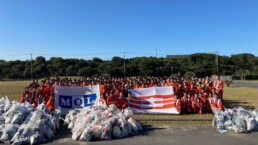
MOL holds giant step memorial ceremony and beach cleanup at Kashima Coast
Memorial and Reflection 20 Years After the Accident: Learning from the Past to Foster an Even Stronger Safety Culture Mitsui O.S.K. Lines, announced…
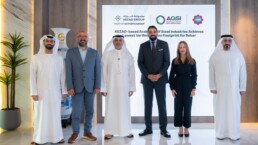
KEZAD-based Arabian Gulf Steel Industries achieves lowest verified Carbon Footprint for Rebar
CARES UK verified Environmental Product Declaration confirms 139 kg CO₂e per tonne for rebar produced at AGSI’s KEZAD Abu Dhabi facility Arabian…
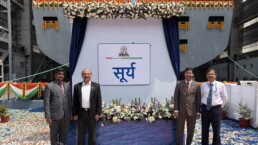
Indian Register of Shipping announces launch of first fleet support ship INS Surya
Indian Register of Shipping continues to strengthen its role in supporting the Indian Navy and India’s naval shipbuilding capabilities through the…

VLCCs Climbing the Record Charts
LR2 The TC1 75kt MEG/Japan index decreased by only a single point this week to WS928. The corresponding Baltic round-trip TCE fell by $2,000 to…
Subscribe to our newsletter!
if you dont want to swim alone in the ocean of news, sign up for the newsletter, and you will receive daily all the important news of world shipping!
