Why your next software investment may fail and what to fix first
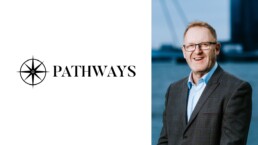

The key to maritime business transformation is building rock-solid organisational foundations, writes Senior Business Adviser MARTIN KARLSTAD of business transformation specialist PATHWAYS.
Maritime and offshore companies have unprecedented access to operational data, allowing them to monitor asset performance, procurement activity, technical status, compliance metrics and financial indicators in very fine detail. Yet, many leadership teams continue to ask the same frustrating question: why isn’t business efficiency keeping up with investment?
The answer lies less in the quantity of the data than in how organisations define, measure and manage performance. True alignment between people, processes and corporate structures must be established before new or existing technology can deliver optimal value.
TUNING WORKFLOWS VS. REPLACING SYSTEMS
A common misconception is that operational excellence requires new software platforms. The pattern is familiar: a system is introduced, significant capital invested, but day-to-day operations look exactly the same. Manual workarounds persist, data quality suffers and teams continue working in silos – because the performance drain almost never lies in the systems themselves, but in how they are connected, configured and governed.
True business transformation means fixing how the organization actually works before layering technology on top of it. When workflows are allowed to evolve organically under daily operational pressures, responsibilities become fragmented and processes become inefficient. Layering an expensive new system onto a broken foundation does not resolve this underlying complexity; it actively amplifies it. Successful transformation focuses on optimising current processes and establishing data ownership; fleet management software and digital tools should merely support those clean structures, not define them.
THE DANGER OF FUNCTIONAL SILOS
The primary reason corporate workflows become fragmented is that traditional KPI frameworks are often designed entirely around functional accountability. Different departments are measured strictly on what they immediately control and are rewarded for delivering against those narrow, isolated objectives.
The foundational flaw here is that true operational performance is rarely created within one department; it emerges from the fluid interaction between them. For example, procurement decisions directly impact technical reliability, crewing practices fundamentally shape operational consistency while compliance requirements generate heavy administrative workloads elsewhere in the company.
Because few companies explicitly measure or manage the trade-offs between these functions, a severe paradox can occur. I have frequently observed management reviews where every single department can successfully demonstrate they are meeting their specific targets, yet overall business performance fails to improve. The organisation effectively becomes more efficient in specific, isolated areas while becoming more complex and less predictable overall. And often the C-suite just doesn’t know why.
THE ROADMAP TO PROCESS OPTIMISATION
To stop implementing new software only to face the same old problems, the focus must shift from simply issuing high-level mandates to doing the practical work of changing daily operational habits. This foundation is built across four clear stages:
- Establish an objective baseline: Organizations must map actual day-to-day workflows to expose the bottlenecks, duplicated tasks and informal workarounds that hide in plain sight as “the way we’ve always done things” – and benchmark these against maritime best practice.
- Fix the master data quality: Fleet management software, automation and digital tools consistently fail because corporate master data – covering assets, components and suppliers – is incomplete or poorly governed. Organizations must clean this data at the root to eliminate the “garbage in, garbage out” cycle that forces constant manual intervention.
- Balance standardisation with flexibility: Redesigned workflows must introduce standardization to reduce corporate complexity and enable scale, while preserving enough practical flexibility to handle unpredictable maritime realities.
- Implement clear cross-functional governance: Effective governance explicitly defines who owns specific process outcomes and establishes how cross-departmental decisions are made across interconnected functions like procurement-to-pay, budgeting, crewing, docking and maintenance.
CLOSING THE LOOP: MOVING FROM BUSYNESS TO OUTCOME CONTROL
When operational performance stalls, leadership’s natural reaction is to introduce more reporting metrics. However, tracking isolated activities – such as the number of purchase orders processed, maintenance tasks completed or training completion rates – confuses sheer internal activity with actual business value outcomes. True operational control requires shifting away from tracking these localized activities, moving instead toward outcome-based KPIs tied directly to overarching metrics like cost, efficiency and asset uptime.
Ultimately, achieving lasting progress requires a willingness to take an honest, objective, cross-functional look at how daily work is actually performed. Sustaining these gains means moving away from temporary, project-based fixes. Continuous optimisation must become an embedded organisational capability – one where departments stop working in isolation and instead manage their workflows to drive the performance of the business as a whole.



Related News.

Navigating the Multi-Orbit Era: In Conversation with Intellian’s Jon Harrison at SMM 2026
At SMM 2026 in Hamburg, the rapid evolution of maritime satellite communications took centre stage. Across the exhibition halls, discussions among…
Cyprus ports need joint energy and investment strategy, shipping agents chief says
Cyprus needs a coordinated strategy for shipping, energy and environmental protection to support port investment and modernisation, Cyprus shipping…

MASO Public Affairs introduces MASO Regulatory Intelligence
A new subscription service helping businesses understand what is changing and what it means for them MASO Public Affairs introduces MASO Regulatory…
Anglo-Eastern helps turn CMBTECH’s ammonia ambition into an operational reality
From early feasibility study and risk-based design to newbuilding supervision, crew readiness and technical management, Anglo-Eastern drew on its…

Escalation of attacks threatens to derail recovery in Middle East oil exports
World oil demand is forecast to fall by 2.5 mb/d y-o-y in 4Q26 and 2.6 mb/d on average in 2026. As the Iran war manifests itself through restricted…
New study finds shipping pays twice its share to EU ETS earmarked revenues should triple to help build market for sustainable fuels and technologies
Shipping is responsible for around 10% of EU ETS emissions but pays almost 20% of the ETS bill. Unlike other sectors, it has never received free…

MSARC strengthens maritime mass rescue readiness through training and national live exercise off Dakar, Senegal
Joint MSARC–FHAS programme combines three days of SAR training with a national multi-agency live exercise The Maritime Search and Rescue Council ,…
Sogese report deliveries are still being delayed as container freight rates fluctuate
FOR IMPORTERS Spot rates into the Mediterranean are back at January levels, Far East to Europe reliability sits at pandemic lows, and nearly…
Glencore begins trading on Australian Securities Exchange
Glencore has begun trading on the Australian Securities Exchange under the ASX code GLC. Gary Nagle, Glencore’s CEO, said it was an exciting day for…
BIMCO Shipping Number of the Week
Suez Canal container ship transits exceed 50% of pre-disruption levels "During the first two weeks of October, weekly container ship capacity…
Subscribe to our newsletter!
if you dont want to swim alone in the ocean of news, sign up for the newsletter, and you will receive daily all the important news of world shipping!
