Fire in the engine room due to auxiliary engine erosion plug failure
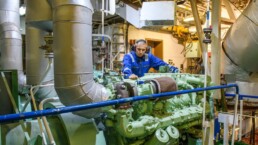

Due to the combination of flammable materials, complex machinery, and human factors, fire in the engine room remains the most common and costly risk in Hull and Machinery insurance.
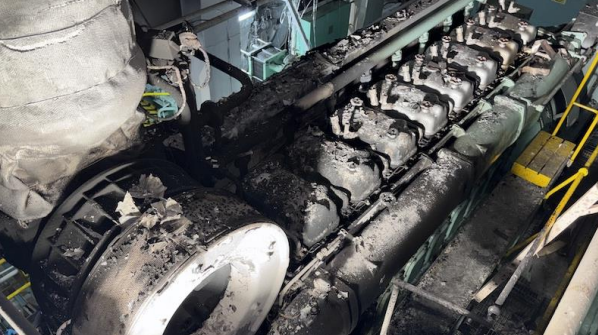
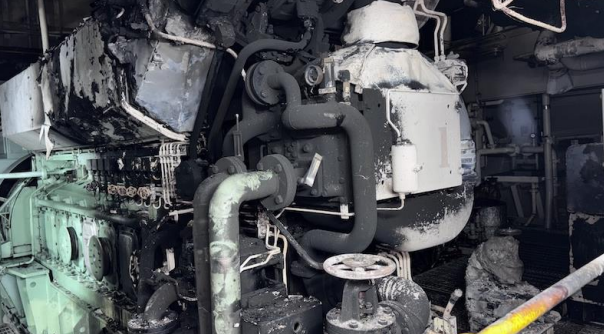
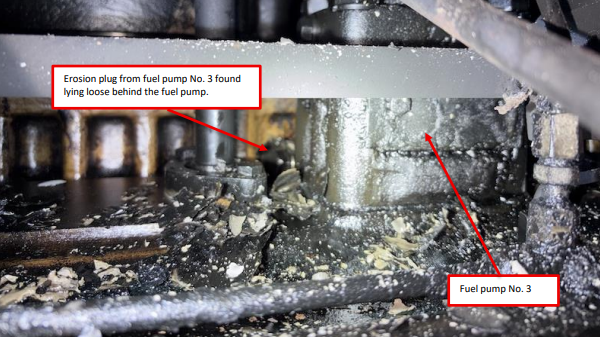
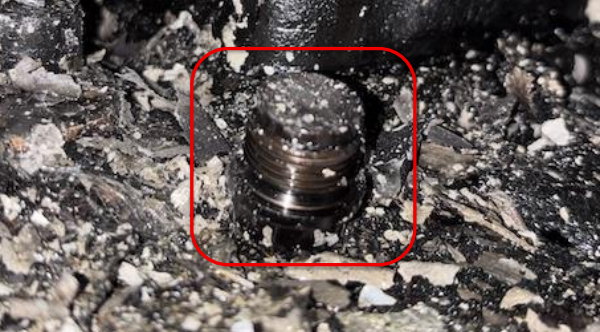
Skuld has seen recent cases of engine room fires due to erosion (fusible) plug failure. An erosion plug failure in a fuel pump can cause engine room fires by allowing pressurised fuel to escape as a fine spray, which can ignite instantly upon contact with hot surfaces. An erosion plug is a safety device built into fuel pumps, and particularly in high-pressure fuel pumps. It is made of low-melting-point alloy material, and its purpose is to relieve pressure if overheating occurs and prevent the fuel pump casing from rupturing or exploding.
Common reasons why erosion plug damage can lead to an engine room fire include excessive temperature, internal friction, pump seizure, and improper maintenance. This causes the plug to melt, erode or blow out. Once the erosion plug fails, pressurised fuel oil escapes, often at high pressure. The leak typically forms a fine oil spray (atomisation), which is much more dangerous than liquid leakage. Once it contacts hot surfaces, such as exhaust manifolds or turbochargers, the fuel spray instantly vaporises and ignites. The rapid-fire escalation (flash fire) due to the combination of fine mist, high pressure, and hot surfaces causes the fire to spread quickly through lagging gaps, cable runs, and oil deposits.
Skuld strongly advises its members and assureds to always strengthen their maintenance controls and inspection.
- Ensure strict compliance with the manufacturer specifications, such as torque setting, verification of installation of the locking devices, such as locking wire, and tabs. To implement post-maintenance inspection and sign-off procedures.
- Conduct operational checks after reassembly and under load conditions of the fuel pumps, fuel lines, and their fittings.
- If the maintenance is conducted by shipboard personnel, ensure adequate competency and training of the personnel performing the maintenance. Avoid critical repairs when appropriate tools are unavailable and where spare parts are not compliant or incomplete.
- Conduct frequent inspections of the fuel system, implement leak detection routines and thermal imaging for early identification of abnormal conditions.
- Ensure that exhaust systems and turbochargers are properly insulated. Repair the damage immediately and treat any exposed hot surface as a critical hazard.
- Perform regular tests on fire detection systems and fixed firefighting systems onboard. Conduct regular fire drills focusing on early isolation and shutdown action for fuel spray fire scenarios.
Members and assureds are encouraged to review their planned maintenance systems, work controls, and verification processes. Implementing a robust safety management system (SMS) will ensure adherence to procedures for fuel handling, maintenance and hot work operation and can prevent this type of incident onboard.
An effective loss prevention program depends on vessels’ procedural compliance, verification of completed work, and a strong onboard safety culture.
Source: Skuld



Related News.

Navigating the Multi-Orbit Era: In Conversation with Intellian’s Jon Harrison at SMM 2026
At SMM 2026 in Hamburg, the rapid evolution of maritime satellite communications took centre stage. Across the exhibition halls, discussions among…
Cyprus ports need joint energy and investment strategy, shipping agents chief says
Cyprus needs a coordinated strategy for shipping, energy and environmental protection to support port investment and modernisation, Cyprus shipping…

MASO Public Affairs introduces MASO Regulatory Intelligence
A new subscription service helping businesses understand what is changing and what it means for them MASO Public Affairs introduces MASO Regulatory…
Anglo-Eastern helps turn CMBTECH’s ammonia ambition into an operational reality
From early feasibility study and risk-based design to newbuilding supervision, crew readiness and technical management, Anglo-Eastern drew on its…

Escalation of attacks threatens to derail recovery in Middle East oil exports
World oil demand is forecast to fall by 2.5 mb/d y-o-y in 4Q26 and 2.6 mb/d on average in 2026. As the Iran war manifests itself through restricted…
New study finds shipping pays twice its share to EU ETS earmarked revenues should triple to help build market for sustainable fuels and technologies
Shipping is responsible for around 10% of EU ETS emissions but pays almost 20% of the ETS bill. Unlike other sectors, it has never received free…

MSARC strengthens maritime mass rescue readiness through training and national live exercise off Dakar, Senegal
Joint MSARC–FHAS programme combines three days of SAR training with a national multi-agency live exercise The Maritime Search and Rescue Council ,…
Sogese report deliveries are still being delayed as container freight rates fluctuate
FOR IMPORTERS Spot rates into the Mediterranean are back at January levels, Far East to Europe reliability sits at pandemic lows, and nearly…
Glencore begins trading on Australian Securities Exchange
Glencore has begun trading on the Australian Securities Exchange under the ASX code GLC. Gary Nagle, Glencore’s CEO, said it was an exciting day for…
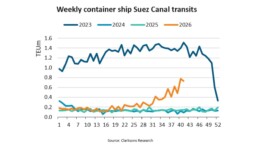
BIMCO Shipping Number of the Week
Suez Canal container ship transits exceed 50% of pre-disruption levels "During the first two weeks of October, weekly container ship capacity…
Subscribe to our newsletter!
if you dont want to swim alone in the ocean of news, sign up for the newsletter, and you will receive daily all the important news of world shipping!
