ClassNK’s Mission in a Changing Maritime World
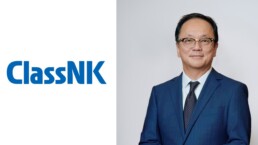

Asked in an interview during Posidonia 2026 how ClassNK sees its role in a period of major change, President and CEO Hayato Suga first explained the Society’s basic mission. ClassNK is a classification society primarily engaged in ship classification services. Today, it has approximately 2,000 employees at around 130 offices worldwide, and about 9,700 vessels on its register, totaling approximately 285 million gross tons. This makes ClassNK one of the world’s largest classification societies. For Mr. Suga, however, the size of the organization is not the main point. He said that the value of ClassNK lies in supporting maritime safety, marine environmental protection, and the sound development of the maritime industry through reliable classification and certification services.
The maritime industry today is facing several major changes at the same time, including decarbonization, digitalization, and rising geopolitical risks. Mr. Suga does not see these as separate issues. Rather, he believes that the uncertainty created by their interconnection is making decision-making more complex for maritime stakeholders. In this environment, the role of a classification society is no longer limited to verifying compliance with rules. ClassNK recognizes that it is expected to provide reliable technical insight, practical guidance, and timely information and services from a broader perspective, so that the industry can make appropriate decisions amid such uncertainty.
A Trusted Partner for Greek Shipping, with the Largest Number of Greek-Owned Vessels
The Greek shipping community, where Posidonia is held, is of great importance to ClassNK. Greece is one of the world’s leading maritime nations and continues to play a central role in global shipping. Japan’s maritime industry has long developed in close connection with the Greek maritime industry.
ClassNK opened its Piraeus Office in 1975 and has continued to provide services from there ever since. Last year, the office marked its 50th anniversary. Today, about 1,000 vessels owned by Greek shipowners are registered with ClassNK, giving the Society the largest share by number of vessels. Mr. Suga said that it is a great honor for ClassNK to be chosen by Greek shipowners, and that this reflects the trust placed in its services in one of the world’s most important shipping markets. In addition to classification surveys and audits, ClassNK continues to provide a wide range of services, including day-to-day technical support, information sharing, and support for training and education.
From ClassNK’s standpoint, Greek shipping companies are highly sophisticated and internationally competitive operators. One of the distinguishing features of the Greek shipping ecosystem is its strong emphasis on long-term operational reliability and commercial practicality. Greek shipowners also place great value on open, practical discussions regarding operational and regulatory challenges. To better respond to these characteristics and further enhance services, ClassNK established the Tech Expertise Center in Piraeus in April 2025. Through this center, ClassNK aims to provide more detailed and responsive technical support and to further enhance customer satisfaction within the Greek maritime community.
ClassNK’s Approach to Future Maritime Challenges
Mr. Suga expressed his hope that IMO will work with Member States and stakeholders to build consensus and provide early guidance for an internationally unified framework in line with the IMO GHG Reduction Strategy. This is important, especially because the adoption of the IMO Net-Zero Framework has been delayed and the situation has become more complex.
For ClassNK, this delay makes it even more important to support the industry through a transition period where several options may exist in parallel, rather than assuming one specific fuel or one single solution.
When uncertainties remain high, many stakeholders are likely to first turn to energy-saving technologies and operational measures that can be introduced relatively flexibly, such as wind-assisted propulsion systems (WAPS), low-friction coatings and voyage optimization systems. On the other hand, once uncertainties decrease and the future direction becomes clearer, the industry will be better positioned to move toward more fundamental and large-scale measures, such as alternative fuels and onboard CO₂ capture and storage (OCCS).
For fuels, biofuels and LNG may play a role in the short term, followed by lower-emission options including blue fuels, and then green fuels in the future. However, fuel choices will depend on technology development, investment, ship type and operational needs. Therefore, several fuels may continue to coexist.
ClassNK will continue to support a realistic and flexible transition by helping stakeholders make appropriate decisions based on safety, technical feasibility, regulatory compliance and economic aspects.
Digitalization and AI are another important area. Mr. Suga believes that AI and digitalization will play an even more important role in the maritime industry going forward. The use of AI is not limited to the introduction of technology for simple efficiency improvement. It may support organizational transformation through more efficient operations and even transformation of the business model itself. More specifically, AI has the power to evolve services in areas such as risk prediction, ship safety assessment, and optimization of measures to reduce environmental impact. At the same time, there are also concerns, including black-box decision-making and unclear responsibility for results.
To address these issues, the Digital Solutions Division, established in April this year, is responsible for promoting the use of digital technologies, including AI, while also addressing reliability, transparency, and responsibility across the organization. At the same time, Mr. Suga stresses that ClassNK’s greatest asset is its people and its long-standing credibility. ClassNK values an organizational culture in which employees think and act on their own initiative, while maintaining long-term employment as a fundamental principle. The value of ClassNK is realized when such people build trust at the front line.
Connecting Customer Needs with ClassNK Services
For ClassNK, Posidonia remains strategically important because it brings together many key people from the maritime industry and provides an important opportunity for direct dialogue with customers. The event has developed beyond a traditional exhibition into a valuable platform for discussing decarbonization, digitalization, and new technologies. ClassNK hopes to listen carefully to the needs of Greek shipowners and connect those needs to suitable services. Through these efforts, ClassNK aims to further strengthen the trust it has built with the Greek shipping community and contribute to the safety, reliability, and sustainability of maritime transport.



Related News.
Hong Kong Global Maritime Trade Summit to return for third edition
The International Chamber of Shipping, in collaboration with the Transport and Logistics Bureau of the Government of Hong Kong and the Hong Kong…

Appetite for US crude oil exports climbs despite high freight
South Korea tops US crude destinations at 568,600 b/d VLCC rates to Asia double, closing arbitrage window European refining margins…
Shipping stocks Rally as Hormuz Traffic plunges 75%
Ship traffic through the Strait of Hormuz — a critical chokepoint handling about 20% of global crude oil and liquefied natural gas shipments — has…
Diana Shipping announces Time Charter Contract for m/v G P Zafirakis with Classic Maritime
Diana Shipping, a global shipping company specializing in the ownership and bareboat charter-in of dry bulk vessels, announced that, through a…
New IMO ESP Code framework for Remote Inspection Techniques
The International Maritime Organisation, through Resolution MSC.584(111) , has adopted amendments to the International Code on the Enhanced…
ABS opens Offshore & Marine Support Center in Bergen
ABS has expanded its capabilities in the Norwegian maritime market with the opening of a cutting-edge support center in Bergen, bringing advanced…
MOL holds giant step memorial ceremony and beach cleanup at Kashima Coast
Memorial and Reflection 20 Years After the Accident: Learning from the Past to Foster an Even Stronger Safety Culture Mitsui O.S.K. Lines, announced…
KEZAD-based Arabian Gulf Steel Industries achieves lowest verified Carbon Footprint for Rebar
CARES UK verified Environmental Product Declaration confirms 139 kg CO₂e per tonne for rebar produced at AGSI’s KEZAD Abu Dhabi facility Arabian…
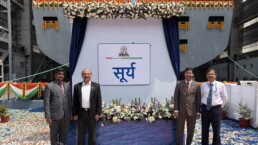
Indian Register of Shipping announces launch of first fleet support ship INS Surya
Indian Register of Shipping continues to strengthen its role in supporting the Indian Navy and India’s naval shipbuilding capabilities through the…
VLCCs Climbing the Record Charts
LR2 The TC1 75kt MEG/Japan index decreased by only a single point this week to WS928. The corresponding Baltic round-trip TCE fell by $2,000 to…
Subscribe to our newsletter!
if you dont want to swim alone in the ocean of news, sign up for the newsletter, and you will receive daily all the important news of world shipping!
