Launch of Joint Research on Corrosion Rate Evaluation of Low-Temperature, Low-Pressure Liquefied CO₂ Cargo Tanks

ClassNK and National Maritime Research Institute (NMRI), National Institute of Maritime, Port and Aviation Technology, have launched a joint research project on corrosion rate evaluation of liquefied CO₂ (LCO₂) cargo tanks under low-temperature and low-pressure conditions.
This research aims to establish a technical foundation for appropriately assessing corrosion risks in the transportation of liquefied CO₂. The outcomes are expected not only to enhance the safety of LCO₂ cargo tanks, but also to enable rational design and operation that balance corrosion risk and impurity removal costs. Ultimately, this will contribute to improving both the safety and economic efficiency of the entire CCUS (Carbon Capture, Utilization and Storage) value chain.
Background
With the implementation of CCUS technologies gaining momentum, the importance of transporting liquefied CO₂ by ship is increasing. In Europe, cross-border CO₂ transportation has already commenced, indicating that LCO₂ shipping is entering the stage of practical application. In the Asia-Pacific region as well, a significant expansion in transportation demand is anticipated.
On the other hand, it is well known that even trace amounts of impurities such as water and SOx (sulfur oxides) mixed into CO₂ can cause corrosion. Therefore, there is a growing need for technologies capable of estimating corrosion rates in LCO₂ environments based on the type and concentration of such impurities.
Research Overview
In this research, a CO₂ corrosion test facility will be installed at NMRI, where corrosion tests will be conducted under controlled conditions reflecting anticipated impurity types and concentrations. The facility will be capable of simulating low-temperature and low-pressure environments suitable for large-scale LCO₂ transportation.
The experimental data obtained will be analyzed to establish fundamental data required for the design and maintenance of LCO₂ cargo tanks.
Expected Outcomes
The results of this research are expected to be reflected in ClassNK’s rules and guidelines, contributing to the development of rational and safe LCO₂ cargo tank designs.
Furthermore, by proposing a rational approach to impurity management based on corrosion risk, this research is expected to contribute not only to safe ship design but also to the optimization of costs across the entire CCUS value chain*1.
Research Structure
This project is being carried out through collaboration between ClassNK and NMRI, with additional cooperation from the University of Tokyo’s social collaboration program, “Materials for Future Energy Infrastructure Trust (MEIT).” This framework brings together Japan’s leading expertise in material reliability evaluation.
Future Prospects
Through this research, the project aims to establish a foundation for corrosion evaluation in low-temperature, low-pressure LCO₂ transportation and to contribute to the development of future design standards and international rulemaking.
Source: ClassNK



Related News.
Hong Kong Global Maritime Trade Summit to return for third edition
The International Chamber of Shipping, in collaboration with the Transport and Logistics Bureau of the Government of Hong Kong and the Hong Kong…

Appetite for US crude oil exports climbs despite high freight
South Korea tops US crude destinations at 568,600 b/d VLCC rates to Asia double, closing arbitrage window European refining margins…
Shipping stocks Rally as Hormuz Traffic plunges 75%
Ship traffic through the Strait of Hormuz — a critical chokepoint handling about 20% of global crude oil and liquefied natural gas shipments — has…
Diana Shipping announces Time Charter Contract for m/v G P Zafirakis with Classic Maritime
Diana Shipping, a global shipping company specializing in the ownership and bareboat charter-in of dry bulk vessels, announced that, through a…
New IMO ESP Code framework for Remote Inspection Techniques
The International Maritime Organisation, through Resolution MSC.584(111) , has adopted amendments to the International Code on the Enhanced…

ABS opens Offshore & Marine Support Center in Bergen
ABS has expanded its capabilities in the Norwegian maritime market with the opening of a cutting-edge support center in Bergen, bringing advanced…
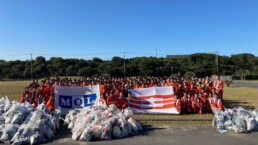
MOL holds giant step memorial ceremony and beach cleanup at Kashima Coast
Memorial and Reflection 20 Years After the Accident: Learning from the Past to Foster an Even Stronger Safety Culture Mitsui O.S.K. Lines, announced…
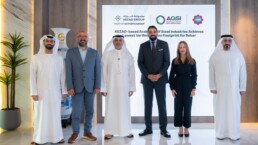
KEZAD-based Arabian Gulf Steel Industries achieves lowest verified Carbon Footprint for Rebar
CARES UK verified Environmental Product Declaration confirms 139 kg CO₂e per tonne for rebar produced at AGSI’s KEZAD Abu Dhabi facility Arabian…
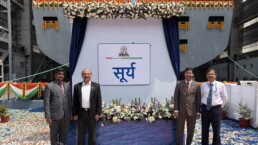
Indian Register of Shipping announces launch of first fleet support ship INS Surya
Indian Register of Shipping continues to strengthen its role in supporting the Indian Navy and India’s naval shipbuilding capabilities through the…
VLCCs Climbing the Record Charts
LR2 The TC1 75kt MEG/Japan index decreased by only a single point this week to WS928. The corresponding Baltic round-trip TCE fell by $2,000 to…
Subscribe to our newsletter!
if you dont want to swim alone in the ocean of news, sign up for the newsletter, and you will receive daily all the important news of world shipping!
