When technology takes the night watch: Why future ship bridges must be designed for people
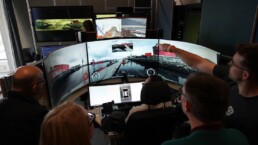

Large screens, advanced control systems and increasing automation are shaping modern ship bridges. But new technology does not necessarily make maritime operations safer. On the contrary, research shows that poorly designed user interfaces, alarms and work environments can increase the risk of accidents, especially when the navigator is alone on night watch.
A brand-new passenger ferry equipped with state-of-the-art systems. The bridge is bright, tidy and filled with screens and digital control systems. At first glance, everything appears to represent the future of maritime operations.
Yet an experienced captain quickly identifies a problem: several of the screens cannot be dimmed sufficiently at night. The intense light disrupts night vision, which is essential for safe navigation in dark waters. The onboard workaround is improvised, paper sheets and posters are taped over the displays.
It may sound trivial, but such small details can have major consequences.
– We have long had the knowledge needed to design ship bridges that are better adapted to human strengths and limitations. The challenge is that this knowledge is still used too little and too late in development processes, says Ole Andreas Alsos, professor of interaction design and head of the Shore Control Lab at NTNU.
.jpg?width=6000&height=4000&name=NATOS%20innovasjonsfond%20Foto%20Lars%20Bugge%20Aarset%20-%20Fremtidens%20Industri%20(42).jpg) Ole Andreas Alsos, professor and head of NTNU Shore Control Lab Photo: Lars Bugge Aarset/Fremtidens Industri
Ole Andreas Alsos, professor and head of NTNU Shore Control Lab Photo: Lars Bugge Aarset/Fremtidens Industri
Accidents are rarely just about human error
Traditionally, many maritime accidents have been explained as “human error.” However, research indicates that errors are often symptoms of deeper issues in the interaction between people, technology and organisations.
In the chapter Designing for the Night Watch: Human Factors Challenges on Modern Ship Bridges, included in the book Safety by Design: Human-Centered Approaches to AI, Automation, and Remote Operations, a range of well-known maritime accidents are analysed from a human factors perspective.
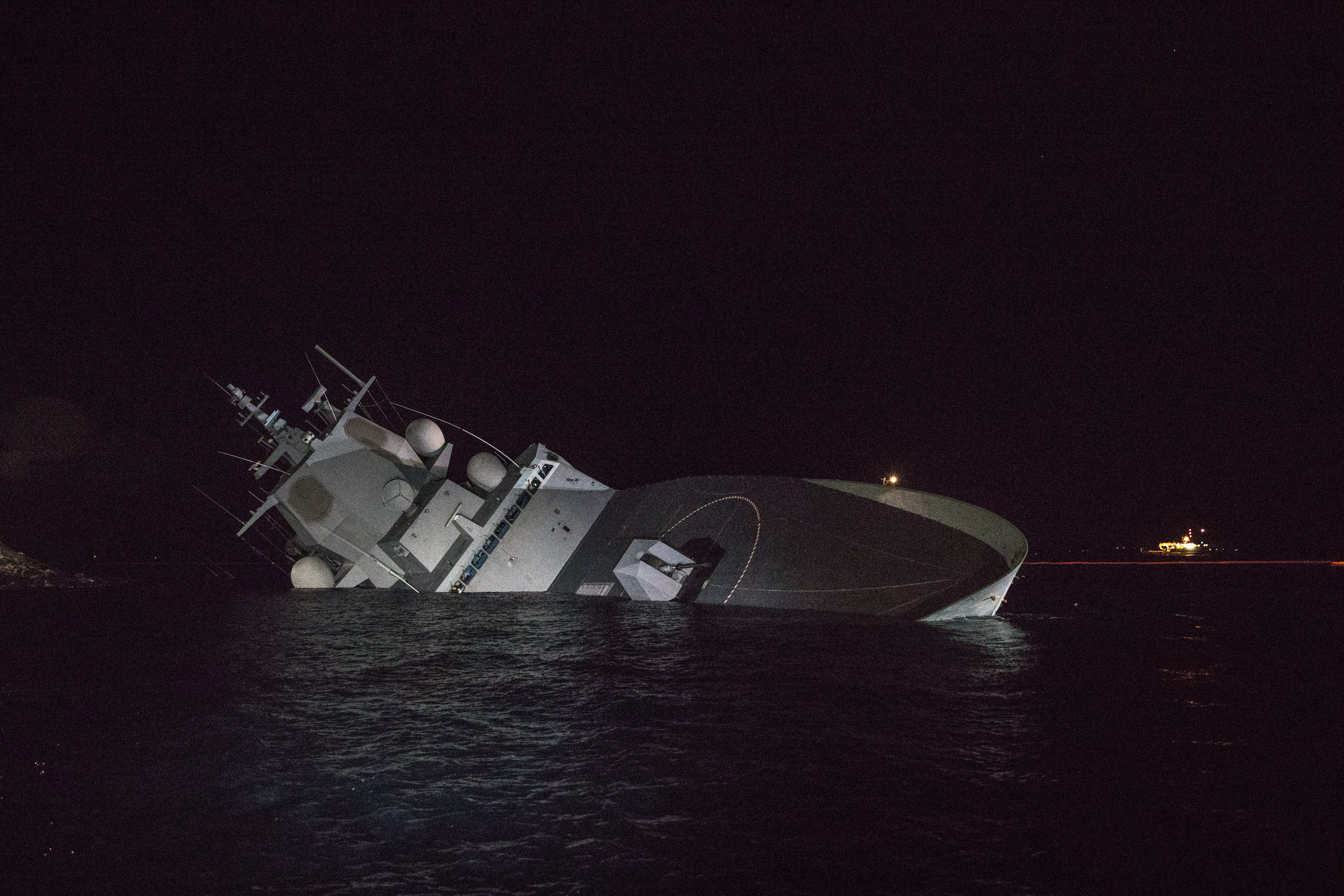 KNM Helge Ingstad. Photo: Jakob Østheim/Forsvaret
Among the incidents highlighted are the collision and subsequent loss of KNM Helge Ingstad collision, the engine failure on Viking Sky, the collision between the supply vessel Sjøborg and Statfjord A, and the grounding of the container ship NCL Salten.
Despite differing causal factors, the accidents share several common traits. Operators are often exposed to high cognitive workload while critical information is distributed across many screens.
Alarm systems generate so many alerts that they are eventually ignored. Automated systems may behave unpredictably, and ship bridges are not always designed in ways that support collaboration and communication among crew members.
– When we investigate serious incidents, we often see that attention is focused on the person who made a mistake. But humans always operate within a system. If the system is poorly designed, the likelihood of errors increases, says Frøy Birte Bjørneseth, associate professor at the Department of Ocean Operations and Civil Engineering at NTNU in Ålesund.
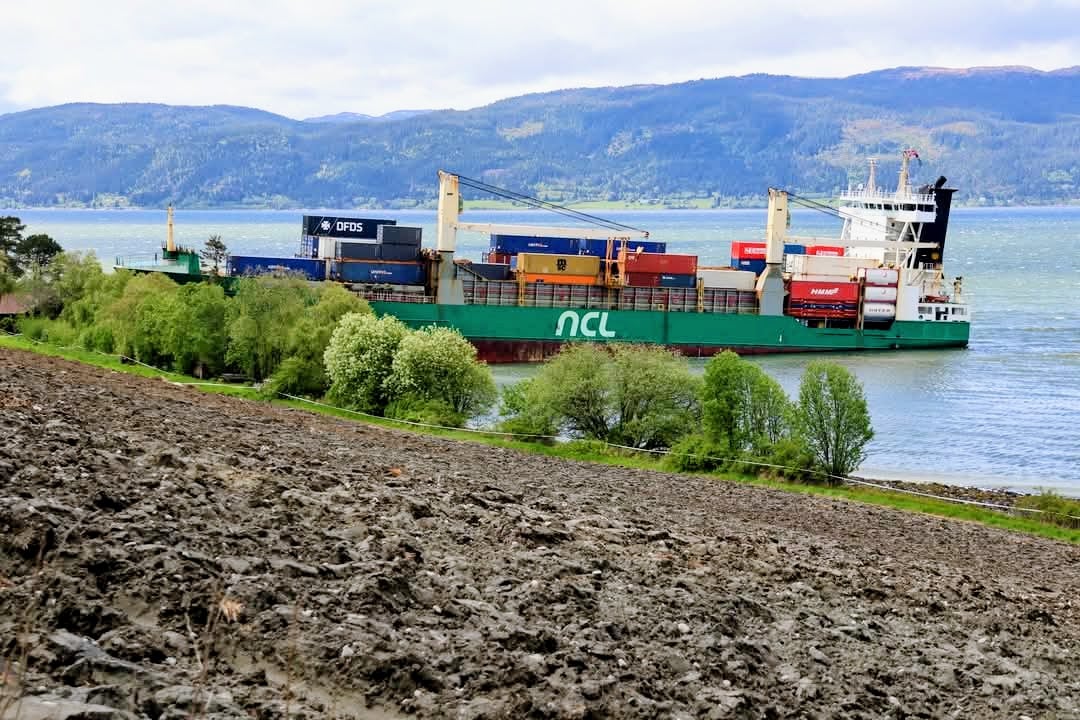 Grounding of container ship NCL Salten. Photo: Lars Bugge Aarset/Fremtidens Industri
Night watch is particularly demanding
For a navigator on night watch, small design choices can have significant impact.
Screens that cause glare, instruments placed several metres away from the steering position, or control systems requiring multiple steps for simple tasks can significantly reduce situational awareness.
In Human Factors research, situational awareness is described as the ability to perceive what is happening, understand what it means, and anticipate what may happen next.
Previous studies have shown that loss of situational awareness is one of the main causes of human error in maritime accidents.
The researchers also point to the phenomenon of alarm fatigue.
On one vessel described in the study, an alarm sounded every five minutes. The first officer repeatedly had to leave the lookout position, turn away from the windows and walk to the rear of the bridge to silence the alarm. Over time, he stopped investigating what the alarms were actually indicating.
In a real emergency, such experiences may lead to critical alarms being overlooked.
– Much of what we see in accident investigations is not about people being unable to do their jobs. It is about the systems they work within not being designed for how humans actually perceive information, collaborate and make decisions under pressure, says Bjørneseth.
Technology must be adapted to humans
Paradoxically, extensive standards, guidelines and methods already exist for developing more user-friendly and safer ship bridges.
International standards describe how displays should be positioned, how alarms should be prioritised, and how users should be involved in the design process. Nevertheless, such principles are often deprioritised in favour of technical requirements and cost savings.
The researchers argue that usability must be treated like other safety requirements. Instead of vague claims that a system should be “intuitive,” requirements should be measurable. For example, 95% of navigators with relevant certification should be able to activate a function within 30 seconds after one hour of training.
– We spend enormous resources testing that technology works technically. At the same time, there are often few or no tests that examine whether people can actually use the systems safely and effectively under realistic conditions. If we are to succeed with autonomy and artificial intelligence, human-centered design must be a fundamental part of development, says Alsos.
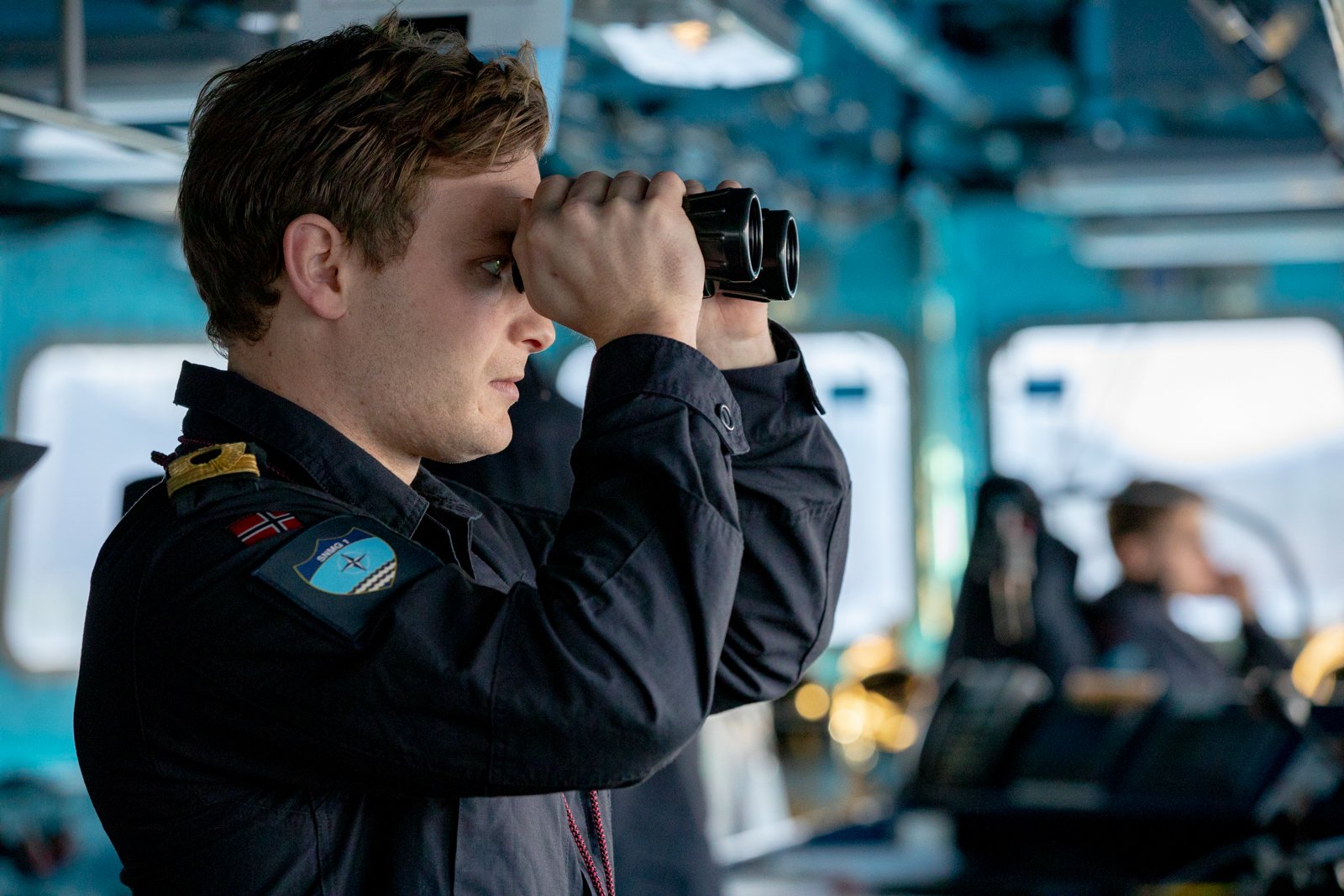 From the bridge of KNM Helge Ingstad. Photo: Marius Vågenes Villanger/Forsvaret
An example of what is possible
The researchers point to the Unified Bridge concept, developed by Rolls-Royce Marine and later continued by Kongsberg Maritime, as an example of human-centred design working in practice.
Here, seafarers were involved from the very beginning of the concept phase and throughout the development process.
The bridge was designed around four key principles: safety, simplicity, proximity between user and equipment, and high operational performance. The goal was to reduce cognitive load, make tasks more intuitive, and ensure that navigators could focus on operating the vessel rather than managing complex systems.
Improvements included a dedicated button for quickly muting alarms, unified control of screen brightness, and better placement of instruments that reduced the need for unnecessary movement on the bridge. Experience showed that users were highly satisfied and had little interest in returning to traditional bridge designs.
.jpg?width=720&height=480&name=Nordic%205%20Tech%20Foto%20Lars%20Bugge%20Aarset%20-%20Ocean%20Autonomy%20Cluster%20(55).jpg) NTNU Shore Control Lab. Photo: Lars Bugge Aarset/Fremtidens Industri
NTNU Shore Control Lab. Photo: Lars Bugge Aarset/Fremtidens Industri
More important than ever
As artificial intelligence, autonomy and remote operations become more prominent in the maritime sector, understanding the interaction between humans and technology becomes even more critical.
– Safety is not primarily about adding more technology, but about ensuring that technology supports the people who use it. As systems become more autonomous and remotely operated, we must be even clearer about how operators can understand the situation, make decisions and intervene when something unexpected occurs, says Stig Ole Johnsen of NTNU, co-editor and contributor to Safety by Design.
– Future maritime systems must be developed together with those who actually stand on the bridge and navigate vessels. Technology that does not take human needs and limitations into account may, in the worst case, become an additional burden in the most demanding situations, says Bjørneseth.
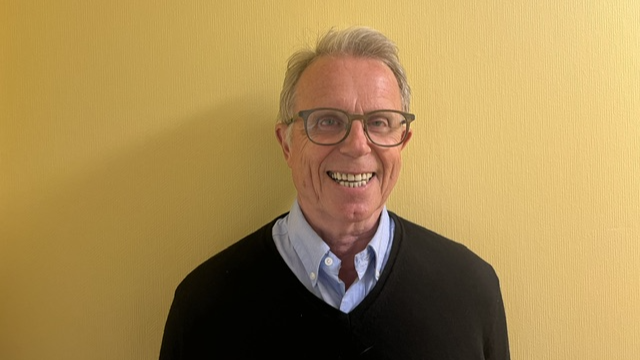 Stig Ole Johnsen, NTNU, co-editor and contributor to Safety by Design.
MIDAS – Humans in Future Maritime Operations
The chapter Designing for the Night Watch: Human Factors Challenges on Modern Ship Bridges is published in Safety by Design: Human-Centered Approaches to AI, Automation, and Remote Operations. The book was initiated, funded and written as part of MIDAS – Humans in Future Maritime Operations.
MIDAS is a national competence project that examines the role of humans in future maritime operations, where autonomy, artificial intelligence and automation are becoming increasingly important. The ambition is to ensure that new technology is developed in a way that safeguards safety, usability and meaningful human control.
The project brings together researchers, technologists, designers and industry actors across the maritime value chain. SINTEF Digital contributes multidisciplinary expertise in human factors and digitalisation. DNV provides expertise in classification and maritime safety, while clusters such as Digital Norway, Ocean Autonomy Cluster and Blue Maritime Cluster ensure relevance for industry stakeholders. Through MIDAS, the goal is to strengthen Norwegian industry’s innovation capacity and contribute to the development and export of future autonomous maritime solutions.
See also: New book puts humans at the centre of autonomous and AI-enabled systems
Open access resource for industry and academia
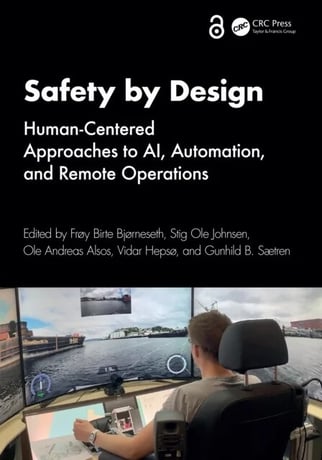 Published by CRC Press, Safety by Design is available as an Open Access book under the Creative Commons CC BY 4.0 licence. This means that the book can be downloaded free of charge, shared, copied and reused in research, education, training, industrial development and policy work, provided that the original source is properly credited.
The book offers practical and research-based insights for technology developers, operators, designers, researchers, educators, regulators and policymakers working to ensure that autonomous, remote and AI-enabled systems are not only innovative, but also safe, usable and centred on meaningful human control.



Related News.

Hong Kong Global Maritime Trade Summit to return for third edition
The International Chamber of Shipping, in collaboration with the Transport and Logistics Bureau of the Government of Hong Kong and the Hong Kong…

Appetite for US crude oil exports climbs despite high freight
South Korea tops US crude destinations at 568,600 b/d VLCC rates to Asia double, closing arbitrage window European refining margins…
Shipping stocks Rally as Hormuz Traffic plunges 75%
Ship traffic through the Strait of Hormuz — a critical chokepoint handling about 20% of global crude oil and liquefied natural gas shipments — has…
Diana Shipping announces Time Charter Contract for m/v G P Zafirakis with Classic Maritime
Diana Shipping, a global shipping company specializing in the ownership and bareboat charter-in of dry bulk vessels, announced that, through a…
New IMO ESP Code framework for Remote Inspection Techniques
The International Maritime Organisation, through Resolution MSC.584(111) , has adopted amendments to the International Code on the Enhanced…
ABS opens Offshore & Marine Support Center in Bergen
ABS has expanded its capabilities in the Norwegian maritime market with the opening of a cutting-edge support center in Bergen, bringing advanced…

MOL holds giant step memorial ceremony and beach cleanup at Kashima Coast
Memorial and Reflection 20 Years After the Accident: Learning from the Past to Foster an Even Stronger Safety Culture Mitsui O.S.K. Lines, announced…
KEZAD-based Arabian Gulf Steel Industries achieves lowest verified Carbon Footprint for Rebar
CARES UK verified Environmental Product Declaration confirms 139 kg CO₂e per tonne for rebar produced at AGSI’s KEZAD Abu Dhabi facility Arabian…
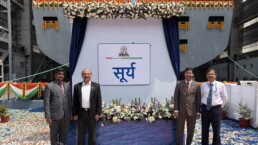
Indian Register of Shipping announces launch of first fleet support ship INS Surya
Indian Register of Shipping continues to strengthen its role in supporting the Indian Navy and India’s naval shipbuilding capabilities through the…

VLCCs Climbing the Record Charts
LR2 The TC1 75kt MEG/Japan index decreased by only a single point this week to WS928. The corresponding Baltic round-trip TCE fell by $2,000 to…
Subscribe to our newsletter!
if you dont want to swim alone in the ocean of news, sign up for the newsletter, and you will receive daily all the important news of world shipping!
