Beyond Specification: Bunker Claims Insights, Early 2026


This report shares practical observations from these recent cases, highlighting recurring challenges and essential considerations for managing fuel quality issues effectively.
Key findings
- Sharp rise in bunker claims and geopolitics: Bunker-related claims increased significantly in early 2026, with over 70 cases recorded – a 50% rise compared to 2025. Most claims involved fuel quality, with a noticeable uptick following the escalation of the Middle East conflict.
- Global risk profile with concentration driven by supply volumes: Bunker quality incidents were recorded worldwide, reflecting a broadly dispersed and global risk environment rather than a localized issue. Higher numbers of claims at major hubs such as Singapore, Houston, and ARA mainly reflect their large bunkering volumes
- VLSFO remains the primary source of claims: Very Low Sulphur Fuel Oil (VLSFO) accounts for the vast majority of bunker quality claims. Its complex blended nature increases the likelihood of variability and contamination, making it more prone to quality issues. This reinforces that VLSFO continues to be the key technical risk area in marine fuel usage.
- ISO 8217 compliance does not guarantee fuel suitability: A significant proportion of cases involved fuels that met ISO 8217 Table 2 parameters but still caused operational issues and damage to machinery. This underscores the growing importance of Clause 5, which focuses on whether fuel is fit for use and free from harmful substances. Standard testing alone is often insufficient, requiring more advanced analysis to identify problematic contaminants.
- Claims are driven by both technical and contractual challenges: Bunker disputes are often complex due to misaligned contractual relationships between owners, charterers, and suppliers. Issues related to binding sample, parameter(s) to be tested, time bars and evidentiary requirements frequently complicate claims resolution.
- Operational impact is often underestimated compared to headline casualties: While no major casualties were directly linked to poor fuel in this dataset, several vessels were disabled or required towage. These incidents can create high exposure when occurring in congested or coastal waters. The absence of catastrophic outcomes should not obscure the underlying operational risk.
This report draws on Gard’s claims data from the first five months of 2026, with additional data contributions from VPS.
Source: Gard



Related News.
Hong Kong Global Maritime Trade Summit to return for third edition
The International Chamber of Shipping, in collaboration with the Transport and Logistics Bureau of the Government of Hong Kong and the Hong Kong…

Appetite for US crude oil exports climbs despite high freight
South Korea tops US crude destinations at 568,600 b/d VLCC rates to Asia double, closing arbitrage window European refining margins…
Shipping stocks Rally as Hormuz Traffic plunges 75%
Ship traffic through the Strait of Hormuz — a critical chokepoint handling about 20% of global crude oil and liquefied natural gas shipments — has…
Diana Shipping announces Time Charter Contract for m/v G P Zafirakis with Classic Maritime
Diana Shipping, a global shipping company specializing in the ownership and bareboat charter-in of dry bulk vessels, announced that, through a…
New IMO ESP Code framework for Remote Inspection Techniques
The International Maritime Organisation, through Resolution MSC.584(111) , has adopted amendments to the International Code on the Enhanced…

ABS opens Offshore & Marine Support Center in Bergen
ABS has expanded its capabilities in the Norwegian maritime market with the opening of a cutting-edge support center in Bergen, bringing advanced…
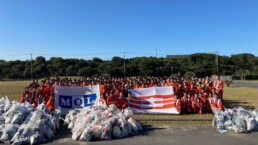
MOL holds giant step memorial ceremony and beach cleanup at Kashima Coast
Memorial and Reflection 20 Years After the Accident: Learning from the Past to Foster an Even Stronger Safety Culture Mitsui O.S.K. Lines, announced…

KEZAD-based Arabian Gulf Steel Industries achieves lowest verified Carbon Footprint for Rebar
CARES UK verified Environmental Product Declaration confirms 139 kg CO₂e per tonne for rebar produced at AGSI’s KEZAD Abu Dhabi facility Arabian…

Indian Register of Shipping announces launch of first fleet support ship INS Surya
Indian Register of Shipping continues to strengthen its role in supporting the Indian Navy and India’s naval shipbuilding capabilities through the…

VLCCs Climbing the Record Charts
LR2 The TC1 75kt MEG/Japan index decreased by only a single point this week to WS928. The corresponding Baltic round-trip TCE fell by $2,000 to…
Subscribe to our newsletter!
if you dont want to swim alone in the ocean of news, sign up for the newsletter, and you will receive daily all the important news of world shipping!
