KIMM develops Core Technologies to localize the “Heart” of next-generation rotorcraft
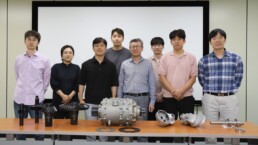

Korea has developed, for the first time, fundamental design and analysis technologies for four key components of power transmission systems that determine the performance and durability of rotorcraft, such as helicopters, which fly using rotating wings. The achievement is expected to lay the groundwork for technological self-reliance in core aviation power transmission components, which have so far been entirely dependent on overseas imports, and to contribute significantly to strengthening national defense technology security through localization.
The Korea Institute of Machinery and Materials (KIMM, President Seog-Hyeon Ryu) announced that a research team led by Dr. Hanmin Lee, head of the Department of Industrial Machinery DX under KIMM’s Virtual Engineering Platform Research Division, has developed fundamental technologies for four key components of next-generation rotorcraft power transmission systems: clutches, gears, housings and bearings.
A power transmission system is a core device that transfers power from a rotorcraft engine to the rotor, the rotating wing similar to a propeller. Such systems must meet demanding technical requirements for high-speed operation and lightweight design. The KIMM research team developed independent design and analysis technologies for each of the four components and completed validation through prototype fabrication and performance testing.
For the clutch, the team developed design and analysis technologies for both individual components and the overall system. It also secured fundamental technologies to improve the heat resistance, low-loss performance and wear resistance of dry and wet friction materials. The performance and reliability of the developed technologies were verified through static and durability tests.
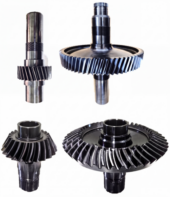
For the gear, the team developed body-shape design and analysis technologies for high-speed, lightweight operation, as well as hybrid dynamic analysis technology. Based on its own design process, the team fabricated lightweight gears comparable to those used in advanced overseas cases, such as the SAFRAN Arriel 2, and completed validation through quasi-static testing.
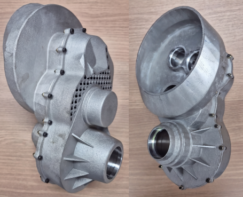
For the housing, the team developed topology optimization and integrated analysis technologies, while also securing process analysis and optimization technologies for 3D printing. The housing was fabricated by applying a TPMS, or Triply Periodic Minimal Surface, structure, an advanced technology for lightweight design. The effectiveness of the technology was verified through stiffness testing.
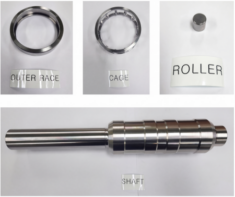
For the bearing, the team developed shape design and analysis technologies, reinforcement learning-based design optimization technology and CFD, or Computational Fluid Dynamics-based, power loss analysis technology. The performance of the developed technologies was subsequently verified through life and efficiency tests.
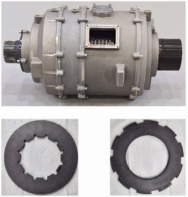
Until now, Korea has lacked fundamental technologies to independently design and analyze core aviation components, resulting in heavy reliance on overseas imports for most key components of rotorcraft power transmission systems. In cooperation with domestic manufacturers, the KIMM research team identified technical requirements necessary to achieve aviation-grade lightweight design and precision. In collaboration with Korean universities including Seoul National University and Kyung Hee University, the team also secured key analysis technologies comparable to those held by leading global companies such as SKF and SAFRAN, including CFD-based power loss analysis and hybrid dynamic analysis technologies.
Through this achievement, KIMM has established an independent process covering design, analysis and optimization, which had previously been absent in Korea, and has secured in-house design capabilities for each of the four key components. The team fabricated prototypes for each component and demonstrated the effectiveness of the developed technologies through evaluations including static, durability, life and efficiency tests. The research also produced design and analysis processes and verification data that can be immediately applied to future domestic development of core components.
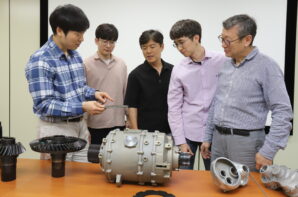
“Establishing a foundation for independent technological self-reliance in aviation power transmission systems, a field that has long depended on foreign technologies, carries significant meaning for strengthening national defense technology security,” said Dr. Hanmin Lee, head of KIMM’s Department of Industrial Machinery DX. “We will continue research and development, as well as industry-academia-research cooperation, so that these technologies can be actively applied in the commercialization stage of next-generation rotorcraft.”
This research was supported by the Korea Research Institute for Defense Technology Planning and Advancement through core technology R&D project(“the Specialized Research Laboratory for Core Components of Next-Generation Rotorcraft Power Transmission Systems”, period: `21~`25, research funding: KRW 5 billion).



Related News.

Navigating the Multi-Orbit Era: In Conversation with Intellian’s Jon Harrison at SMM 2026
At SMM 2026 in Hamburg, the rapid evolution of maritime satellite communications took centre stage. Across the exhibition halls, discussions among…
Cyprus ports need joint energy and investment strategy, shipping agents chief says
Cyprus needs a coordinated strategy for shipping, energy and environmental protection to support port investment and modernisation, Cyprus shipping…

MASO Public Affairs introduces MASO Regulatory Intelligence
A new subscription service helping businesses understand what is changing and what it means for them MASO Public Affairs introduces MASO Regulatory…
Anglo-Eastern helps turn CMBTECH’s ammonia ambition into an operational reality
From early feasibility study and risk-based design to newbuilding supervision, crew readiness and technical management, Anglo-Eastern drew on its…

Escalation of attacks threatens to derail recovery in Middle East oil exports
World oil demand is forecast to fall by 2.5 mb/d y-o-y in 4Q26 and 2.6 mb/d on average in 2026. As the Iran war manifests itself through restricted…

New study finds shipping pays twice its share to EU ETS earmarked revenues should triple to help build market for sustainable fuels and technologies
Shipping is responsible for around 10% of EU ETS emissions but pays almost 20% of the ETS bill. Unlike other sectors, it has never received free…
MSARC strengthens maritime mass rescue readiness through training and national live exercise off Dakar, Senegal
Joint MSARC–FHAS programme combines three days of SAR training with a national multi-agency live exercise The Maritime Search and Rescue Council ,…

Sogese report deliveries are still being delayed as container freight rates fluctuate
FOR IMPORTERS Spot rates into the Mediterranean are back at January levels, Far East to Europe reliability sits at pandemic lows, and nearly…

Glencore begins trading on Australian Securities Exchange
Glencore has begun trading on the Australian Securities Exchange under the ASX code GLC. Gary Nagle, Glencore’s CEO, said it was an exciting day for…
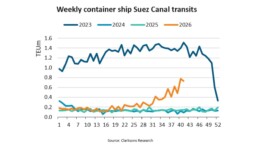
BIMCO Shipping Number of the Week
Suez Canal container ship transits exceed 50% of pre-disruption levels "During the first two weeks of October, weekly container ship capacity…
Subscribe to our newsletter!
if you dont want to swim alone in the ocean of news, sign up for the newsletter, and you will receive daily all the important news of world shipping!
