The Digital Warehouse Revolution: Bjorn Madsen on transforming maritime supply chains via On-Demand Manufacturing


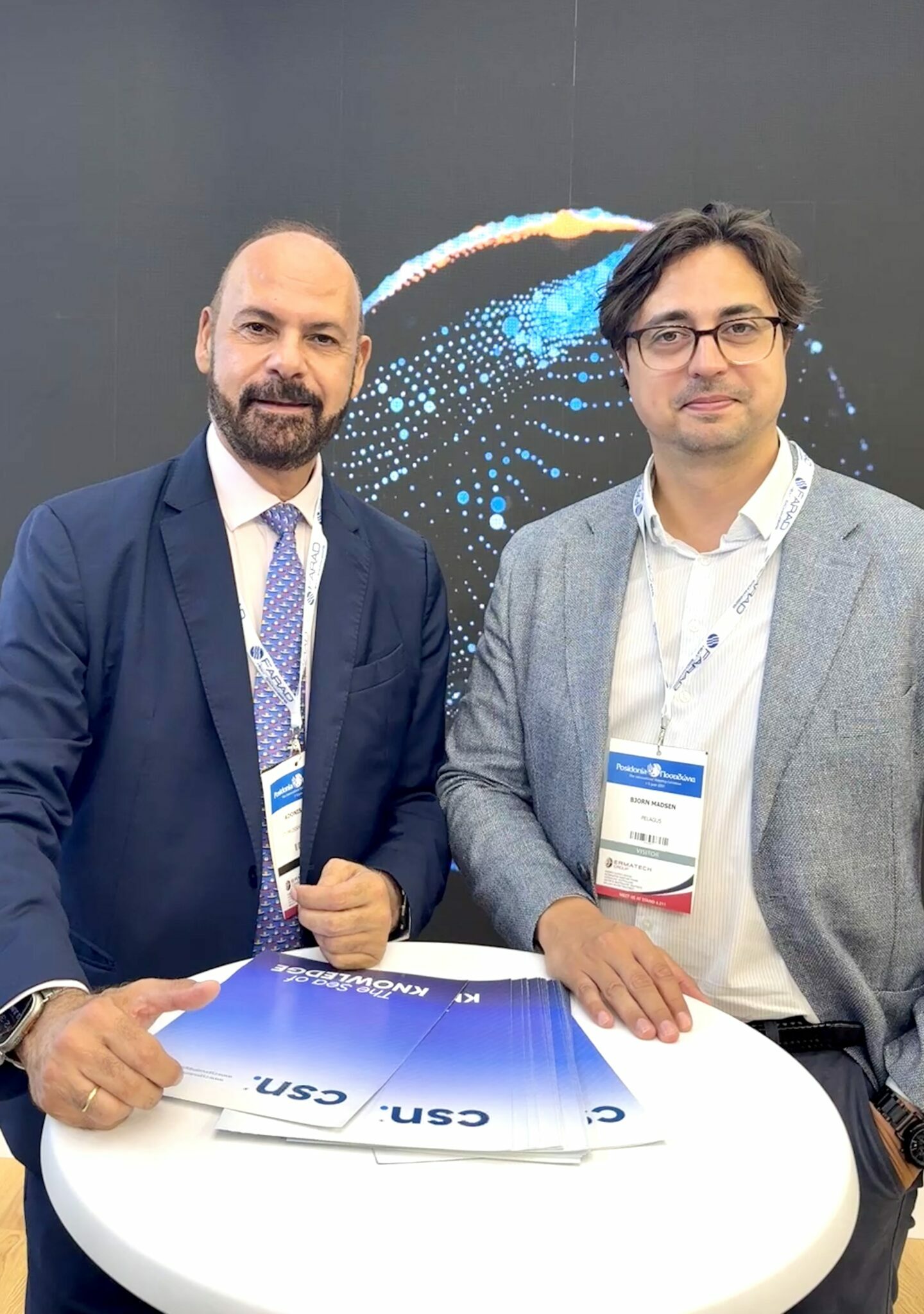
Following the intense operational and logistics debates at Posidonia 2026, Cyprus Shipping News Managing Director Adonis Violaris sits down with Bjorn Madsen, CCO of Pelagus, to explore how on-demand manufacturing is injected with the power to solve shipping’s most persistent spare parts bottlenecks. With over 30% of the global merchant fleet now exceeding 20 years of age, operators are increasingly exposed to costly downtime from obsolete components and unverified grey-market suppliers. In this exclusive interview, Bjorn details Pelagus’s strategic evolution into a technology-agnostic manufacturing partner that works hand-in-hand with OEMs to secure intellectual property and deliver class-approved components within a guaranteed four-week dispatch window. From scaling digital warehouse infrastructures with the Maritime and Port Authority of Singapore to bypassing complex import structures in Brazil and the MENA region, this discussion outlines a compelling financial roadmap for fleet managers looking to transition from costly physical warehouses to highly resilient, localised digital inventories.
The Post-Posidonia Supply Chain Reality
Posidonia 2026 has shown that while shipowners are looking deeply at future fuels, their immediate day-to-day headache remains operational continuity amid global trade disruptions. Reflecting on your discussions in Athens this month, how acutely are ship managers feeling the strain of traditional, slow-moving spare parts supply chains?
The geopolitical tensions and supply chain disruptions that have affected global businesses in recent years have exposed the limits of traditional spare parts supply chains, with real world events highlighting vulnerabilities in warehouse-dependent logistics models.
Ship managers and asset owners are experiencing longer lead times and increasing uncertainty over whether critical parts will be available when and where they are needed.
Operational continuity is an immediate commercial priority, and Pelagus was founded specifically to address this challenge. As an on-demand manufacturing partner in the maritime and energy sectors, Pelagus enables OEMs to digitize relevant parts and manufacture these anywhere in the world. The case for on-demand manufacturing is compelling for legacy parts, where availability is often a critical issue.
Conversations during Posidonia reinforced our belief that the industry is actively looking for more resilient and responsive alternatives to traditional supply chains.
The Identity Shift: Becoming Technology-Agnostic
Pelagus recently dropped the “3D” from its original branding, shifting focus from purely promoting additive manufacturing to becoming a broader, technology-agnostic on-demand manufacturing partner for OEMs. What drove this strategic rebranding, and how does it help conservative maritime engineers view on-demand production as a standard procurement tool rather than an experimental trial?
Dropping “3D” from our name was a deliberate decision that reflects how our business has evolved. We do not see ourselves as a technology company promoting a single manufacturing method. Instead, we are an on-demand manufacturing partner that selects the optimum approach to production for each part, whether that is laser powder bed fusion, CNC machining, casting, or conventional supply.
We lead with the outcome: a certified, class-approved component, delivered on time and to specification.
In an industry where reliability, safety and compliance are non-negotiable, the focus on outcomes is what makes on-demand production a practical procurement choice. We extend the commercial reach of OEMs without asking them to invest in new manufacturing infrastructure. We become their trusted production and logistics partner.
Supporting the Legacy Portfolio of Aging Fleets
Recent data shows that over 30% of the global merchant fleet is now over 20 years old, meaning many vessels rely heavily on legacy equipment where original parts are either out of production or the makers no longer exist. How is Pelagus helping OEMs digitize and profitably re-engage these legacy portfolios to keep older vessels operational without massive inventory overheads?
The aging global fleet represents one of the most significant challenges in the maritime aftermarket. As an increasing number of vessels approach 20+ years old, operators are relying on equipment where original spare parts may no longer be available. When an OEM discontinues a part or the OEM itself no longer exists, the ship operator faces a choice between costly, slow custom fabrication, unverified third-party suppliers, or in some cases, full system replacement in order to avoid downtime. None of which is straightforward on an aging vessel.
Pelagus works directly with OEMs to digitize relevant parts in their legacy portfolio by converting existing technical drawings, specifications and engineering data into validated digital files that can be manufactured on demand, anywhere in the world. Once a component has been digitized and approved, it effectively becomes always available. There is no physical inventory that can run out, no warehouse that requires management, and no single geographic location restricting supply.
For OEMs, this creates an opportunity to re-engage with aftermarket revenue streams that may have previously been considered commercially unviable. For vessel operators, it provides confidence that aging equipment can continue to be maintained safely, efficiently and in compliance with regulatory requirements, allowing older vessels to remain operational for longer.
Combating the Grey Market and Protecting IP
The United States Patent and Trademark Office estimates that up to 20% of global spare parts are suspected to be counterfeit, leading to a massive grey market of reverse-engineered parts that risk vessel safety. How does the Pelagus business model protect OEM intellectual property while offering shipowners a faster, fully certified alternative to unvetted grey-market suppliers?
The grey market for spare parts is not just a commercial challenge for OEMs; it represents a serious safety concern for the maritime industry. Counterfeit or reverse-engineered components that have not been manufactured to OEM specifications can fail in service, potentially compromising crew safety, vessel performance, regulatory compliance and insurance cover.
Pelagus operates exclusively under authorization from the OEM. We do not reverse-engineer parts, and we do not manufacture anything without the OEM’s technical documentation and approval. The OEM’s intellectual property is protected by design, through our operational processes, our secure digital inventory and through the legal agreements that govern every manufacturing relationship in our network.
Every part produced through the Pelagus network is manufactured according to the OEM’s original specifications by vetted and certified suppliers. Each part is supported by fully traceable documentation, including inspection certificates and class society approvals where required.
For ship operators, this means that instead of turning to unverified grey-market suppliers, they receive a part that is functionally equivalent to what the OEM would supply directly but with the added benefit of a shorter lead time. Rather than accepting the risks associated with uncertified parts, Pelagus can supply a certified, fully documented component from an OEM-authorised channel.
Scaling Beyond Pilots with Singapore JIP Phase 3
Pelagus recently entered Phase 3 of the Maritime Additive Manufacturing Joint Industry Project alongside the MPA and NAMIC. Moving from small-scale pilot trials to a truly scalable, digital warehouse of qualified parts, what are the primary regulatory and engineering benchmarks you must hit over the next twelve months to make on-demand printing a standard port service globally?
The Maritime Additive Manufacturing Joint Industry Project led by the Maritime and Port Authority of Singapore and NAMIC, has played a critical role in establishing industry-wide adoption of on-demand manufacturing solutions in maritime.
The early phases were focused on demonstrating technical feasibility and proving that the technology could meet maritime standards. Phase 3 is about moving beyond proof of concept into a repeatable and globally scalable model. In this phase, we are focused on working with the American Bureau of Shipping (ABS) to streamline the certification process for digitally manufactured parts. This includes incorporating digital validation methods into inspection and testing workflows and refining certification requirements for suppliers manufacturing critical components.
Our goal is a future where a vessel in any major port can order a certified legacy spare part and receive it within a defined and commercially guaranteed timeframe, complete with the necessary class approvals and supporting documentation.
The 4-Week Dispatch Guarantee and Global Network Certification
You have established a commercial commitment to ensure legacy parts are available for dispatch in four weeks or less by utilizing a certified global supplier network. How do you maintain absolute quality control and class society verification when a critical component, like a pump impeller, is manufactured by a local partner near the vessel instead of the OEM’s main factory?
Maintaining quality and consistency across a distributed manufacturing network is fundamental to our model. Every supplier within the Pelagus network undergoes a rigorous qualification process that evaluates manufacturing capability, quality management systems and compliance with relevant class society requirements.
A supplier will not secure approval to manufacture parts until we have full confidence in its ability to consistently produce that part to the required specification. When an order is placed, the digital file transmitted to the local manufacturer is the same validated file that has been approved against the OEM’s original specification. The manufacturing process itself is controlled and standardised to ensure consistency regardless of location.
Before dispatch, every component is subjected to a quality inspection. Material certificates, dimensional reports, and, where necessary, third-party inspection records, accompany the part to provide complete traceability.
Class societies have become increasingly familiar with this manufacturing model, and we work closely with them to ensure our documentation and quality assurance processes meet their acceptance criteria.
Expanding into Regional Hotspots: The Brazil and MENA Strategy
Through your strategic partnerships with local entities like Belga Marine in Brazil and Immensa in the MENA region, you are tackling highly complex, localized supply chain bottlenecks. What unique procurement hurdles do these regions present to ship managers, and how does localized digital manufacturing solve them?
Brazil and the MENA region are excellent examples of markets where traditional spare part supply chains face significant challenges. Both regions share a common challenge: traditional supply chains that carry long lead times, high logistics costs and significant import complexity.
In Brazil, import duties and customs procedures for marine spare parts can add considerable time and expense to the procurement process. By working with a local partner such as Belga Marine, we can manufacture parts in-country, helping operators avoid many of these barriers while supporting both the offshore energy sector and the merchant fleet with faster turnaround times.
In the MENA region, our partnership with Immensa brings additive manufacturing capability into a region that is actively investing in local industrial capacity. Components that previously required international air freight, with all of the associated high costs and long lead times, can now be sourced locally from a certified manufacturer with full documentation.
This localisation strategy is central to Pelagus’ long-term vision. Rather than building a single global production facility, we are creating a distributed network of qualified manufacturing partners located close to major shipping and energy hubs. By bringing production closer to demand, we reduce lead times, lower logistics costs and strengthen supply chain resilience.
The Financial Case for Digital Inventory
When shipping markets face volatile freight rates, spending on digital transformation can be highly scrutinized. If you could leave ship finance directors and fleet managers with one key takeaway from Posidonia regarding the true return on investment of shifting from physical warehouses to secure digital inventories, what would it be?
A physical spare parts inventory is a fixed cost. Capital is tied up in components that may sit unused for years, depreciate over time or become obsolete before they are ever needed. By contrast, digital inventory is a variable, scalable asset that generates value only when it is needed.
This is not an argument for replacing physical inventory entirely. For high-turnover, fast-moving parts, physical stock makes commercial sense. The opportunity enabled by digital inventory is in identifying the parts of a legacy portfolio where on-demand manufacturing is the more economical model. Typically, the parts that move slowly, carry high obsolescence risk, or are increasingly difficult to source through genuine channels.
The financial benefits extend beyond inventory reduction. As fleets continue to age and part availability from OEM channels diminishes, the alternative for the harder-to-source parts is increasingly the grey market, which introduces liability risks that can be highly consequential. On-demand manufacturing gives OEMs and operators a commercially sound alternative, supplying genuine parts manufactured to specification without the overhead of physical stock.



Related News.

Hong Kong Global Maritime Trade Summit to return for third edition
The International Chamber of Shipping, in collaboration with the Transport and Logistics Bureau of the Government of Hong Kong and the Hong Kong…

Appetite for US crude oil exports climbs despite high freight
South Korea tops US crude destinations at 568,600 b/d VLCC rates to Asia double, closing arbitrage window European refining margins…
Shipping stocks Rally as Hormuz Traffic plunges 75%
Ship traffic through the Strait of Hormuz — a critical chokepoint handling about 20% of global crude oil and liquefied natural gas shipments — has…

Diana Shipping announces Time Charter Contract for m/v G P Zafirakis with Classic Maritime
Diana Shipping, a global shipping company specializing in the ownership and bareboat charter-in of dry bulk vessels, announced that, through a…
New IMO ESP Code framework for Remote Inspection Techniques
The International Maritime Organisation, through Resolution MSC.584(111) , has adopted amendments to the International Code on the Enhanced…

ABS opens Offshore & Marine Support Center in Bergen
ABS has expanded its capabilities in the Norwegian maritime market with the opening of a cutting-edge support center in Bergen, bringing advanced…

MOL holds giant step memorial ceremony and beach cleanup at Kashima Coast
Memorial and Reflection 20 Years After the Accident: Learning from the Past to Foster an Even Stronger Safety Culture Mitsui O.S.K. Lines, announced…
KEZAD-based Arabian Gulf Steel Industries achieves lowest verified Carbon Footprint for Rebar
CARES UK verified Environmental Product Declaration confirms 139 kg CO₂e per tonne for rebar produced at AGSI’s KEZAD Abu Dhabi facility Arabian…
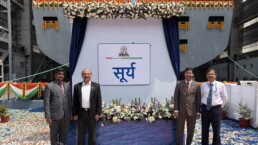
Indian Register of Shipping announces launch of first fleet support ship INS Surya
Indian Register of Shipping continues to strengthen its role in supporting the Indian Navy and India’s naval shipbuilding capabilities through the…

VLCCs Climbing the Record Charts
LR2 The TC1 75kt MEG/Japan index decreased by only a single point this week to WS928. The corresponding Baltic round-trip TCE fell by $2,000 to…
Subscribe to our newsletter!
if you dont want to swim alone in the ocean of news, sign up for the newsletter, and you will receive daily all the important news of world shipping!
