The Hybrid Horizon: ATPI’s Nikos Gazelidis on Balancing Digital Innovation and Human Response in Marine Travel


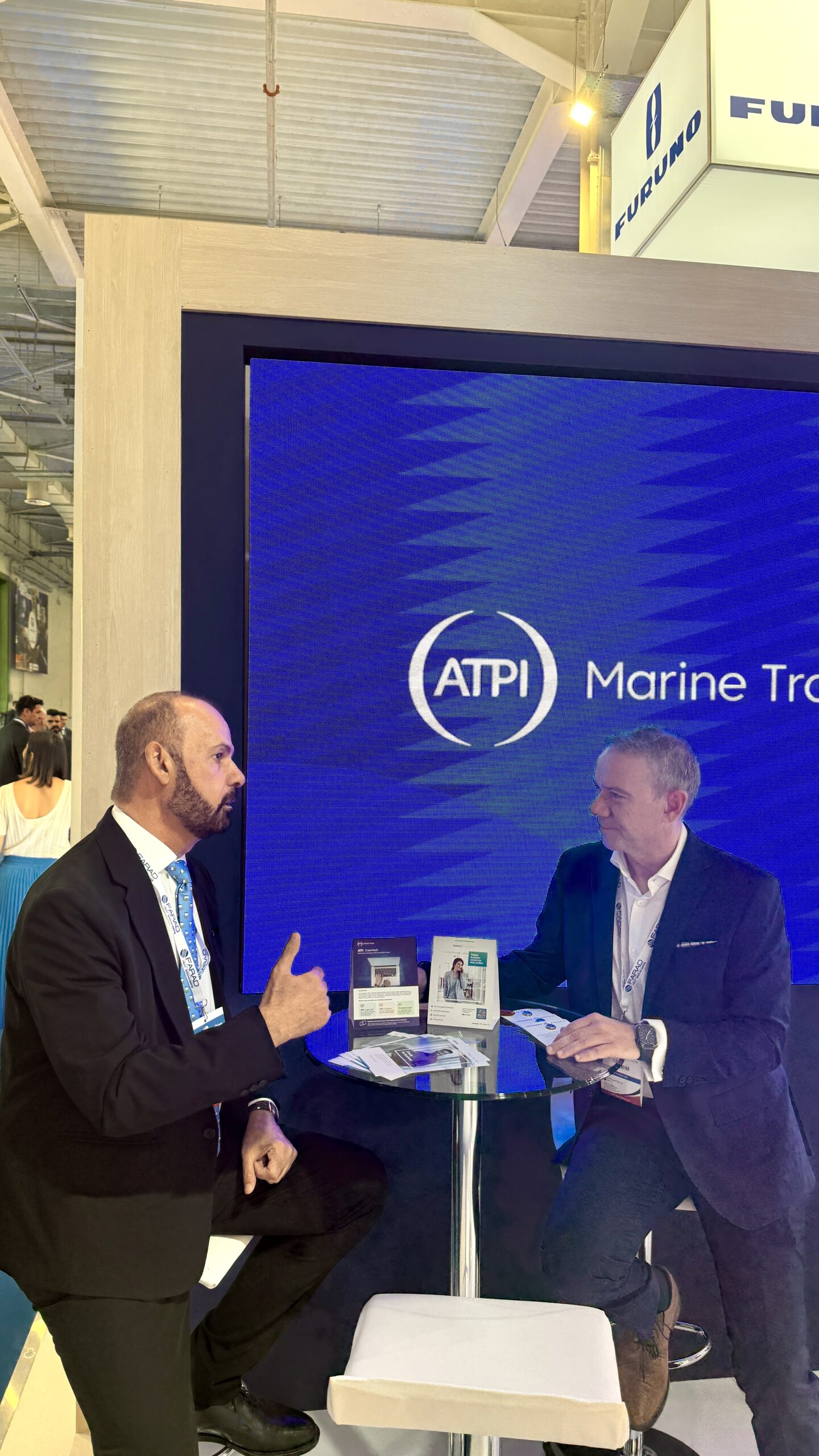
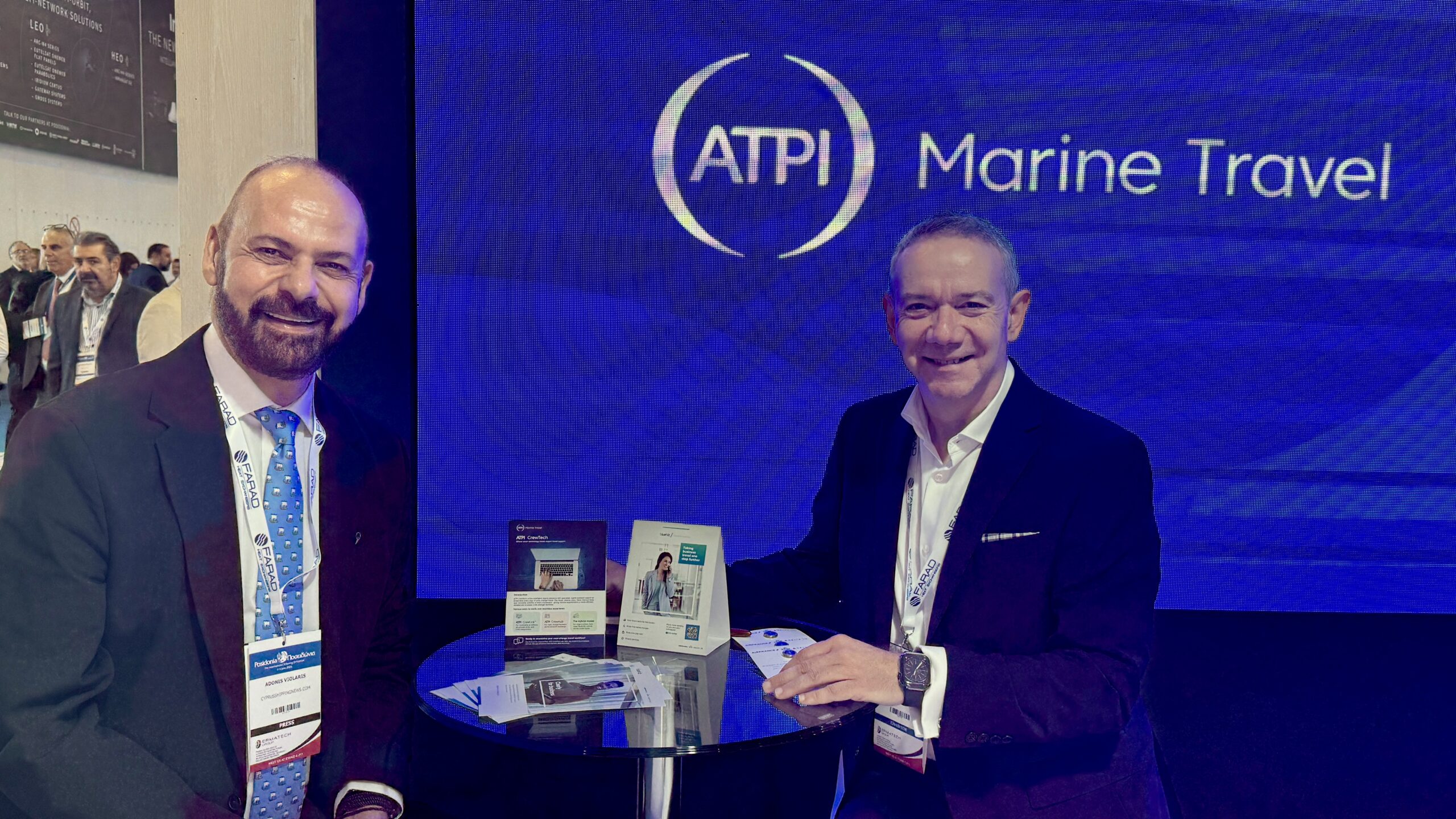
In this exclusive post-Posidonia interview, Cyprus Shipping News Managing Director Adonis Violaris sits down with Nikos Gazelidis, Chief Commercial Officer of ATPI’s Marine Division and Managing Director of ATPI Greece and Cyprus. Following the intensive discussions at Posidonia 2026, Nikos provides an expert look at the mounting complexities currently facing global crew travel logistics. From navigating severe flight network volatility and airspace restrictions to balancing advanced automated tools with crucial human intervention during a crisis, this conversation outlines how operators can successfully control operational costs without compromising seafarer welfare. Additionally, he highlights the growing pressure of tracking Scope 3 travel emissions via targeted solutions like CrewCarbon and offers critical strategic advice for shipmanagers ahead of the challenging winter peak season.
The Posidonia Takeaway
Posidonia always serves as a barometer for the global shipping industry. Reflecting on the discussions and energy in Athens this month, what do you see as the most pressing challenge and the biggest opportunity facing marine logistics and crew travel for the remainder of 2026?
Posidonia once again highlighted just how interconnected geopolitics, aviation, and maritime operations have become. The most pressing challenge for crew change logistics in 2026 is unquestionably volatility across global travel networks. Ongoing regional conflicts, airspace restrictions, and sudden schedule disruptions are creating mounting pressure on ship operators trying to maintain operational continuity while managing rising crew change travel costs. Fuel price fluctuations are also impacting airfare structures globally, making crew mobility increasingly complex and unpredictable.
At the same time, the biggest opportunity lies in strategic travel management. Operators are recognising that crew travel is a critical operational function requiring specialist expertise, real-time visibility, and adaptive planning. Marine travel experts with clear overview of the whole crew change cycle, strong airline relationships, predictive tools, and 24/7 support capabilities can help operators mitigate disruption, maintain crew welfare, and optimise operational costs even during periods of uncertainty.
Geopolitical Reality and Routing Agility
The maritime industry continues to navigate complex geopolitical shifts, from Red Sea diversions to changing flight corridor restrictions. How is ATPI helping ship owners and managers maintain crew change continuity and control costs when global flight networks are so volatile?
Global flight volatility has reinforced the need for agility within crew change logistics. At ATPI Marine Travel, we are helping ship owners and managers maintain operational resilience through a combination of continuous short-term & real-time market monitoring, strategic airline partnerships, and experienced marine travel specialists who understand the complexities of maritime crew movement.
When airspace restrictions or regional instability impact established routes, our teams rapidly identify alternative travel corridors, engage charter flights when airspace is restricted, secure flexible fares, and coordinate adaptive itineraries that minimise disruption to vessel schedules. This is particularly important during periods of sudden geopolitical escalation, where flight cancellations and rerouting can happen with very little notice.
Equally important is cost control. We help operators optimise operational costs without compromising crew welfare and safety, even when addressing on-trip changes and cancellations. In a volatile environment, proactive planning and expert intervention are becoming essential components of effective crew change management.
The Digital vs. Human Balance
Maritime ICT and AI are transforming back-office logistics, yet crew travel remains inherently unpredictable, requiring rapid human intervention when a flight is delayed or a port schedule shifts. How is ATPI leveraging technology to streamline bookings without losing the essential “human touch” required during a logistics crisis?
Crew change logistics will always require a balance between intelligent technology and experienced human intervention. While AI and digital platforms are transforming booking efficiency and data visibility, marine travel remains highly dynamic, with weather events, delayed flights, port schedule changes, and geopolitical disruption all requiring rapid decision-making.
At ATPI Marine Travel, we believe technology delivers the greatest value when combined with experienced marine travel experts. Our integrated solutions provide real-time visibility, automated processes, and predictive insights that help streamline bookings and improve operational efficiency. However, when disruption occurs, clients still need immediate access to specialists who understand marine operations and can resolve issues quickly.
This hybrid approach enables operators to benefit from both digital innovation and human-led responsiveness. It improves continuity, reduces administrative pressure on crewing teams, and ultimately supports a more resilient and efficient crew change operation.
Commercial Aviation Capacity and Seafarer Prioritisation
With global tourism and business travel competing heavily for commercial airline seats, securing cost-effective blocks for seafarers can be a major hurdle. What strategies or airline partnerships is ATPI utilizing to ensure ship managers get priority access to key crew-change hubs?
Competition for airline capacity continues to intensify as global tourism and corporate travel recover, making access to key crew change routes increasingly challenging. ATPI Marine Travel works closely with airline partners worldwide to help ensure seafarers retain priority access to critical travel corridors and major transit hubs.
Our long-standing relationships with carriers enable us to negotiate marine-specific fare structures, secure flexible ticketing conditions, and access inventory that supports the unique requirements of crew change logistics. Partnerships and industry collaboration are essential in ensuring airlines understand the operational importance of maritime crew mobility.
Sustainability and Scope 3 Emissions
Decarbonisation is no longer just about fuel and engines; corporate governance is increasingly looking at the environmental footprint of the entire supply chain, including corporate and crew travel. How is ATPI enabling maritime clients to track, report, and actively offset their Scope 3 travel emissions?
Sustainability within shipping is evolving rapidly, and crew change travel-related emissions are now firmly part of the wider operational conversation. ATPI Marine Travel supports maritime clients through solutions such as CrewCarbon and ATPI Halo, helping operators measure, report, and reduce the environmental impact associated with crew mobility.
CrewCarbon provides visibility into emissions generated through crew change travel, enabling operators to better understand their Scope 3 footprint and identify opportunities for reduction. Combined with the broader sustainability expertise of ATPI Halo, clients can access reporting tools, carbon compensation programmes, and strategic guidance aligned with evolving ESG requirements.
Importantly, the focus is not simply on offsetting emissions, but on enabling smarter travel decisions. Optimised routing, consolidated itineraries, sustainable aviation fuel initiatives, and improved travel planning can all contribute to reducing the carbon impact of global crew change logistics while maintaining operational continuity and crew welfare.
The Changing Needs of the Modern Seafarer
Crew well-being and retention are central to operational success. Beyond simply getting a seafarer from point A to point B, how can specialized marine travel management contribute to a better, less stressful transit experience for the crew themselves?
Poorly coordinated itineraries, excessive layovers, last-minute changes, and communication gaps can significantly increase fatigue and stress levels for crew members already operating in demanding environments. Specialised marine travel management helps mitigate these pressures through proactive planning, adaptive routing, realistic connection times, and 24/7 support during disruption.
At ATPI Marine Travel, we also recognise the importance of cultural understanding and regional expertise, particularly across major crew source markets in Southeast Asia and beyond. By prioritising coordination, communication, and flexibility, operators can improve the overall travel experience, strengthen crew satisfaction, and ultimately support long-term retention.
Future-Proofing Marine Travel
Looking ahead, what structural changes do you anticipate in the marine travel sector over the next few years, and how is ATPI positioning itself to stay ahead of the curve?
The marine travel sector is entering a period where adaptability, visibility, and specialist expertise will become even more important. Geopolitical instability, fluctuating aviation capacity, sustainability pressures, and evolving crew expectations are all increasing the complexity of global crew mobility.
Over the next few years, we expect the shipping community to place greater emphasis on strategic crew change partnerships rather than purely transactional travel booking models. There will also be growing focus on data-driven decision-making, predictive planning, and integrated technologies that provide better operational visibility across the whole cycle of crew change logistics.
Sustainability reporting will continue to develop, particularly around Scope 3 travel emissions, although broader decarbonisation efforts across shipping will understandably remain the primary industry focus. ATPI Marine Travel is positioning itself by combining digital innovation with experienced marine expertise, ensuring clients have both the technology and operational support needed to navigate an increasingly complex global travel environment.
Final Reflections
If you could leave the ship management community with one key piece of advice regarding their travel strategy for the upcoming winter peak season, what would it be? Would you like to adjust the tone of any of these questions, or perhaps add a specific angle regarding the Greek or Cypriot shipping markets?
My advice to ship managers looking to optimise crew change travel is simple: work closely with a specialist marine travel expert and plan as proactively as possible. The operating environment remains unpredictable, and resilience within crew change logistics has never been more important.
Winter disruption, geopolitical volatility, and aviation capacity constraints can quickly impact crew continuity if travel arrangements are inflexible. Operators need partners with global reach, an adaptive approach, and experienced marine teams capable of responding rapidly when disruption occurs.
From a regional perspective, ATPI Greece & ATPI Cyprus remain deeply connected to the Greek & Cypriot shipping community through their long-standing presence in Athens and Limassol respectively and close relationships with ship owners and operators across the market. Supporting hundreds of thousands of crew movements annually, the team combines local understanding with global marine expertise, providing on-the-ground support and operational continuity for one of the world’s most important maritime hubs.



Related News.

Hong Kong Global Maritime Trade Summit to return for third edition
The International Chamber of Shipping, in collaboration with the Transport and Logistics Bureau of the Government of Hong Kong and the Hong Kong…

Appetite for US crude oil exports climbs despite high freight
South Korea tops US crude destinations at 568,600 b/d VLCC rates to Asia double, closing arbitrage window European refining margins…
Shipping stocks Rally as Hormuz Traffic plunges 75%
Ship traffic through the Strait of Hormuz — a critical chokepoint handling about 20% of global crude oil and liquefied natural gas shipments — has…
Diana Shipping announces Time Charter Contract for m/v G P Zafirakis with Classic Maritime
Diana Shipping, a global shipping company specializing in the ownership and bareboat charter-in of dry bulk vessels, announced that, through a…
New IMO ESP Code framework for Remote Inspection Techniques
The International Maritime Organisation, through Resolution MSC.584(111) , has adopted amendments to the International Code on the Enhanced…

ABS opens Offshore & Marine Support Center in Bergen
ABS has expanded its capabilities in the Norwegian maritime market with the opening of a cutting-edge support center in Bergen, bringing advanced…

MOL holds giant step memorial ceremony and beach cleanup at Kashima Coast
Memorial and Reflection 20 Years After the Accident: Learning from the Past to Foster an Even Stronger Safety Culture Mitsui O.S.K. Lines, announced…

KEZAD-based Arabian Gulf Steel Industries achieves lowest verified Carbon Footprint for Rebar
CARES UK verified Environmental Product Declaration confirms 139 kg CO₂e per tonne for rebar produced at AGSI’s KEZAD Abu Dhabi facility Arabian…
Indian Register of Shipping announces launch of first fleet support ship INS Surya
Indian Register of Shipping continues to strengthen its role in supporting the Indian Navy and India’s naval shipbuilding capabilities through the…

VLCCs Climbing the Record Charts
LR2 The TC1 75kt MEG/Japan index decreased by only a single point this week to WS928. The corresponding Baltic round-trip TCE fell by $2,000 to…
Subscribe to our newsletter!
if you dont want to swim alone in the ocean of news, sign up for the newsletter, and you will receive daily all the important news of world shipping!
