Maritime security update: Gulf Region / Strait of Hormuz and Red Se


The operating environment across the Gulf region remains highly constrained, but the past week has brought two important shifts. First, transit through the Strait of Hormuz is increasingly being managed through a model of coordinated passage rather than physical escort. Secondly, the Red Sea threat picture has sharpened again following the Houthis’ announcement on 8 June that they have reinstated their ban on Israeli shipping.
Recent reporting from JMIC suggests that the immediate risk picture in the Strait has stabilised somewhat compared with the peak disruption phase, although the environment remains severe and highly sensitive to miscalculation, navigation interference and blockade-enforcement activity. In parallel, Risk Intelligence assesses that the broader strategic picture has not improved materially, with the United States and Iran continuing to exchange strikes while remaining entrenched in their respective positions.
Strait of Hormuz: severe, and no return to normality
The most material change in official reporting is that JMIC’s 7 June update reduced the regional threat level from CRITICAL to SEVERE, and also reduced the Strait of Hormuz from CRITICAL to SEVERE, explicitly citing the number of safe transits conducted via the southern route through Omani territorial waters. At the same time, JMIC continues to state that navigation interference, blockade-enforcement activity and mine-risk reporting remain relevant within and adjacent to the traffic separation scheme.
That reduction should not be read as a return to normal operating conditions. Traffic remains far below historical norms. JMIC’s 7 June advisory records only 6 transits on 4 June, 4 on 5 June and 3 on 6 June, against a historical average of around 138 vessels per day. It also continues to report persistent GNSS interference across the Strait approaches, the Gulf of Oman and the Arabian Gulf.
JMIC, moreover, maintains that mine-risk reporting continues to apply within and adjacent to the TSS, referring again to the NAVAREA IX warning (180/26) issued on 26 May concerning a suspected floating mine. Vessels anchored close to the Strait may still be instructed to relocate, while short-notice actions by Iranian units remain possible.
Coordinated transit and the role of NCAGS
At present, the US Navy is not offering routine escorts for merchant shipping in the Strait of Hormuz. Instead, the model is one of coordination, situational awareness and deconfliction. Vessels seeking to transit are expected to engage proactively with the established reporting framework, including MSCHOA, UKMTO and, crucially, NAVCENT’s NCAGS cell, where practical interaction with US naval forces takes place. Within that framework, operators may share transit plans, receive routing guidance and benefit from real-time monitoring and potential military response in the event of an incident. The US Navy has worked to establish defined transit “pathways” based on demonstrated safe passages, with ships guided along these routes through communication rather than physical escort.
That means the current system is best understood as coordinated transit rather than convoying. As such, continuous communication remains central – vessels are expected to monitor VHF Channel 16, communicate their intentions clearly and comply immediately with instructions from naval units in the area.
For shipowners and operators, the practical implication is that early engagement with the coordination centres, close alignment with war risk insurers, and strict adherence to reporting and communications procedures remain essential. The industry guidance on the safe management of vessel transit through the Strait of Hormuz, produced by ICS, BIMCO, INTERCARGO, INTERTANKO, IMCA and OCIMF, remains directly relevant in this regard.
Recent Gulf developments: no sustained recovery and continued volatility
Although JMIC has reported no new verified incidents affecting commercial shipping in the Gulf of Oman in the most recent reporting periods, the wider operating environment remains unstable. On 1 June, JMIC recorded an attack on a cargo vessel 40 nautical miles south-east of Umm Qasr, Iraq, describing a large explosion following a hit from an unknown projectile on the starboard side. In its subsequent updates of 4 and 7 June, JMIC recorded no further incidents of that type, but retained SEVERE threat levels for the Arabian Gulf and Gulf of Oman.
Risk Intelligence added important strategic context – it states that the United States conducted strikes against Iranian facilities and claimed to have used a Hellfire missile against a vessel suspected of breaching the US naval blockade. It further states that Iran retaliated across the region, including against US military bases and port areas, and claimed to have attacked several vessels, including at least two operated by MSC in the region. Risk Intelligence’s core assessment is that these exchanges do not alter the underlying strategic picture, which remains one of periodic violence interspersed with suspended or largely performative negotiations.
Red Sea: renewed Houthi policy signal
The most important new development outside the Gulf itself is the renewed Houthi signal in the Red Sea. According to Ambrey’s 8 June threat circular, following escalation between Israel and Iran, the Houthis launched an attack against Israel on 8 June and, on the same day, military spokesperson Yahya Sare’e declared that the Houthis had reinstated their ban on Israeli shipping. Ambrey assesses Israel-owned, operated and managed shipping to be at high risk in the Red Sea and Gulf of Aden. Ambrey also notes that companies calling Israel may face a realistic future targeting risk and that vessels calling Israel may be exposed to collateral damage.
This is an important development because it sharpens the distinction between the Gulf and Red Sea theatres. Ambrey explicitly states that threat levels in the Arabian Gulf, Strait of Hormuz and Gulf of Oman remain unchanged, while the immediate deterioration is concentrated on the Red Sea and Gulf of Aden for Israeli-linked interests.
That in turn broadly aligns with JMIC’s latest Red Sea reporting, which continues to assess the Bab el-Mandeb and Southern Red Sea as MODERATE, with no confirmed attacks on merchant shipping in the last 72 hours and no operational indicators of imminent targeting, even though Houthi rhetoric persists.
Multinational Military Mission: political support, but no immediate operational change
A further development that remains relevant is the emerging Multinational Military Mission for the Strait of Hormuz. The joint statement issued following the UK and French-led 12 May meeting confirms broad political support from multiple states for an independent, and strictly defensive mission intended to support civilian shipping, reassure commercial operators and conduct mine-clearance operations. The same statement also makes clear that operations will commence only in a permissive environment, and that the mission is intended to complement ongoing diplomatic and de-escalation efforts rather than replace them.
That limitation is important. For now, the Mission remains more significant politically than operationally. It signals sustained international concern over the security of commercial navigation through Hormuz, but it does not yet alter the practical reality faced by shipowners and masters.
Alongside that new initiative, the longer-standing European Maritime Awareness in the Strait of Hormuz (EMASoH) framework continues to matter as an instrument intended to protect freedom of navigation, ensure coordination among parties in the area and contribute to de-escalation through military and diplomatic presence. Its military component, Operation AGENOR, is focused on maritime situational awareness and surveillance rather than convoying.
P&I perspective: what matters for members now
From a P&I perspective, the current phase is defined less by mass casualty incidents and more by structured yet still fragile risk management under military oversight. The principal exposures remain:
- miscalculation or misidentification in a congested and heavily monitored operating area
- navigation risk arising from persistent GNSS interference and mine reporting
- delay and deviation risk caused by restricted throughput and routing constraints
- sanctions and compliance exposure where interactions with state-controlled transit systems or conflicting instructions arise
- renewed war risk for Israel-linked shipping in the Red Sea following the Houthis’ announcement of 8 June.
The more encouraging aspect of the latest reporting is that a model of coordinated transit through the Strait of Hormuz now appears more clearly established than in earlier phases of the crisis. The limiting factor is that this remains coordination-led, capacity-constrained and politically contingent, rather than a restored system of normal commercial passage.
Source: SKULD



Related News.

Hong Kong Global Maritime Trade Summit to return for third edition
The International Chamber of Shipping, in collaboration with the Transport and Logistics Bureau of the Government of Hong Kong and the Hong Kong…

Appetite for US crude oil exports climbs despite high freight
South Korea tops US crude destinations at 568,600 b/d VLCC rates to Asia double, closing arbitrage window European refining margins…
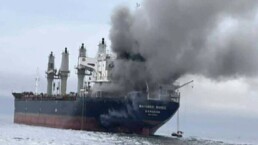
Shipping stocks Rally as Hormuz Traffic plunges 75%
Ship traffic through the Strait of Hormuz — a critical chokepoint handling about 20% of global crude oil and liquefied natural gas shipments — has…

Diana Shipping announces Time Charter Contract for m/v G P Zafirakis with Classic Maritime
Diana Shipping, a global shipping company specializing in the ownership and bareboat charter-in of dry bulk vessels, announced that, through a…
New IMO ESP Code framework for Remote Inspection Techniques
The International Maritime Organisation, through Resolution MSC.584(111) , has adopted amendments to the International Code on the Enhanced…

ABS opens Offshore & Marine Support Center in Bergen
ABS has expanded its capabilities in the Norwegian maritime market with the opening of a cutting-edge support center in Bergen, bringing advanced…

MOL holds giant step memorial ceremony and beach cleanup at Kashima Coast
Memorial and Reflection 20 Years After the Accident: Learning from the Past to Foster an Even Stronger Safety Culture Mitsui O.S.K. Lines, announced…

KEZAD-based Arabian Gulf Steel Industries achieves lowest verified Carbon Footprint for Rebar
CARES UK verified Environmental Product Declaration confirms 139 kg CO₂e per tonne for rebar produced at AGSI’s KEZAD Abu Dhabi facility Arabian…

Indian Register of Shipping announces launch of first fleet support ship INS Surya
Indian Register of Shipping continues to strengthen its role in supporting the Indian Navy and India’s naval shipbuilding capabilities through the…

VLCCs Climbing the Record Charts
LR2 The TC1 75kt MEG/Japan index decreased by only a single point this week to WS928. The corresponding Baltic round-trip TCE fell by $2,000 to…
Subscribe to our newsletter!
if you dont want to swim alone in the ocean of news, sign up for the newsletter, and you will receive daily all the important news of world shipping!
