Mintra launches accessible onboard immersive learning to strengthen Maritime Safety Training


New 3D simulation capability brings practical, scenario-led training directly to the vessel, helping crews practice critical decision-making and identify the kind of behavioural lapses that happen under pressure, in real time, with real consequences before incidents occur.
Mintra, a leading provider of digital learning and workforce management solutions for safety-critical industries, has launched an immersive learning capability designed to make realistic maritime safety training more accessible, affordable and effective at sea.
Built by seafarers for seafarers, the new capability uses advanced 3D simulation technology powered by Unreal Engine to move beyond traditional eLearning and place learners inside operational scenarios that reflect real decisions, pressures and consequences onboard.
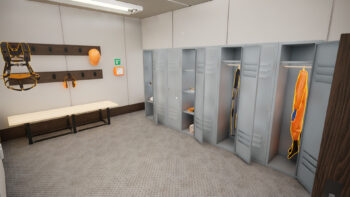
The simulations can be accessed via a vessel’s existing onboard PC or by an end user’s personal PC by downloading the app from the Microsoft Store. The solution removes the need to attend specialist simulator centres or to operate VR (Virtual Reality) equipment, such as headsets. This makes practical, hands-on learning accessible to crews wherever they operate, while giving ship operators a consistent way to build competence across vessels, fleets, and ranks.
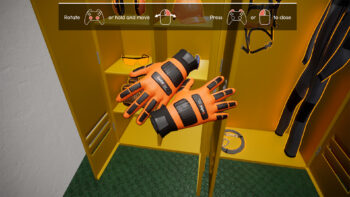
The first two courses Mintra has developed through this capability are Incident Investigation (MGM-013) and Enclosed Space Entry and Rescue (MGM-205). Incident Investigation places seafarers into a real maritime incident, requiring them to assess risk, interpret developing situations, communicate effectively and make operational decisions as the scenario unfolds. Enclosed Space Entry and Rescue addresses one of the industry’s highest-risk activities, replicating authentic workflows, pressure points and the consequences, whether immediate or emerging over time, that are often seen in real enclosed space incidents.
Enclosed space incidents remain one of the sector’s most persistent safety challenges, despite increased regulation, awareness and procedural controls. InterManager has reported continued concern about enclosed-space casualties, including a rise from 18 in 2022 to 34 in 2023, with early 2024 figures showing little improvement. Between 2000 and 2024, at least 1,010 ship and shore workers lost their lives in enclosed space accidents, many involving multiple fatalities and senior officers.

Jessica Suessmilch, Digital Learning Development Manager at Mintra, former seafarer and project lead, said: “Seafarers work long hours, seven days a week, often completing training on top of demanding operational schedules. Too often, learning can feel repetitive or disconnected from the realities of the job.
“As an ex-seafarer, I wanted us to create something engaging, relevant and respectful of crews’ time and expertise. These simulations close the gap between theory and practice by allowing crews to experience operational decision-making in a safe digital environment, before those decisions have real-life consequences.”

Ole-Christian Olsen Apeland, Innovation Director Learning at Mintra, adds, “Immersive learning is particularly valuable in safety-critical industries because it allows people to go deeper into a subject, rather than simply consume information. Simulation strengthens retention because learners are placed in the situation and asked to make decisions.
“For maritime training, that matters. Competence is not only about completing a course but being able to demonstrate skills and judgement in scenarios that reflect the real operating environment.”
Early learner feedback from pilot activity showed strong evidence of improved engagement, safety awareness and knowledge retention:
- 95% said the simulation was useful, realistic and valuable for onboard learning
- 90% said it improved understanding, reinforced correct procedures and strengthened knowledge retention
- 95% reported that the learning-by-doing approach improved awareness of operational risks and consequences
Seafarers participating in the Bernhard Schulte Shipmanagement (BSM) pilot programme said the situations “felt real and made us think before making choices” and improved understanding of the correct sequence of actions during a rescue, including the importance of assessing the situation, using the correct PPE and following safety protocols before entering a confined space.
Spokesperson for BSM said, “The realism of the scenarios immediately changed how crews engaged with the pilot training. Many asked for more learning to be delivered this way. They were able to think through operational decisions and understand why certain actions mattered.”
Following each simulation, learners receive a performance report to support self-reflection and continuous improvement. Fleet managers can access data to identify trends, knowledge gaps and potential signs of complacency across vessels, fleets and ranks. This gives organisations a more targeted way to intervene, reduce unnecessary repeat training and move from compliance-led learning towards competency-led safety improvement.
Because the simulations are standardised globally, operators can deliver consistent practical training regardless of vessel location, trading route or crew rotation. The result is a more accessible model for onboard safety training: practical, measurable and grounded in real operational experience.



Related News.

Navigating the Multi-Orbit Era: In Conversation with Intellian’s Jon Harrison at SMM 2026
At SMM 2026 in Hamburg, the rapid evolution of maritime satellite communications took centre stage. Across the exhibition halls, discussions among…
Cyprus ports need joint energy and investment strategy, shipping agents chief says
Cyprus needs a coordinated strategy for shipping, energy and environmental protection to support port investment and modernisation, Cyprus shipping…

MASO Public Affairs introduces MASO Regulatory Intelligence
A new subscription service helping businesses understand what is changing and what it means for them MASO Public Affairs introduces MASO Regulatory…
Anglo-Eastern helps turn CMBTECH’s ammonia ambition into an operational reality
From early feasibility study and risk-based design to newbuilding supervision, crew readiness and technical management, Anglo-Eastern drew on its…

Escalation of attacks threatens to derail recovery in Middle East oil exports
World oil demand is forecast to fall by 2.5 mb/d y-o-y in 4Q26 and 2.6 mb/d on average in 2026. As the Iran war manifests itself through restricted…
New study finds shipping pays twice its share to EU ETS earmarked revenues should triple to help build market for sustainable fuels and technologies
Shipping is responsible for around 10% of EU ETS emissions but pays almost 20% of the ETS bill. Unlike other sectors, it has never received free…
MSARC strengthens maritime mass rescue readiness through training and national live exercise off Dakar, Senegal
Joint MSARC–FHAS programme combines three days of SAR training with a national multi-agency live exercise The Maritime Search and Rescue Council ,…
Sogese report deliveries are still being delayed as container freight rates fluctuate
FOR IMPORTERS Spot rates into the Mediterranean are back at January levels, Far East to Europe reliability sits at pandemic lows, and nearly…

Glencore begins trading on Australian Securities Exchange
Glencore has begun trading on the Australian Securities Exchange under the ASX code GLC. Gary Nagle, Glencore’s CEO, said it was an exciting day for…
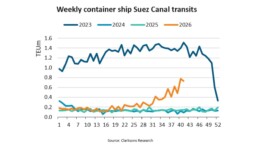
BIMCO Shipping Number of the Week
Suez Canal container ship transits exceed 50% of pre-disruption levels "During the first two weeks of October, weekly container ship capacity…
Subscribe to our newsletter!
if you dont want to swim alone in the ocean of news, sign up for the newsletter, and you will receive daily all the important news of world shipping!
