A roadmap to Hydrogen Ship Safety Standards in the era of decarbonised shipping
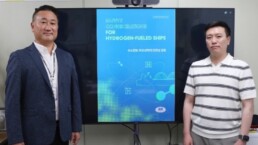
– KIMM Reliability Research Center and Korean Register identify key hazards and propose mitigation measures for hydrogen-fueled ships –
The Reliability Research Center of the Virtual Engineering Platform Research Division at the Korea Institute of Machinery & Materials (KIMM, President Seog-Hyeon Ryu) participated as a key research partner in the publication of the report titled 「Safety Review of Hydrogen-Fueled Ships」 conducted in collaboration with the Korean Register, the report is a comprehensive technical document that systematically presents safety considerations, international regulations, and risk mitigation measures for hydrogen-fueled ships.
□ A research team led by Dr. Yongjin Kim, Head of the Reliability Research Center at KIMM, collaborated with Mr. Jun-Sung Park, General Manager at Korean Register, in preparing the report titled 「Safety Review of Hydrogen-Fueled Ships」. The report includes an overview of maritime hydrogen systems, analyses of hydrogen-related accidents, identification of hydrogen hazards and risk mitigation measures, and relevant international regulations. Published in both Korean and English, the report is available for viewing and download on the Korean Register website(https://www.krs.co.kr/eng/).
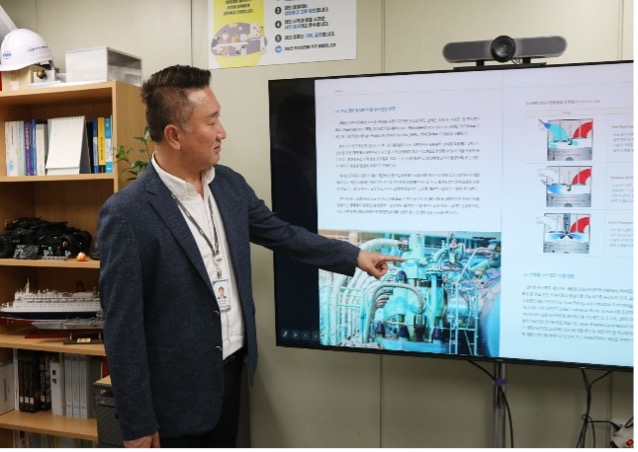
□ Hydrogen is attracting attention as a promising alternative fuel for decarbonizing the maritime sector because it produces no carbon emissions during use and can serve as a feedstock for low-carbon fuels such as methanol. However, safe onboard use requires hydrogen to be stored either as compressed gas at high pressure or as liquid hydrogen at approximately -253°C. The report reviews recent developments in hydrogen fuel cell- and hydrogen internal combustion engine-powered vessels, along with hydrogen storage, supply, and fuel consumption systems.
□ Hydrogen has safety characteristics that differ from conventional fuels such as LNG due to its wide flammability range and extremely low minimum ignition energy. According to the Hydrogen Incidents and Accidents Database(HIAD 2.1), more than 66% of recorded hydrogen-related incidents resulted in fires or explosions. The report examines major hazards associated with hydrogen-fueled ships, including hydrogen leakage and dispersion, fire and explosion, deflagration-to-detonation transition(DDT), jet fires, cryogenic hazards, and hydrogen embrittlement. It further compares these risks with the International Code of Safety for Ships using Gases or Other Low-Flashpoint Fuels(IGF Code) to highlight safety considerations unique to hydrogen-fueled vessels.
□ Based on the interim safety guidelines for hydrogen-fueled ships currently being developed by the International Maritime Organization(IMO), the report explains the physical and chemical properties of hydrogen and key technical considerations for its safe use onboard ships. It presents practical risk mitigation measures for ship design and operation, including leak prevention, ventilation and inerting systems, material selection and compatibility, hazardous area classification, and gas and fire detection and suppression systems. The report is intended to help stakeholders from industry, academia, and research institutions better understand and apply safety considerations for hydrogen-fueled ships.
□ The IMO’s Sub-Committee on Carriage of Cargoes and Containers(CCC) developed interim guidelines for hydrogen-fueled ships during its 11th session, and the guidelines are expected to receive final approval at the 111th session of the Maritime Safety Committee(MSC) in May 2026. As international hydrogen transportation and trade continue to expand, demand for hydrogen carriers and hydrogen-fueled ships is expected to increase. Published ahead of the adoption of the international guidelines, the report is expected to serve as a valuable technical reference for industry stakeholders.
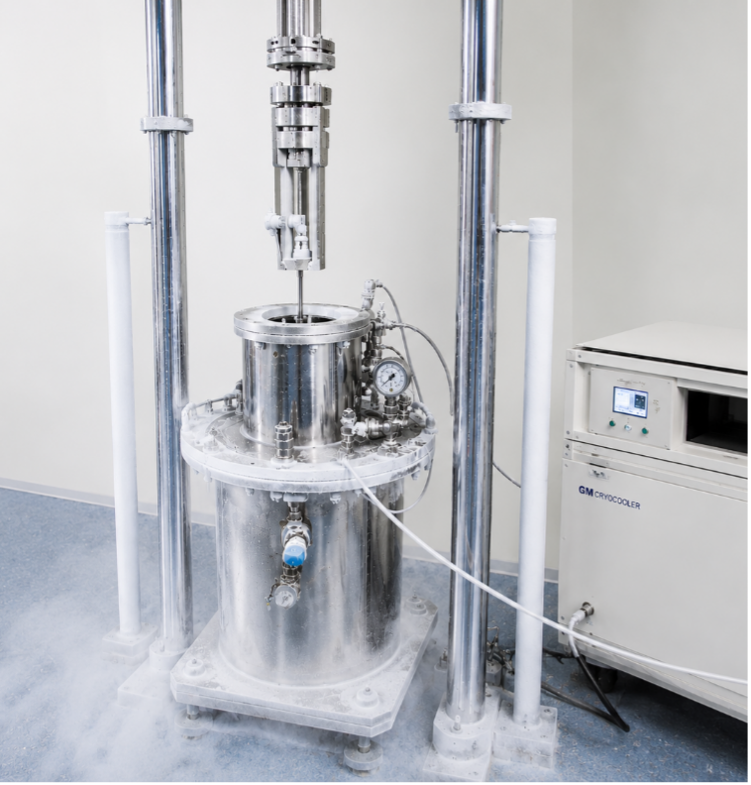
□ Dr. Yongjin Kim emphasized, “This report systematically presents key hazards and risk mitigation measures for hydrogen-fueled ships and represents a meaningful outcome of collaboration among industry, academia, and research institutions. KIMM’s expertise in cryogenic and hydrogen embrittlement testing helped enhance the reliability and practical value of the report.” He added, “We will continue to support the advancement of Korea’s shipbuilding and maritime industries through safety standards development and material suitability evaluation for environmentally friendly vessels.”
□ This research was conducted with support from the Ministry of Oceans and Fisheries through the project titled 「Development of Safety Standards for Hydrogen Storage Tanks and Fuel Supply Systems for Ships」. Through this project, KIMM’s Reliability Research Center established testing and analysis infrastructure for hydrogen embrittlement under cryogenic conditions(-253°C) and became the first institution in Korea to develop guidelines for selecting materials for liquid hydrogen storage systems for marine applications.



Related News.
Hong Kong Global Maritime Trade Summit to return for third edition
The International Chamber of Shipping, in collaboration with the Transport and Logistics Bureau of the Government of Hong Kong and the Hong Kong…

Appetite for US crude oil exports climbs despite high freight
South Korea tops US crude destinations at 568,600 b/d VLCC rates to Asia double, closing arbitrage window European refining margins…
Shipping stocks Rally as Hormuz Traffic plunges 75%
Ship traffic through the Strait of Hormuz — a critical chokepoint handling about 20% of global crude oil and liquefied natural gas shipments — has…
Diana Shipping announces Time Charter Contract for m/v G P Zafirakis with Classic Maritime
Diana Shipping, a global shipping company specializing in the ownership and bareboat charter-in of dry bulk vessels, announced that, through a…
New IMO ESP Code framework for Remote Inspection Techniques
The International Maritime Organisation, through Resolution MSC.584(111) , has adopted amendments to the International Code on the Enhanced…

ABS opens Offshore & Marine Support Center in Bergen
ABS has expanded its capabilities in the Norwegian maritime market with the opening of a cutting-edge support center in Bergen, bringing advanced…
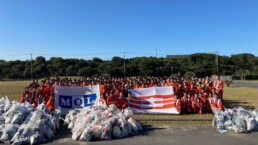
MOL holds giant step memorial ceremony and beach cleanup at Kashima Coast
Memorial and Reflection 20 Years After the Accident: Learning from the Past to Foster an Even Stronger Safety Culture Mitsui O.S.K. Lines, announced…
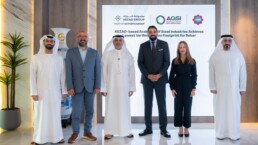
KEZAD-based Arabian Gulf Steel Industries achieves lowest verified Carbon Footprint for Rebar
CARES UK verified Environmental Product Declaration confirms 139 kg CO₂e per tonne for rebar produced at AGSI’s KEZAD Abu Dhabi facility Arabian…
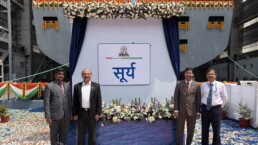
Indian Register of Shipping announces launch of first fleet support ship INS Surya
Indian Register of Shipping continues to strengthen its role in supporting the Indian Navy and India’s naval shipbuilding capabilities through the…
VLCCs Climbing the Record Charts
LR2 The TC1 75kt MEG/Japan index decreased by only a single point this week to WS928. The corresponding Baltic round-trip TCE fell by $2,000 to…
Subscribe to our newsletter!
if you dont want to swim alone in the ocean of news, sign up for the newsletter, and you will receive daily all the important news of world shipping!
