Uncrewed maritime operations accelerating rapidly across Norwegian ocean technology sector
The development of autonomous and remote maritime operations is accelerating rapidly across the Norwegian ocean technology sector. In recent months, several companies have demonstrated how uncrewed vessels, remote operations, and new sensor systems are moving from pilot projects into regular operations in demanding offshore environments.
A clear example comes from Nordic USV, which recently upgraded its USV “Kuling” after more than 6,000 nautical miles of operations.
The vessel has operated fully uncrewed, without a chase boat, and has been controlled directly from an operations centre in Bergen. In total, the company has completed around 10,000 nautical miles of uncrewed operations in 2026.
A new 6 kW generator is intended to increase cruising speed, improve operational reliability in harsh weather conditions, and extend maintenance intervals by 50 percent.
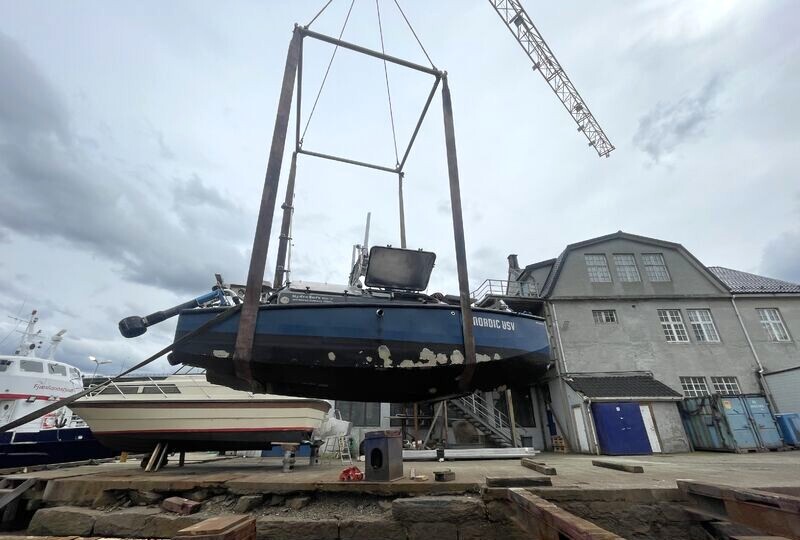 USV Kuling under maintenance and upgrade after more than 6,000 nautical miles of autonomous operations. Photo: Nordic USV.
“Nordic USV is well underway in establishing uncrewed infrastructure along the Norwegian coast. We currently operate three USVs and six unmanned docking and charging stations, covering both the Helgeland coast and the entire stretch from Måløy to the inner Oslofjord,” says Sander Henriksen, CEO & Founder of Nordic USV.
“The vessels operate year-round, delivering water sampling and monitoring services for the aquaculture industry, public authorities, as well as monitoring emissions from wastewater, industrial activity, and mining operations,” he says.
.jpg?width=6000&height=4000&name=NTNU%20Studentettermiddag%20291025%20Foto%20Lars%20Bugge%20Aarset%20Fremtidens%20Industri%20(11).jpg) Sander Henriksen, CEO & Founder of Nordic USV. Photo: Lars Bugge Aarset/Fremtidens Industri
Sander Henriksen, CEO & Founder of Nordic USV. Photo: Lars Bugge Aarset/Fremtidens Industri
Autonomous voyage from Trondheim to Kårstø
Another example is Maritime Robotics and its uncrewed vessel Mariner X, which recently completed an autonomous voyage of more than 500 nautical miles from Trondheim to Kårstø. The nine-metre USV spent nearly one week along the Norwegian coast—operated entirely without crew on board, but under continuous monitoring and control from shore.
The operation was carried out in cooperation with Equinor and is described as one of the most extensive autonomous test operations conducted in Norway to date.
The vessel is designed for long-endurance operations in challenging coastal and offshore environments and is equipped with advanced sensors and navigation systems for data collection, testing, and operational missions under real-world conditions.
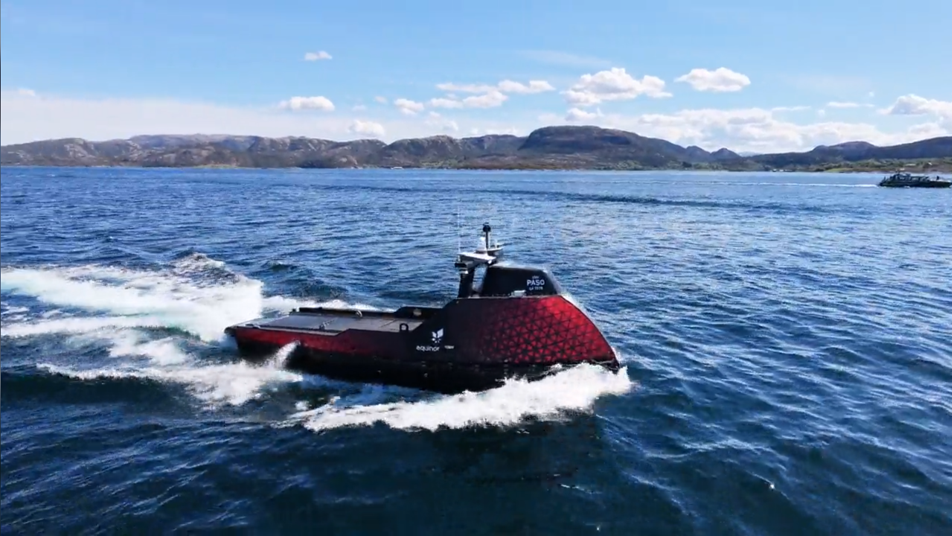 Mariner X. Photo: Maritime Robotics
The project is not only about autonomous navigation, but about how offshore operations can be conducted with reduced risk, lower manning levels, and improved energy efficiency. Through the voyage, the partners are investigating how uncrewed systems can be scaled from individual demonstrations to routine offshore operations on the Norwegian continental shelf.
“We have already tested and operationalised uncrewed vessels in real operations, but the Mariner X gives us an opportunity to push the boundaries of autonomy in a controlled, yet realistic environment. The goal is to understand how these technologies perform in day-to-day offshore operations and what it takes to move from promising trials to scalable solutions,” says Arne Gürtner, Senior Vice President – Technology, Digital and Innovation at Equinor.
.jpg?width=854&height=683&name=Arne%20G%C3%BCrther%20Equinor%20(2).jpg) Arne Gürtner, Senior Vice President – Technology, Digital and Innovation at Equinor.
Arne Gürtner, Senior Vice President – Technology, Digital and Innovation at Equinor.
The Norwegian coastline itself provides a demanding test arena, with rapidly changing weather, waves, traffic, currents, and complex navigation conditions. That Mariner X completed the entire journey without serious incidents represents an important technological and operational milestone.
“This is Norwegian-built technology that makes complex and hazardous offshore operations safer, more efficient and significantly more environmentally friendly,” says Eirik Hovstein of Maritime Robotics.
.jpg?width=6000&height=4000&name=Regjeringens%20forskningsinnsats%20i%20n%C3%A6ringslivet%20-%20Foto%20Lars%20Bugge%20Aarset%20Ocean%20Autonomy%20Cluster(21).jpg) Eirik Hovstein, Maritime Robotics. Photo: Lars Bugge Aarset/Fremtidens Industri
Eirik Hovstein, Maritime Robotics. Photo: Lars Bugge Aarset/Fremtidens Industri
Maritime Robotics has developed uncrewed and remotely operated systems in Trondheim for more than 15 years and already has more than 200 vessels in active operations globally across defence, research, offshore, and ocean industries.
See also: Uncrewed vessel completes 500-nautical-mile autonomous voyage along the Norwegian coast
Remote seabed mapping in the North Sea
At the same time, Fugro has deployed its new USV Blue Eclipse 1 in Norway. The vessel will carry out major parts of the MAREANO seabed mapping programme in the North Sea, remotely operated from the company’s control centre in Aberdeen.
The operation marks an important milestone for large-scale uncrewed offshore operations and demonstrates how autonomous vessels are increasingly used in demanding commercial missions in the North Sea.
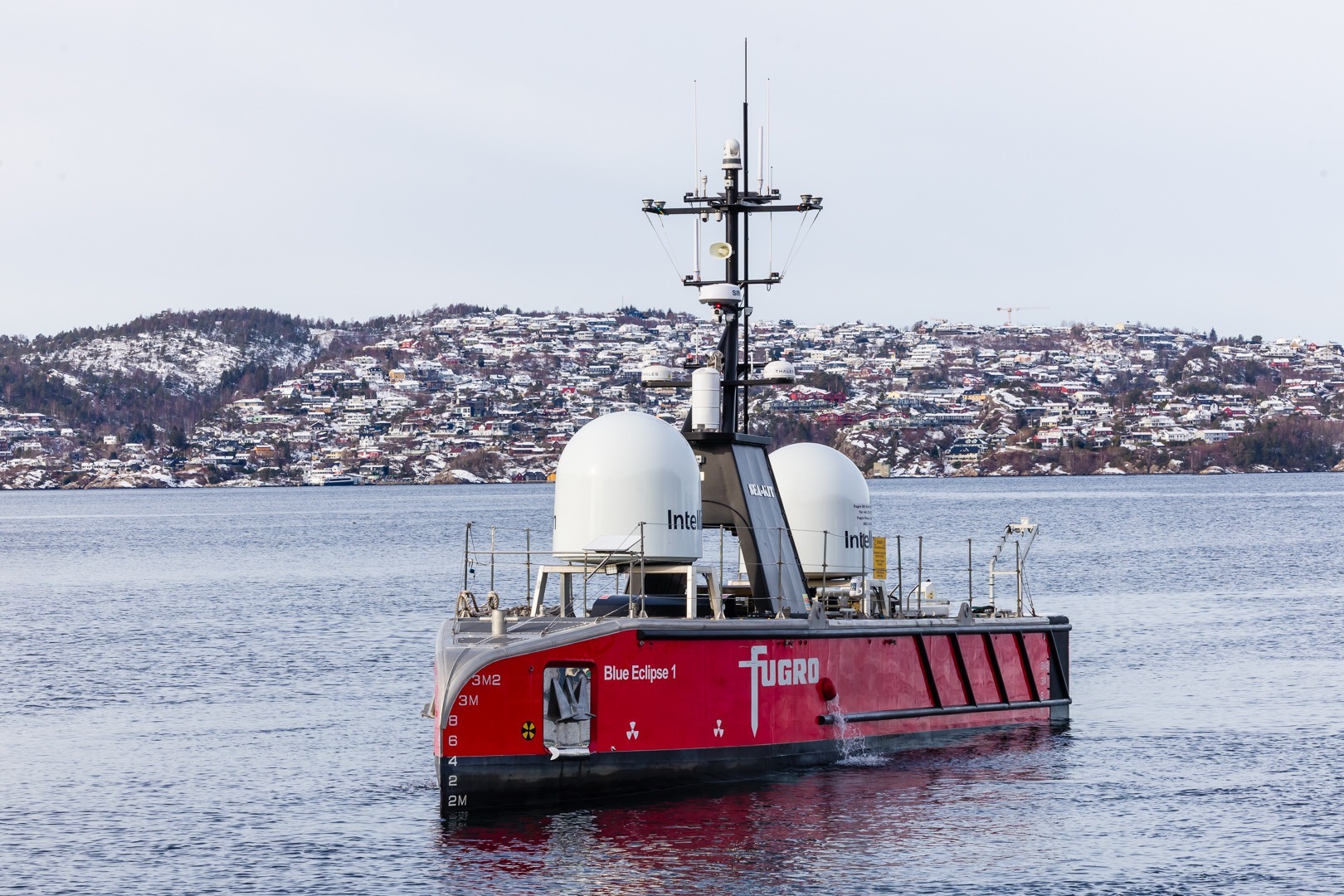 Fugro’s 18-metre USV “Blue Eclipse 1”. Photo: Fugro
Se also: Fugro launches Blue Eclipse USV in Norway – set for North Sea mission
New sensors and monitoring technology
In the area of sensing and situational awareness, new technologies are also being tested directly on board autonomous vessels.
Squarehead Technology has partnered with Reach Subsea to install advanced acoustic monitoring systems on the uncrewed vessel “Reach Remote 1”.
The solution enables remote operators to monitor the vessel’s machinery space from shore through AI-based analysis of sound patterns and anomalies. The system is integrated with Massterly’s Remote Operations Centre in Horten.
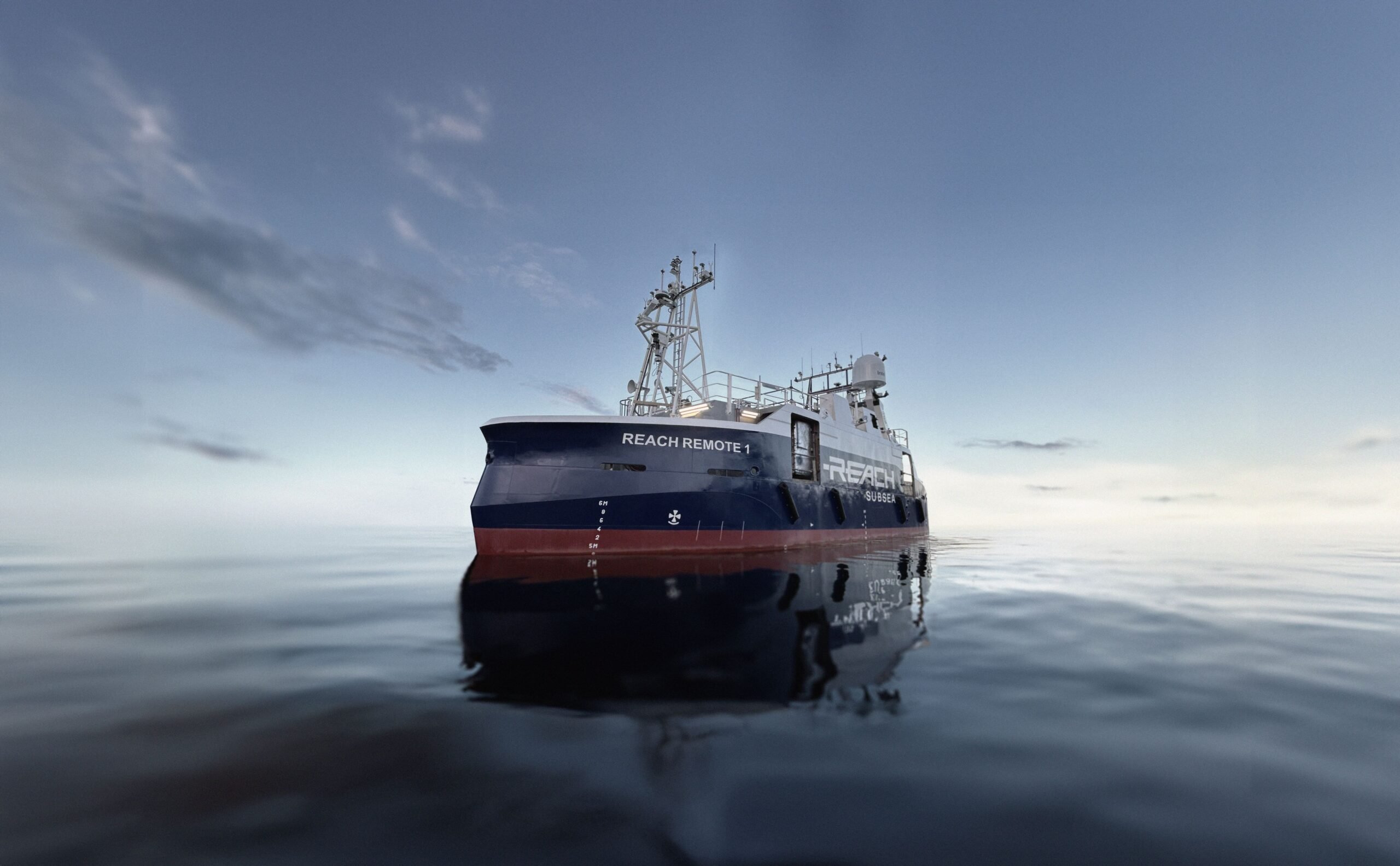 Reach Remote 1. Illustration: Reach Subsea
See also: Squarehead and Reach Remote launch acoustic pilot onboard autonomous vessel
Squarehead Technology has also demonstrated how advanced acoustic sensing can improve maritime situational awareness through its “super hearing” technology for ships.
The system uses arrays of microphones and AI-powered sound analysis to detect and classify surrounding vessels and activities beyond normal human hearing capabilities, providing operators with additional situational awareness in demanding maritime environments.
The technology is currently being tested onboard Fjord1’s ferry MF Skopphorn and will also be implemented on the new ferries operating the Lavik–Oppedal connection on Norway’s west coast. The project is part of the broader development toward highly automated and eventually autonomous ferry operations, where new sensor systems are needed to strengthen both onboard and shore-based situational awareness.
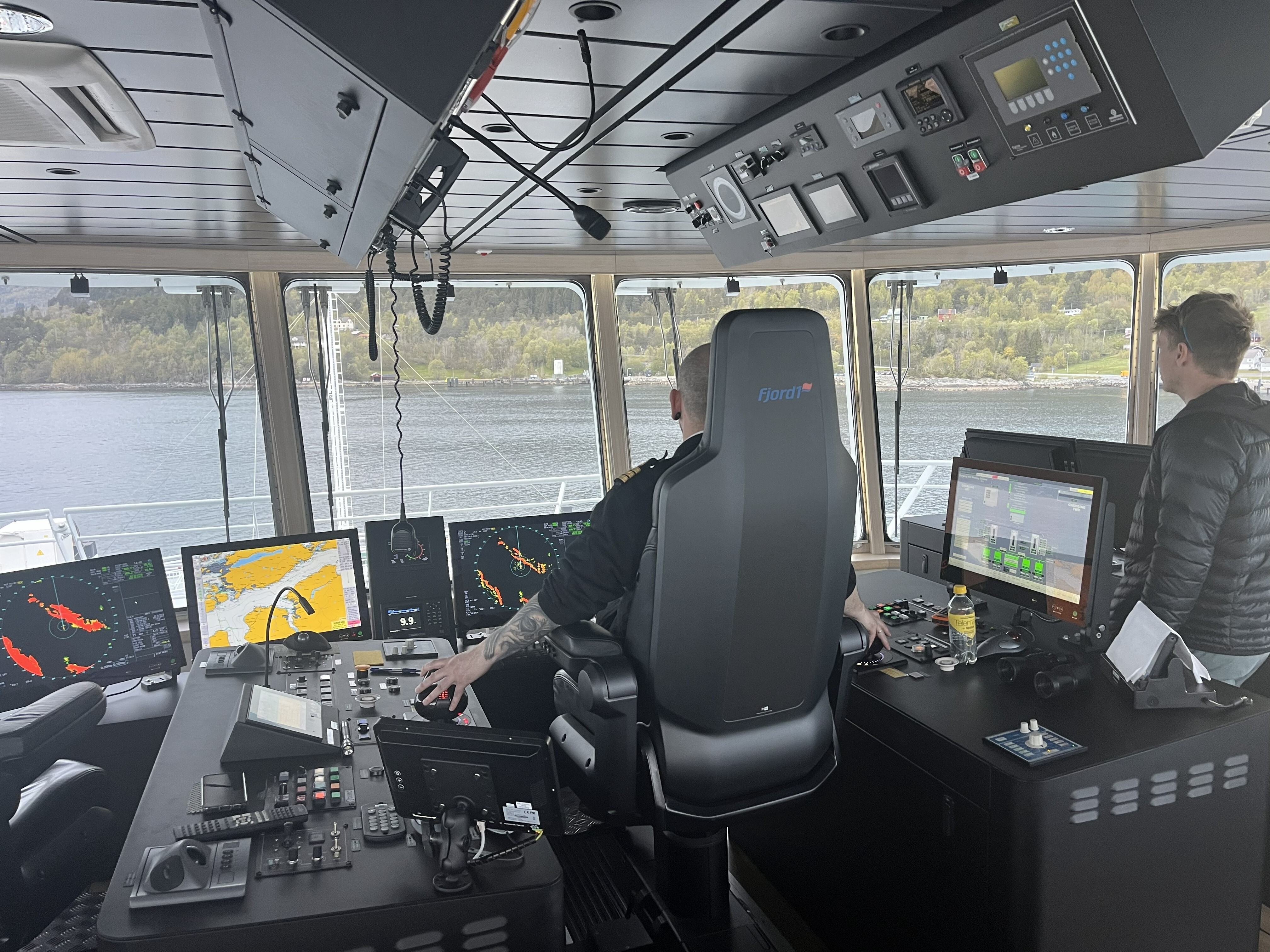 Bridge on Fjord1 ferry, MF Skopphorn. Photo: Squarehead
See also: Squarehead brings “superhearing” to ships
Autonomous ferry operations enabled by 5G
Norway has also become a testing ground for autonomous ferry operations. The Lavik–Oppedal ferry connection has been used to demonstrate how 5G technology can support autonomous vessel functions, remote monitoring, and real-time data transfer in live ferry operations.
The project involved several Norwegian technology actors, including Senti Systems, contributing to communication and enabling technologies supporting autonomous maritime operations.
The project demonstrated how next-generation connectivity infrastructure can become a key enabler for future autonomous maritime transport systems, particularly in coastal operations where reliable low-latency communication is critical.
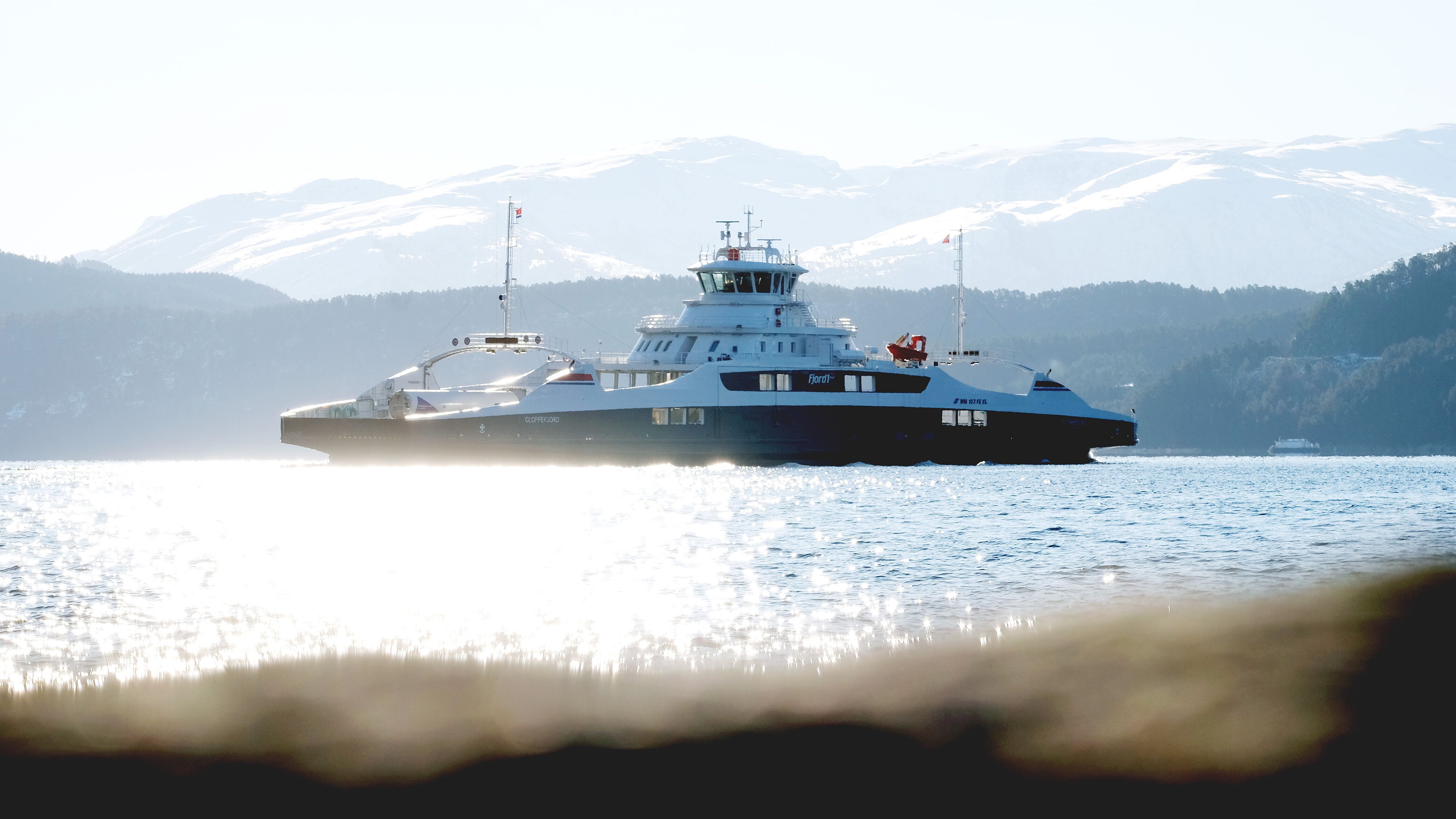 Photo: Fjord1
See also: The critical role of 5G in future of autonomous maritime transport
Norwegian autonomy technology is also increasingly being deployed internationally. Zeabuz recently delivered autonomy solutions for the Swedish zero-emission ferry Neptunus, where autonomous transit systems, remote monitoring, and advanced navigation technology will support safer, more energy-efficient, and more predictable ferry operations on one of Sweden’s busiest ferry routes.
See also: Zeabuz delivers autonomy solution to Swedish zero-emission ferry
MIDAS and Shore Control Lab
MIDAS (Human in Future Ocean Space Operations) is a six-year research and capacity-building initiative focused on how humans interact with autonomous maritime systems in future ocean operations.
The programme explores how increasing autonomy changes maritime work, with particular emphasis on decision support, situational awareness, and the design of safe and effective shore-based control environments.
“The ongoing projects are highly relevant to MIDAS because they represent the transition the initiative was established to support, the move from isolated technology development to operational systems where human interactions, autonomous vessels, and shore-based control centres are better integrated,” says Alexandra Neyts, project manager for MIDAS.
“MIDAS is all about building strong bridges between academia and industry, connecting research with real-world applications to drive innovation in autonomous marine operations. The developments, pilot projects, and start-ups emerging from this approach clearly demonstrate how it is giving Norway a competitive edge in a rapidly evolving maritime sector,” she says.
.jpg?width=6000&height=4000&name=SmartSj%C3%B826%20-%20Foto%20Lars%20Bugge%20Aarset%20Fremtidens%20Industri%20(68).jpg) Alexandra Neyts, project manager for MIDAS – Human in Future Ocean Space Operations. Photo: Lars Bugge Aarset/Fremtidens Industri
Alexandra Neyts, project manager for MIDAS – Human in Future Ocean Space Operations. Photo: Lars Bugge Aarset/Fremtidens Industri
Professor Ole Andreas Alsos, Head of NTNU Shore Control Lab, says the rapid development of uncrewed maritime operations is closely aligned with the research environment’s focus areas.
“Uncrewed maritime operations are highly relevant to the Shore Control Lab because they bring together the core questions we work with every day: how to design safe, understandable and effective systems for remote and supervisory control at sea,” says Alsos.
“Through the Shore Control Lab and the MIDAS project, we can contribute with human-centred design methods, operational test facilities and research-based knowledge about how operators, autonomy and maritime infrastructure should work together. At the same time, real-world developments in uncrewed operations give us essential cases, requirements and data that strengthen our research, education and innovation activities.”
 Ole Andreas Alsos, professor and Head of NTNU Shore Control Lab. Photo: Lars Bugge Aarset/Fremtidens Industri
The Shore Control Lab is an experimental and research environment used to study and test concepts for remote ship operations and shore-based control centres, including operator interaction, interface design, and human performance in autonomous maritime systems.
From demonstrations to operational reality
The development shows how Norwegian actors are building complete ecosystems for maritime autonomy, where vessels, sensors, remote operations centres, and digital services are integrated into new operational models.
A wide range of companies and collaboration partners connected to Ocean Autonomy Cluster, FI Ocean Space Incubator, and Maritimt Forum Midt-Norge are involved in this development, contributing expertise across autonomous vessels, sensors, connectivity, control systems, software, offshore operations, and maritime infrastructure.
“New technological solutions, expertise, and test arenas are necessary for Norway to remain the world-leading maritime cluster. It is extremely exciting to follow the ocean technology environment that has now really gained momentum in Trondheim, and which will have a major impact on the maritime industry going forward. Therefore, Maritimt Forum works to ensure that conditions are in place for continued development of both technology and expertise through good framework conditions and collaboration across sectors,” says Ellen Weidemann, head of Maritimt Forum Midt-Norge.
.jpg?width=6000&height=4000&name=Dark%20Drones%202026%20Foto%20Lars%20Bugge%20Aarset%20Fremtidens%20Industri%20(101).jpg) Ellen Weidemann, head of Maritimt Forum Midt-Norge. Photo: Lars Bugge Aarset/Fremtidens Industri
Ellen Weidemann, head of Maritimt Forum Midt-Norge. Photo: Lars Bugge Aarset/Fremtidens Industri
For Ocean Autonomy Cluster, this illustrates how the sector is rapidly moving from technology development to commercial operations. It is no longer only about demonstrations and testing, but about real-world operations in the North Sea and along the Norwegian coastline, conducted entirely without crew on board.



Related News.
Navigating the Multi-Orbit Era: In Conversation with Intellian’s Jon Harrison at SMM 2026
At SMM 2026 in Hamburg, the rapid evolution of maritime satellite communications took centre stage. Across the exhibition halls, discussions among…
Cyprus ports need joint energy and investment strategy, shipping agents chief says
Cyprus needs a coordinated strategy for shipping, energy and environmental protection to support port investment and modernisation, Cyprus shipping…

MASO Public Affairs introduces MASO Regulatory Intelligence
A new subscription service helping businesses understand what is changing and what it means for them MASO Public Affairs introduces MASO Regulatory…
Anglo-Eastern helps turn CMBTECH’s ammonia ambition into an operational reality
From early feasibility study and risk-based design to newbuilding supervision, crew readiness and technical management, Anglo-Eastern drew on its…

Escalation of attacks threatens to derail recovery in Middle East oil exports
World oil demand is forecast to fall by 2.5 mb/d y-o-y in 4Q26 and 2.6 mb/d on average in 2026. As the Iran war manifests itself through restricted…
New study finds shipping pays twice its share to EU ETS earmarked revenues should triple to help build market for sustainable fuels and technologies
Shipping is responsible for around 10% of EU ETS emissions but pays almost 20% of the ETS bill. Unlike other sectors, it has never received free…
MSARC strengthens maritime mass rescue readiness through training and national live exercise off Dakar, Senegal
Joint MSARC–FHAS programme combines three days of SAR training with a national multi-agency live exercise The Maritime Search and Rescue Council ,…
Sogese report deliveries are still being delayed as container freight rates fluctuate
FOR IMPORTERS Spot rates into the Mediterranean are back at January levels, Far East to Europe reliability sits at pandemic lows, and nearly…
Glencore begins trading on Australian Securities Exchange
Glencore has begun trading on the Australian Securities Exchange under the ASX code GLC. Gary Nagle, Glencore’s CEO, said it was an exciting day for…
BIMCO Shipping Number of the Week
Suez Canal container ship transits exceed 50% of pre-disruption levels "During the first two weeks of October, weekly container ship capacity…
Subscribe to our newsletter!
if you dont want to swim alone in the ocean of news, sign up for the newsletter, and you will receive daily all the important news of world shipping!
